...

By Jack Beresford
Senior Reporter
0
Share
Newsweek is a Trust Project member
See more of our trusted coverage when you search.Prefer Newsweek on Googleto see more of our trusted coverage when you search.
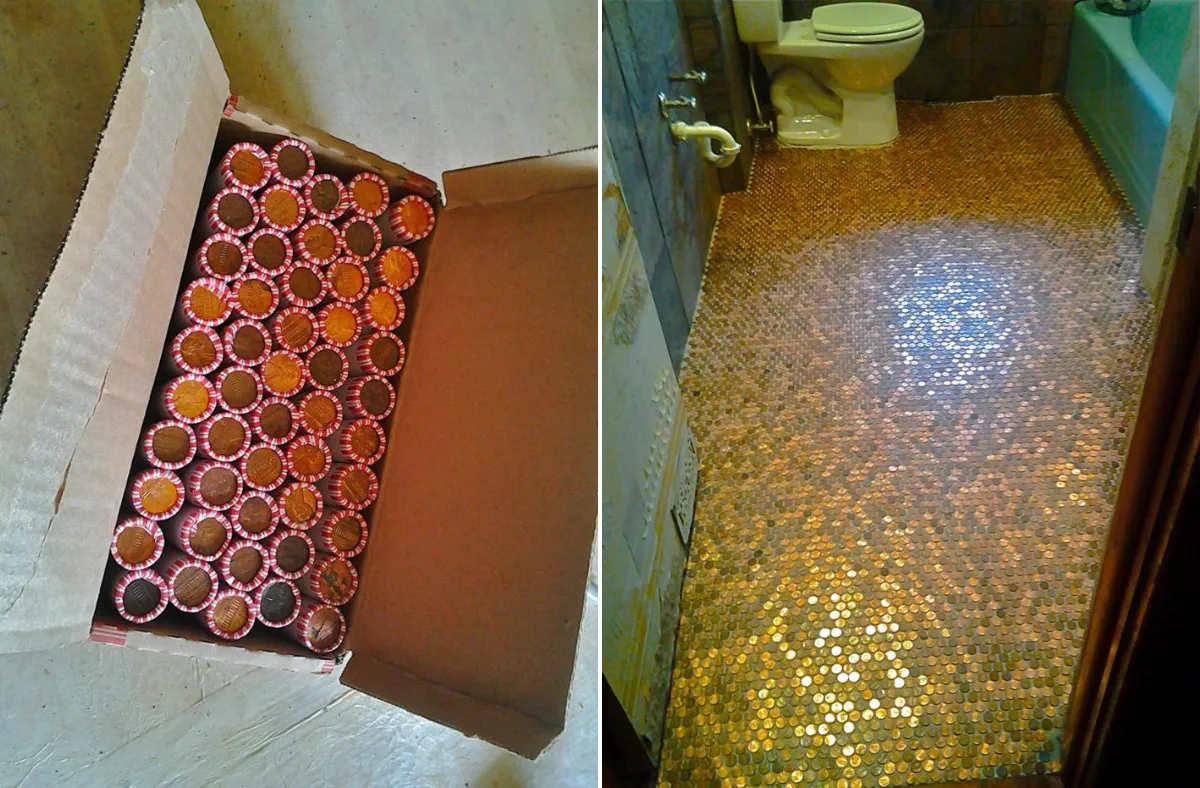
A Florida-based illustrator has earned praise for his painstaking efforts in using $97 worth of pennies to tile a bathroom floor.
Ten years ago, Patrick Girouard and his then-girlfriend Debra Cusick were living just outside of Chicago in northwest Indiana. Girouard’s work at the time focused primarily on mosaics while Cusick was a collage artist.
Together they ran a small business called Cut & Paste that focused on creative interior decorating ideas. At the time, the couple were renovating their bathroom when Girouard had a brainwave.
Read More on Home & Garden
“I had been making mosaic art using mostly scrap stained glass along with bits of ephemera like skeleton keys, bottle caps and old coins at the time,” Girouard told Newsweek. “Using coins in mosaics led me to the penny floor idea.”
A quick Google image search brought up other examples of penny-paved flooring. After doing a little research, Girouard hit upon as efficient a method as anyone is likely to have when it comes to gluing hundreds of pennies to the floor.
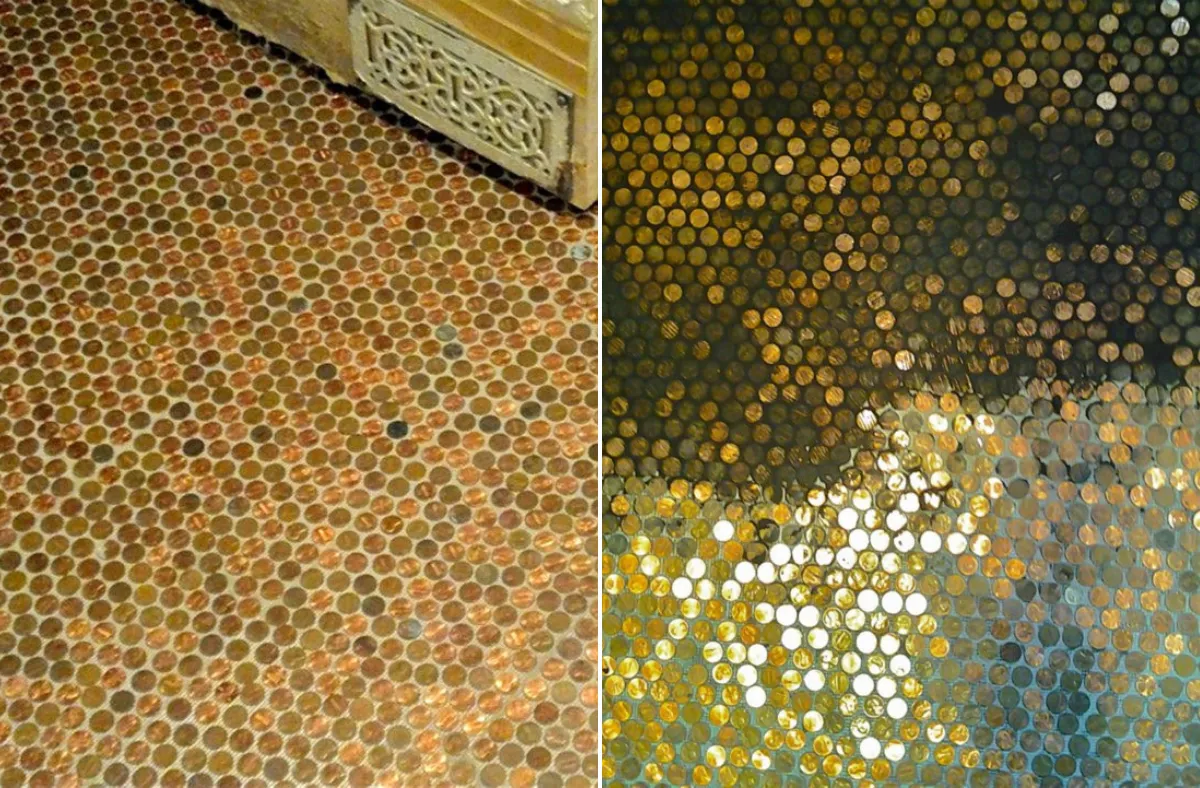
“I decided the best way to do it was by using a fiberglass mesh that comes in rolls and has a low tack adhesive on one side,” he said. “For the sake of uniformity I created a template that was about 8 inches square. I could fit 99 pennies on each square.”
The pennies used in the process were not ones from some long-held collection. “I just went to my bank and got $100 worth of pennies in rolls,” Girouard said.
...
Girouard estimates he and Cusick spent “two rainy weekend days sticking pennies to the mesh squares and gently stacking them while watching old movies.”
By that point they had already taken-up the old ceramic tiling in the bathroom and put down a fresh layer of self leveling concrete as a new base. “I went to work with a tube of Liquid Nails adhesive, putting a drop on the back of each penny and applying the squares to the floor,” Girouard said. “The glue took a while to dry so I was able to move the tiles around a bit to customize the fit.”
After applying some grouting and sealant, Girouard estimated they had used $97 worth of pennies, along with five buttons, two dimes and a peso. The result was something he was very proud of.
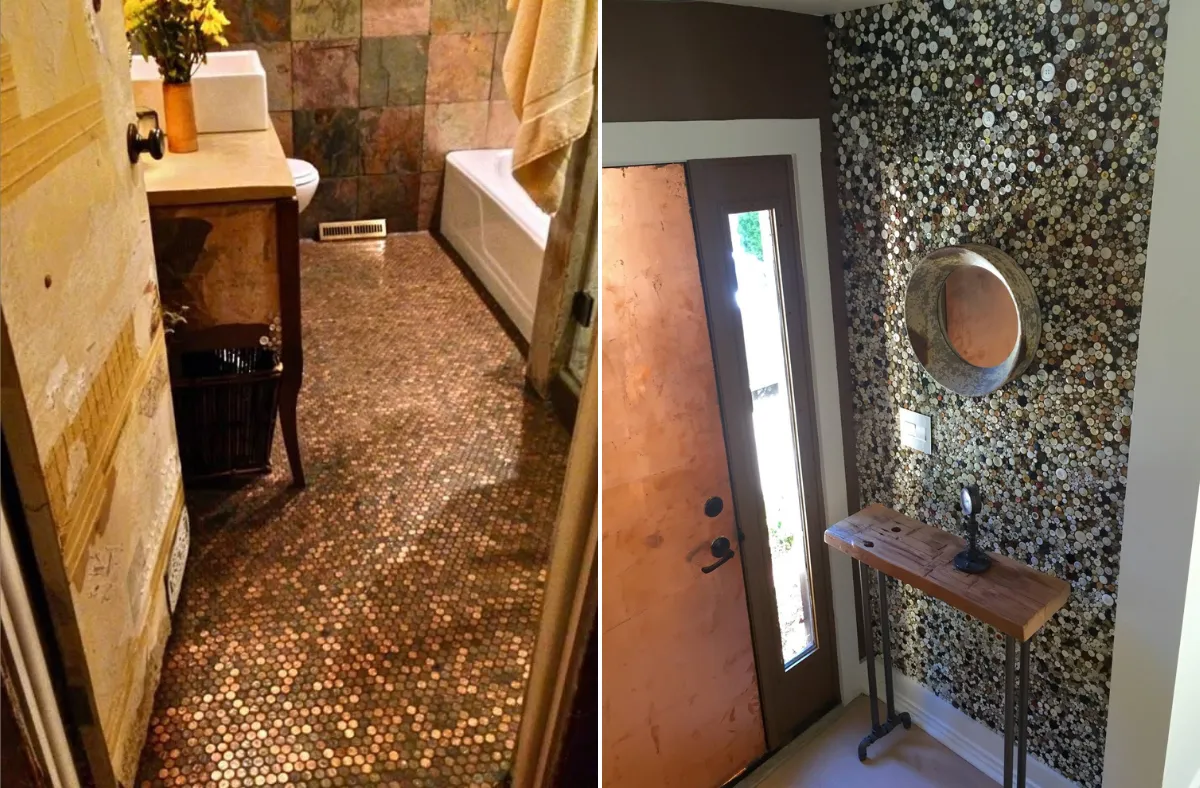
“I honestly didn't find any part of it very difficult, just time consuming,” he said. “We were very pleased with the way the completed floor looked. It was easy to maintain and in spite of being metal it gave the room a very warm feeling. If a penny ever popped loose from every day wear and tear it's super easy to fix.”
...
Or at least it was. In May, the U.S. Treasury Department announced its plan to stop manufacturing the penny after more than two centuries in circulation. It’s a decision that sparked renewed interest in these coins and in Girouard’s penny flooring after he posted a picture of it on Threads under the handle @patrickgirouard.
“I was scrolling through and saw a post about someone who had made penny Christmas wreath ornaments so I replied with a picture of the penny floor,” he said.
At the time of writing, it’s earned over 5,000 likes on the platform. Now working as an illustrator based out in Florida, Girouard has enjoyed looking back at his work on the flooring. It’s not the only project of this kind he and Cusick worked on. They also created a wall of buttons together.
Though penny production may have ceased, something tells us this won’t be the last time one of Girouard and Cusick’s creations catches the eye on social media.
...
View 0 Comments
Submit Correction
View Editorial & AI Guidelines