10
Loading video...

By Anna Skinner
Associate News Editor
0
Share
Newsweek is a Trust Project member
See more of our trusted coverage when you search.Prefer Newsweek on Googleto see more of our trusted coverage when you search.
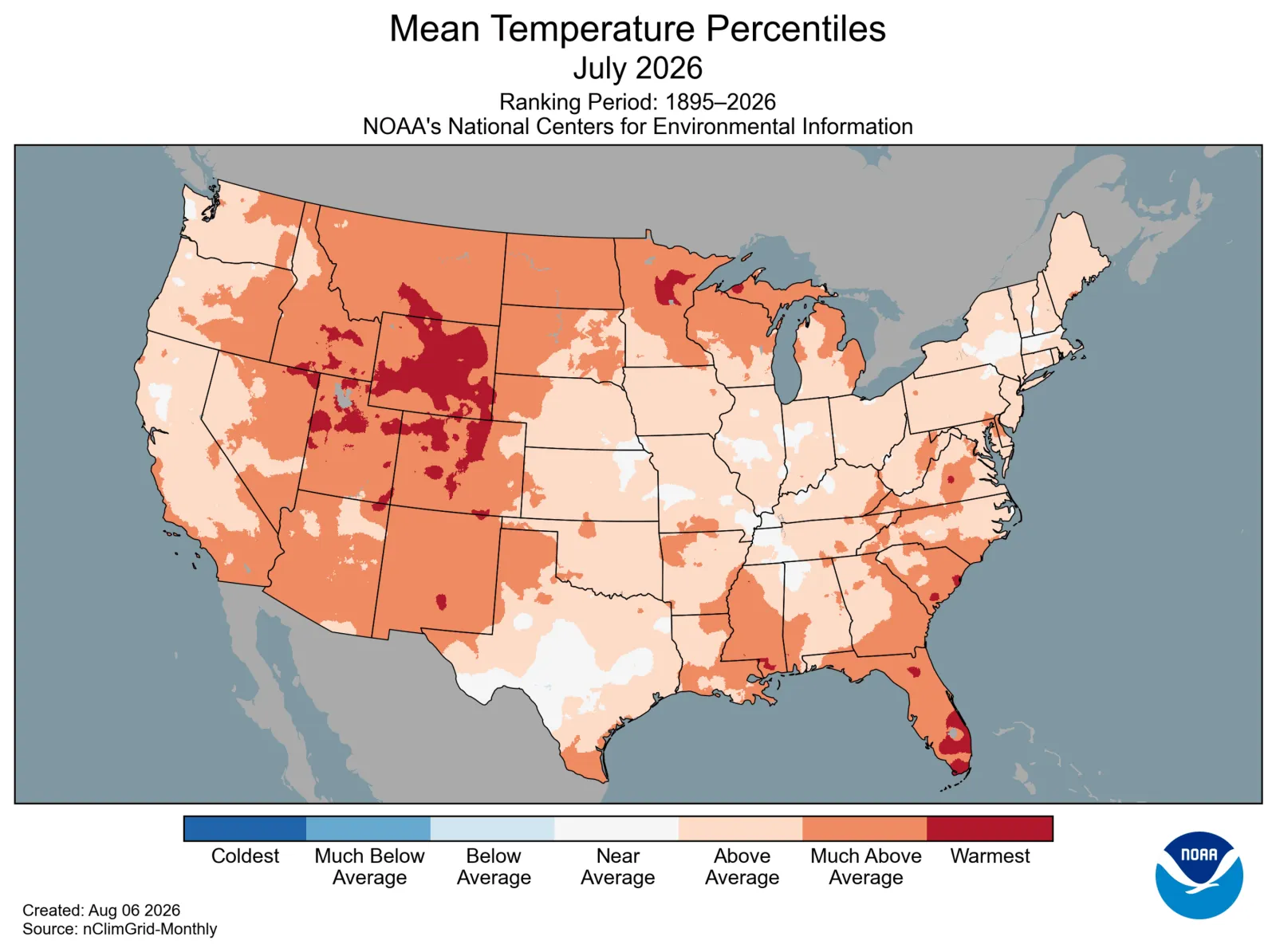
A newly released map from the National Oceanic and Atmospheric Administration (NOAA), shaded almost entirely in red, shows that July 2026 was the hottest month ever recorded across the contiguous United States.
Data published Monday by NOAA's National Centers for Environmental Information (NCEI) found that the Lower 48 states averaged 76.9 degrees Fahrenheit during July, making it not only the warmest July on record but the hottest month of any kind since federal recordkeeping began in 1895. The previous benchmarks, set during July 1936 and July 2012, were surpassed by roughly one to two tenths of a degree.
The record-setting month adds to a growing body of evidence showing how rising global temperatures are influencing weather extremes. Scientists have repeatedly found that human-caused climate change is making heat waves more intense, more frequent and longer-lasting, while warmer overnight temperatures are reducing opportunities for people, crops and infrastructure to recover from daytime heat. Last month's exceptional warmth came amid a summer marked by repeated heat domes across different regions of the country, amplifying temperatures from coast-to-coast.
Read More on Weather
Newsweek reached out to NOAA and NCEI by email for comment.
Related Story
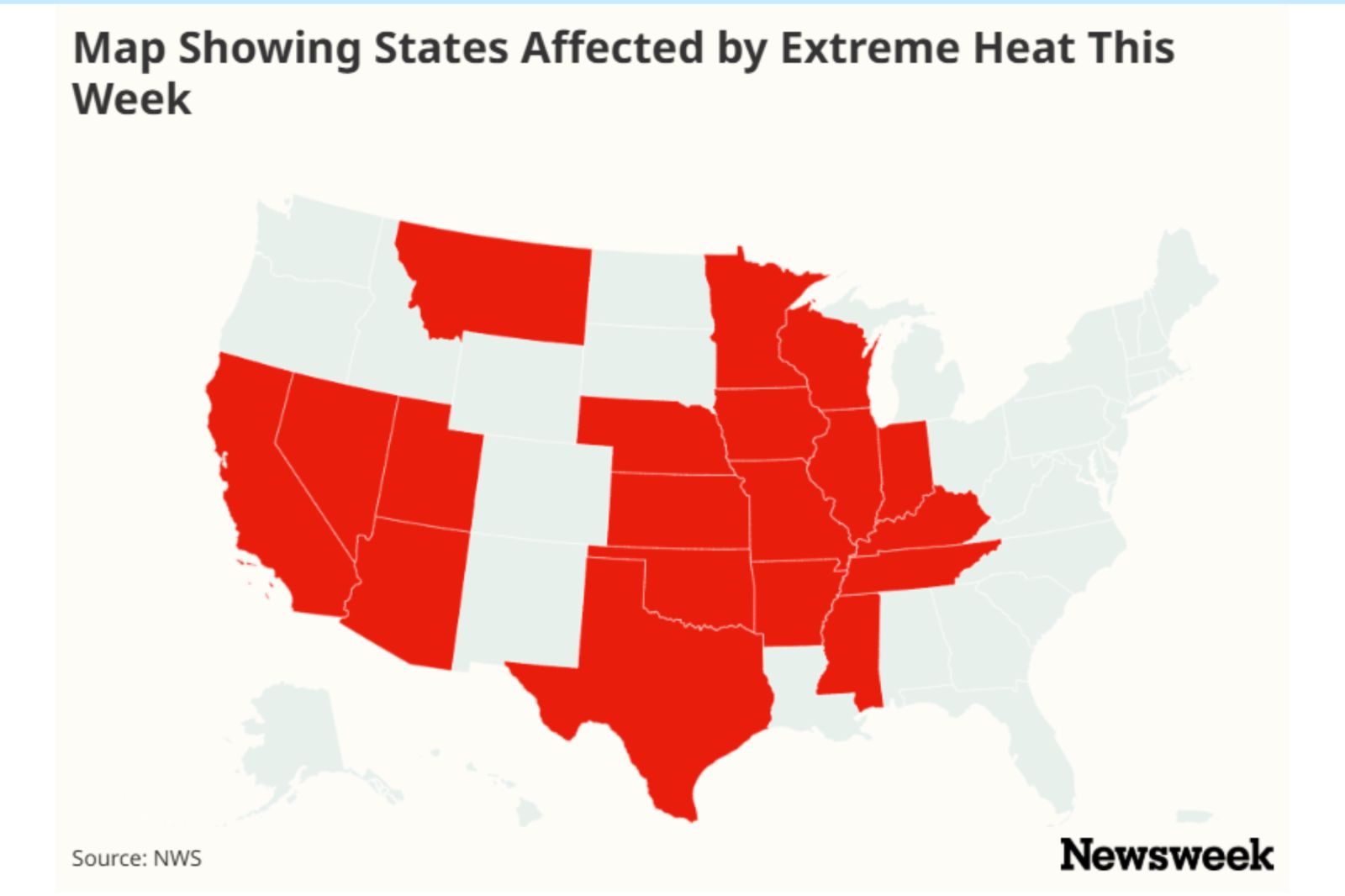
Map Shows 19 States Under Extreme Heat Dome Warning: ‘Stay Out of the Sun’
The NOAA map accompanying the report illustrates the scale of the event. Above-average temperatures stretched across the entire contiguous U.S., with every state ranking within the warmest third of its historical July record. No state experienced near-average or below-average conditions.
...
State-by-State Breakdown
- Alabama: July temperatures were generally above average, with some near-average areas in northern portions of the state.
- Arizona: Much of Arizona experienced much above average temperatures, with pockets in the south and north in the above-average category.
- Arkansas: Temperatures were mostly above average across the state, with a few pockets of much above average.
- California: Southern California fell into the much above average category, whereas most of the rest of the state was considered above average.
- Colorado: Large areas of Colorado recorded much above-average temperatures, with some spots among the warmest on record.
- Connecticut: Temperatures were generally near to slightly above average statewide.
- Delaware: Delaware experienced above-average temperatures during July, with the northern part of the state falling into the much above average category.
- Florida: Most of Florida was much above average, with parts of South Florida among the warmest on record.
- Georgia: Above-average temperatures dominated much of the state, with much above average recorded on the eastern half.
- Idaho: Idaho was broadly much warmer than average, with pockets reaching record-warm territory.
- Illinois: Temperatures were above average or near average across the state.
- Indiana: Indiana experienced mostly near- to above-average temperatures.
- Iowa: July temperatures were above average statewide.
- Kansas: Most of Kansas saw near- to above-average temperatures, with a small pocket of the state in the west experiencing much above average temperatures.
- Kentucky: Kentucky was generally warmer than average, although some areas were closer to normal.
- Louisiana: Most of Louisiana was above average, with parts of the south and northeast much above average.
- Maine: Temperatures were above average across much of the state.
- Maryland: Maryland experienced warmer-than-average conditions overall, with pockets of much above average temperatures recorded, too.
- Massachusetts: Temperatures were generally near to slightly above average.
- Michigan: Much of Michigan recorded above-average temperatures, with localized areas much above average. In the Upper Peninsula, some areas recorded their warmest on record.
- Minnesota: Northern Minnesota experienced some of the state's warmest July conditions relative to average, while other areas were above average or much above average.
- Mississippi: Temperatures ranged largely from above average to much above average, with a small pocket in southern Mississippi approaching warmest on record territory.
- Missouri: Missouri saw a mix of near- and above-average temperatures, with a small pocket of much above average in the south.
- Montana: The state recorded widespread much above-average temperatures, with parts of southern Montana recording the warmest on record.
- Nebraska: Temperatures were generally above average, with parts of the west recording much above average.
- Nevada: Nevada was broadly warmer than average, with several areas much above average and northeastern Nevada recording warmest on record.
- New Hampshire: Most of New Hampshire experienced near- to slightly above-average temperatures.
- New Jersey: Temperatures were generally above average statewide.
- New Mexico: Much of New Mexico recorded much above-average temperatures, with small pockets recording the warmest on record.
- New York: New York saw largely near- to above-average temperatures.
- North Carolina: Temperatures were generally above average, especially in central North Carolina, although other parts saw much above average.
- North Dakota: July was much warmer than average across most of North Dakota.
- Ohio: Ohio experienced near- to above-average temperatures.
- Oklahoma: Most of Oklahoma was above average, with some much warmer than average areas.
- Oregon: Temperatures were generally above average, with parts of eastern Oregon much above average.
- Pennsylvania: Pennsylvania saw mostly near- to above-average temperatures, with very small pockets of much warmer than average temperatures.
- Rhode Island: Rhode Island experienced above-average temperatures overall.
- South Carolina: Above-average temperatures prevailed, with localized areas among the warmest on record.
- South Dakota: Much of South Dakota recorded much above average temperatures, though some central and eastern areas were above average.
- Tennessee: Temperatures were generally above average statewide.
- Texas: Texas experienced a mix of near- and above-average temperatures, with the warmest conditions along parts of the Gulf Coast and in the panhandle.
- Utah: Utah recorded widespread much above-average temperatures, including some record-warm areas.
- Vermont: Temperatures were near to slightly above average across the state.
- Virginia: Virginia experienced warmer-than-average conditions overall, with a small pocket of central Virginia approaching warmest on record.
- Washington: Washington was generally warmer than average, though some coastal areas were nearer normal.
- West Virginia: Temperatures were mostly above average across the state, with some parts considered much above average.
- Wisconsin: Wisconsin recorded above average temperatures, with northern areas much above average.
- Wyoming: All of Wyoming experienced much above-average temperatures, with several areas ranking among the warmest on record.
Which States Had The Hottest Temperatures?
Some of the most pronounced temperature departures from normal were observed across the interior West, Southwest, Rocky Mountains, northern Plains and Upper Midwest, the map showed. Parts of the Gulf Coast and Southeast also experienced significantly warmer-than-average conditions.
The most exceptional state was Wyoming.
NOAA reported that Wyoming recorded its warmest July on record and, notably, the hottest month of any kind ever observed in the state's climate record. Average temperatures there were 5.1 degrees above normal, surpassing the state's previous July record, set in 2007, by nearly a full degree.
While Wyoming was the only state specifically identified as setting an all-time statewide monthly record, NOAA said 13 states ranked among their five warmest Julys ever recorded.
The findings follow weeks of intense heat that repeatedly expanded into different parts of the country. A major heat wave gripped much of the eastern U.S. around the Fourth of July holiday before additional periods of extreme heat developed later in the month across the Plains, Rockies and Southwest.
Scientists say one of the most telling aspects of the July data was how warm nights became.
While daytime highs averaged 89.5 degrees nationwide, the largest anomaly occurred in overnight temperatures. Average nighttime lows reached 64.2 degrees, the warmest monthly minimum-temperature reading in the federal climate record and about 3.7 degrees above average.
Climate researchers often view rising nighttime temperatures as a particularly important indicator of long-term warming because they can increase health risks during heat waves. Without cooler overnight conditions, the human body receives less relief from prolonged heat exposure, and electricity demand for cooling can remain elevated around the clock.
The heat coincided with expanding drought across portions of the West, Rockies and northern Plains, while parts of the Pacific Northwest and western Canada battled significant wildfire activity.
Although Alaska bucked the national trend and experienced its coolest July since 2008, the red-shaded NOAA map underscores the broader picture: the entire Lower 48 experienced unusually warm conditions during a month that has now entered the record books as America's hottest ever.
Contact Newsweek editors for this story: Steve Mollman and Anthony Murray.
View 0 Comments
Submit Correction
View Editorial & AI Guidelines