...

By Hollie Silverman
News Editor
0
Share
Newsweek is a Trust Project member
See more of our trusted coverage when you search.Prefer Newsweek on Googleto see more of our trusted coverage when you search.
NOAA’s Space Weather Prediction Center (SWPC) reported a strong G3 geomagnetic storm on Sunday, noting that additional isolated G3 conditions were possible through the end of the day, boosting the chances of seeing the northern lights across parts of the country tonight.
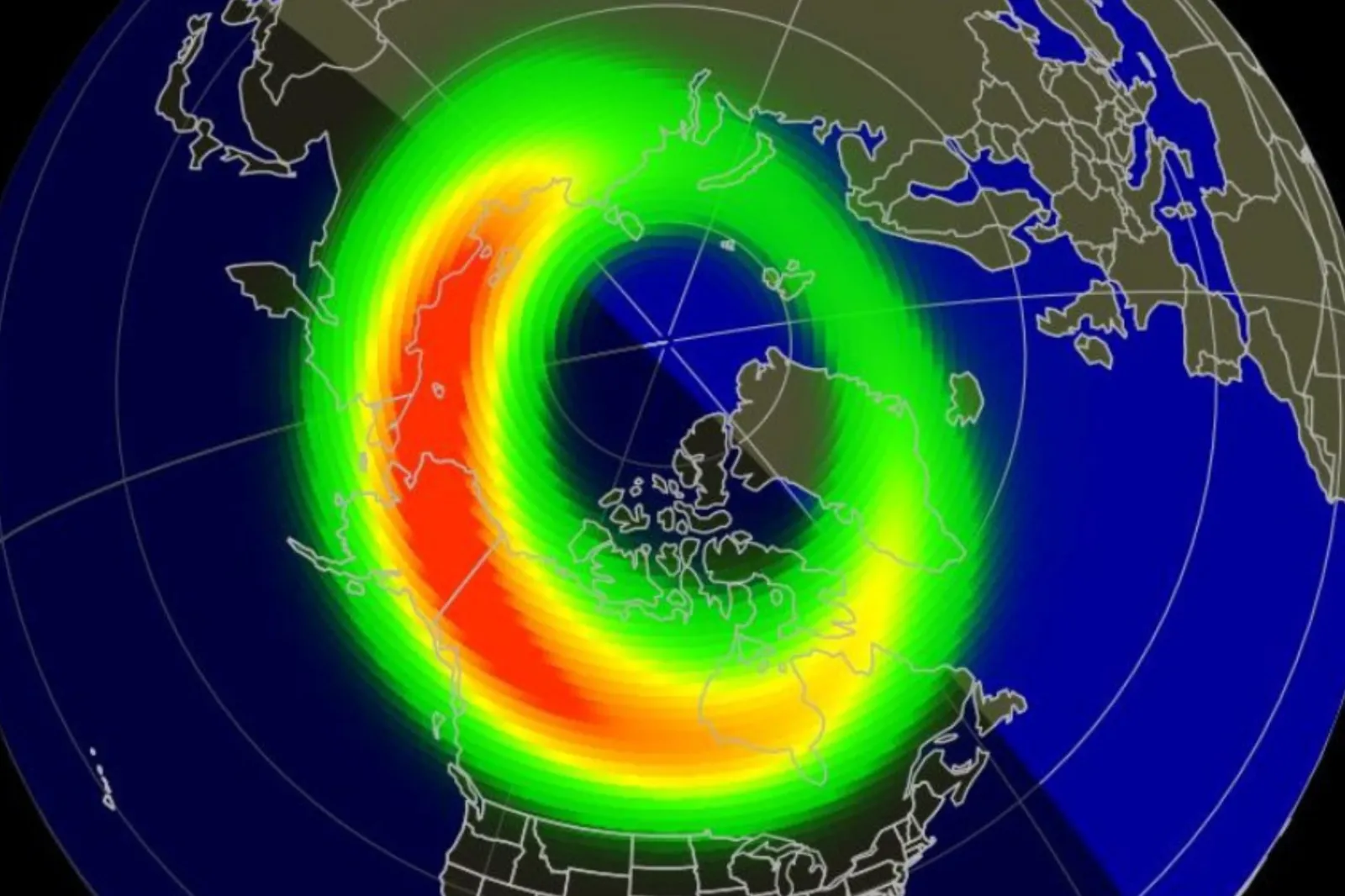
As of Sunday afternoon, SWPC’s alerts showed ongoing space weather activity, with the agency directing the public to its Aurora Dashboard for real-time “viewline” maps that estimate how far south the aurora may be visible on the northern horizon.
The Context
Geomagnetic storms can push auroral displays farther south than usual, creating viewing opportunities well beyond the Arctic and northern Canada, including U.S. border states and, during stronger events, parts of the Upper Midwest and Northeast.
Read More on News
Visibility depends on the geomagnetic Kp index, cloud cover, and local light pollution, which is why SWPC advises checking its near-real-time aurora forecasts before heading out.
...
What Is a Geomagnetic Storm? What to Know
A geomagnetic storm is a major disturbance of Earth’s magnetosphere that occurs when energy from solar wind and coronal mass ejections (CMEs) couples efficiently into the space environment around Earth, causing fluctuations measured on NOAA’s G-scale (G1 to G5).
G3 (Strong) conditions often correlate with aurora visible much farther south than normal, though exact visibility varies with real-time solar wind parameters and local weather.
Where Will the Northern Lights Be Visible?
NOAA’s Aurora Dashboard publishes “Tonight’s Aurora Viewline Forecast,” a moving boundary that marks the southernmost locations where the aurora may be visible on the northern horizon if skies are dark and clear.
As of late Sunday, SWPC said G1–G2 storming continued with another isolated G3 period possible through the end of the day, which typically keeps the best U.S. viewing prospects in northern-tier states near the Canadian border and Alaska.
Other areas where the aurora may be seen includes the northern tier of the U.S. such as northern Michigan and Maine, as well as parts of New York and Washington state.
Earlier in the week, SWPC forecasts indicated potential visibility across Alaska and parts of northern border states, including regions of Washington, Idaho, Montana, North Dakota, South Dakota, Minnesota, Wisconsin, Michigan and Maine, with conditional southward expansion during stronger intervals.
For the most accurate, location-specific guidance tonight, SWPC directs aurora watchers to consult the real-time 30-minute aurora forecast maps and the viewline on its dashboard, then find a dark site with a clear northern horizon.
SWPC also noted current radio blackout conditions at the R1 (Minor) level, which can accompany heightened solar activity, although these impacts mainly affect high-frequency radio on the sunlit side and do not directly hinder nighttime aurora viewing.
In a polarized era, the center is dismissed as bland. At Newsweek, ours is different: The Courageous Center—it's not "both sides," it's sharp, challenging and alive with ideas. We follow facts, not factions. If that sounds like the kind of journalism you want to see thrive, we need you.
When you become a Newsweek Member, you support a mission to keep the center strong and vibrant. Members enjoy: Ad-free browsing, exclusive content and editor conversations. Help keep the center courageous. Join today.


View 0 Comments
Submit Correction
View Editorial & AI Guidelines