...

By Ryan Chan
China News Reporter
0
Share
Newsweek is a Trust Project member
See more of our trusted coverage when you search.Prefer Newsweek on Googleto see more of our trusted coverage when you search.
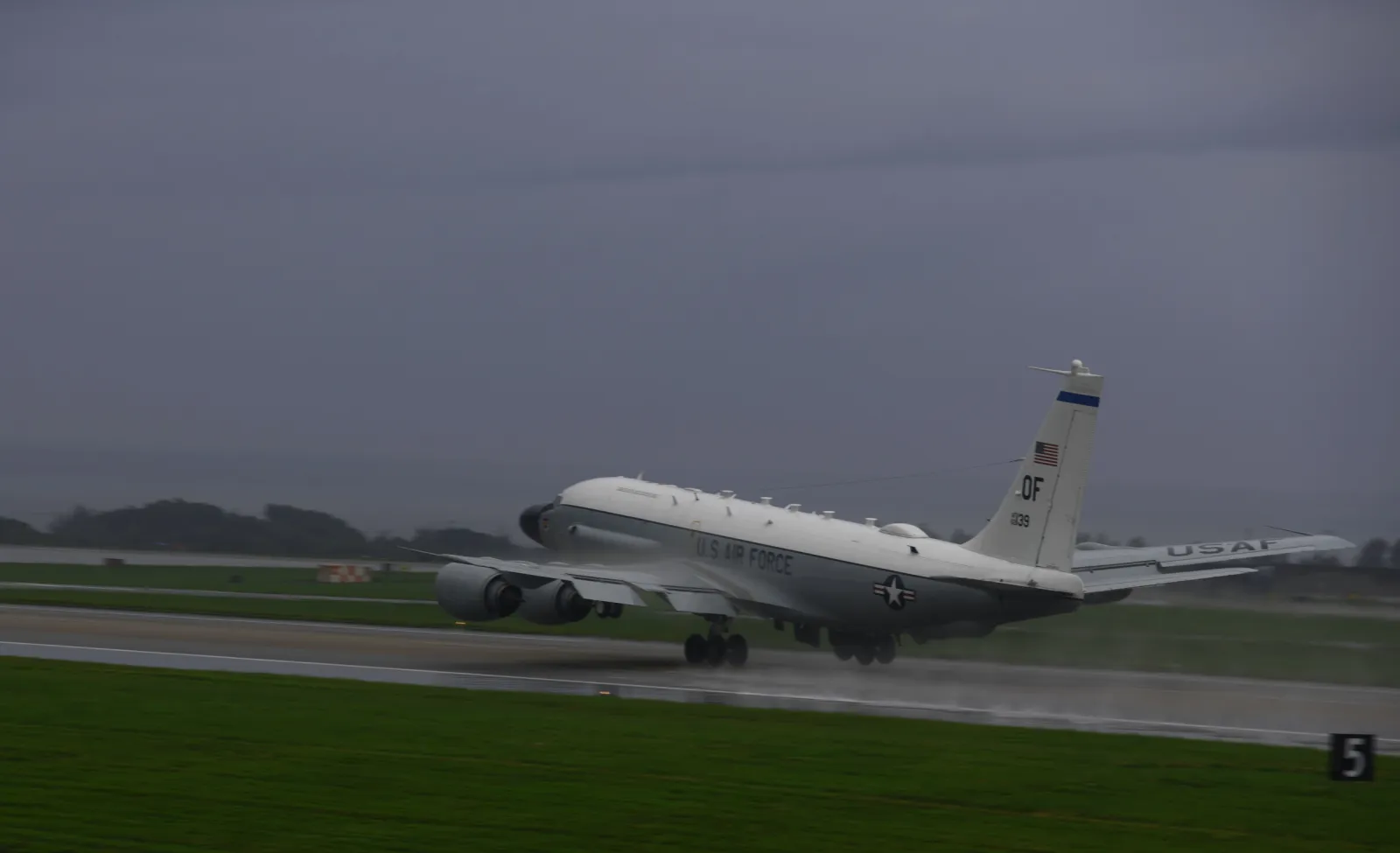
The United States RC-135 reconnaissance aircraft flew several spying missions near the coast of China this month, according to Newsweek's map, using open-source tracking data.
The Chinese military did not immediately respond to Newsweek's request for comment. The U.S. Pacific Air Forces (PACAF) previously told Newsweek that the RC-135 aircraft were conducting what it called "planned, routine operations" in the Indo-Pacific region.
Why It Matters
The U.S. Air Force stationed several variants of the RC-135 spy planes at Kadena Air Base, a U.S. military hub on Japan's Okinawa Island. The base, which also hosts fighter jets and aerial refueling aircraft, conducted a rapid response exercise earlier this month.
Read More on World
Okinawa is part of a blockade, commonly known as the first island chain, that forms with Taiwan and the Philippines under a U.S. defense concept, which attempts to leverage the islands to contain China's navy and air force in the Western Pacific Ocean during wartime.
In the past, Beijing had protested what it called "close-in reconnaissance" of Chinese territory by the U.S. military, demanding the Pentagon put an end to its "provocations."
What To Know
Based on data captured by the aircraft tracking service Flightradar24, Newsweek's map showed that the RC-135V reconnaissance aircraft, also known as Rivet Joint, have been flying near China's coast since January 2, with the recent mission conducted on Thursday.
Most of these China-related spying missions involved Kadena-based Rivet Joint aircraft, with the exception of a mission that was carried out on January 13, which saw the aircraft take off from Yokota Air Base, located west of Tokyo on Japan's main island of Honshu.
The Rivet Joint flew close to the eastern and southern coasts of China during missions, the map indicated. This variant of the RC-135 aircraft is equipped with sensors for detecting, identifying, and geolocating electronic signals, the U.S. Air Force said in a fact sheet.
Another Kadena-based RC-135 variant aircraft, the RC-135U, conducted a similar spying mission last Friday, flying north of the self-ruled island of Taiwan and near China's east coast. Beijing has said it reserves all options against Taiwan, including the use of force.
...
According to the U.S. Air Force, the RC-135U, also known as Combat Sent, is designed for locating and identifying foreign military land, naval, and airborne radar signals, which will help determine detailed operating characteristics and capabilities of foreign systems.
On Wednesday, both the Combat Sent and the Rivet Joint were deployed from Kadena. They flew near the Chinese southern island of Hainan in the South China Sea, following a transit over the waters between the Philippines and Taiwan, according to tracking data.
What People Are Saying
The U.S. Pacific Air Forces told Newsweek: "PACAF remains committed to a free and open Indo-Pacific focused on fostering regional security and stability throughout the region."
Chinese Foreign Ministry spokesperson Mao Ning said on February 9, 2023: "U.S. aircraft and warships frequently conduct close-in reconnaissance around China, which seriously threatens China's national security and undermines regional peace and stability."
What Happens Next
The Japan-based American spy planes are likely to continue their missions as the Chinese military deploys ships and aircraft around Taiwan for patrols and drills on a daily basis.
View 0 Comments
Submit Correction
View Editorial & AI Guidelines