
...

By Thomas Westerholm
Life & Trends Reporter
0
Share
Newsweek is a Trust Project member
See more of our trusted coverage when you search.Prefer Newsweek on Googleto see more of our trusted coverage when you search.
Americans are preparing for another challenging allergy season in 2026, as some regions are expected to experience particularly intense pollen levels, according to a new outlook from AccuWeather.
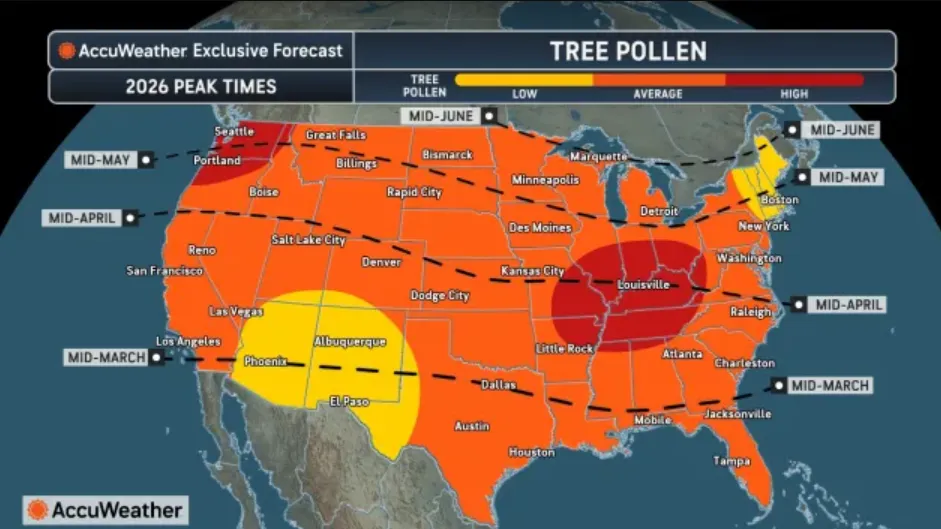
Tree pollen has already begun increasing in parts of the South and West and is expected to spread northward as spring temperatures rise.
The Ohio Valley—including Ohio, Indiana and Kentucky—could experience some of the highest tree pollen levels in the country this year, especially following periods of spring rainfall, according to AccuWeather’s 2026 allergy forecast.
Read More on Life
Different types of pollen—tree, grass and weed—will peak at different points in the year, creating waves of allergy triggers from early spring through early fall.
...
Why it Matters
Seasonal allergies affect millions of Americans annually, causing symptoms such as sneezing, congestion and itchy eyes.
Tracking pollen forecasts can help individuals prepare for severe allergy days by adjusting medication schedules or limiting time outdoors.
Weather patterns play a major role in determining how intense allergy seasons become. Temperature changes, rainfall, wind and late-season frost events can all influence how much pollen plants release into the air.
Warmer soil temperatures can allow plants and trees to produce pollen more easily, while rain can temporarily wash pollen out of the atmosphere.
However, dry weather following rainfall often leads to sharp spikes in airborne pollen.
Wind also contributes by carrying pollen long distances, sometimes transporting allergens hundreds of miles from their source.
“A later frost can help short-term pollen with lowering the tree pollen for a short time, but also increase pollen later in the season and make it more intense,” AccuWeather Senior Meteorologist Alan Reppert said.
What to Know
Tree pollen season began earlier than usual across Southern California, southern Arizona and much of the Gulf Coast, according to AccuWeather.
The Ohio Valley is forecast to be among the hardest-hit areas this year. Cities in the Pacific Northwest—including Portland, Oregon and Seattle—may also experience elevated tree pollen levels lasting several weeks.
Later in the spring, grass pollen will become the dominant allergen. AccuWeather predicts higher grass pollen levels across the northern Plains and Great Lakes, including major cities such as Chicago, St. Louis and Minneapolis.
...
In contrast, grass pollen levels may remain somewhat lower in parts of the Gulf Coast because frequent rainfall can wash pollen from the air before it accumulates to extreme levels.
By late summer and early fall, weed pollen—often associated with ragweed—will likely peak.
What’s Next
Health experts typically advise people with allergies to limit outdoor exposure during peak pollen hours, change clothes after spending time outside and keep windows closed during high pollen days.
Many also recommend starting allergy medications before pollen counts surge.
Newsweek has reached out to meteorologists for comment via email.
View 0 Comments
Submit Correction
View Editorial & AI Guidelines