...


By Ellie Cook and John Feng
0
Share
Newsweek is a Trust Project member
See more of our trusted coverage when you search.Prefer Newsweek on Googleto see more of our trusted coverage when you search.
In just over 13 months, President Donald Trump and his administration have at once sought to pull back from the rest of the world, focusing on home turf, and become embroiled in military action across three continents outside of North America.
Trump has framed the overseas operations as part of his "peace through strength" push, needed to protect America despite his years of criticism of foreign intervention.
"The affairs of other countries are our concern only if their activities directly threaten our interests," the administration explicitly laid out in its National Security Strategy, published in November. "In everything we do, we are putting America First."
Read More on World
But for many, U.S. military action during Trump's second term has jarred with what the administration insists it stands for. With Congress set to vote on curbing the president's ability to strike Iran, Newsweek has created a rundown of where the U.S has carried out military action during the current administration.
For these purposes, military action is referring mostly to strikes on nations outside the U.S. But the U.S. military has a global footprint, and has supported operations executed by other countries. For example, the U.S. last month provided intelligence to Mexican security forces that ultimately killed one of the country's most-wanted drug barons, Nemesio Oseguera Cervantes, known as El Mencho.
...
Where Did The U.S. Military Carry Out Operations in 2025?
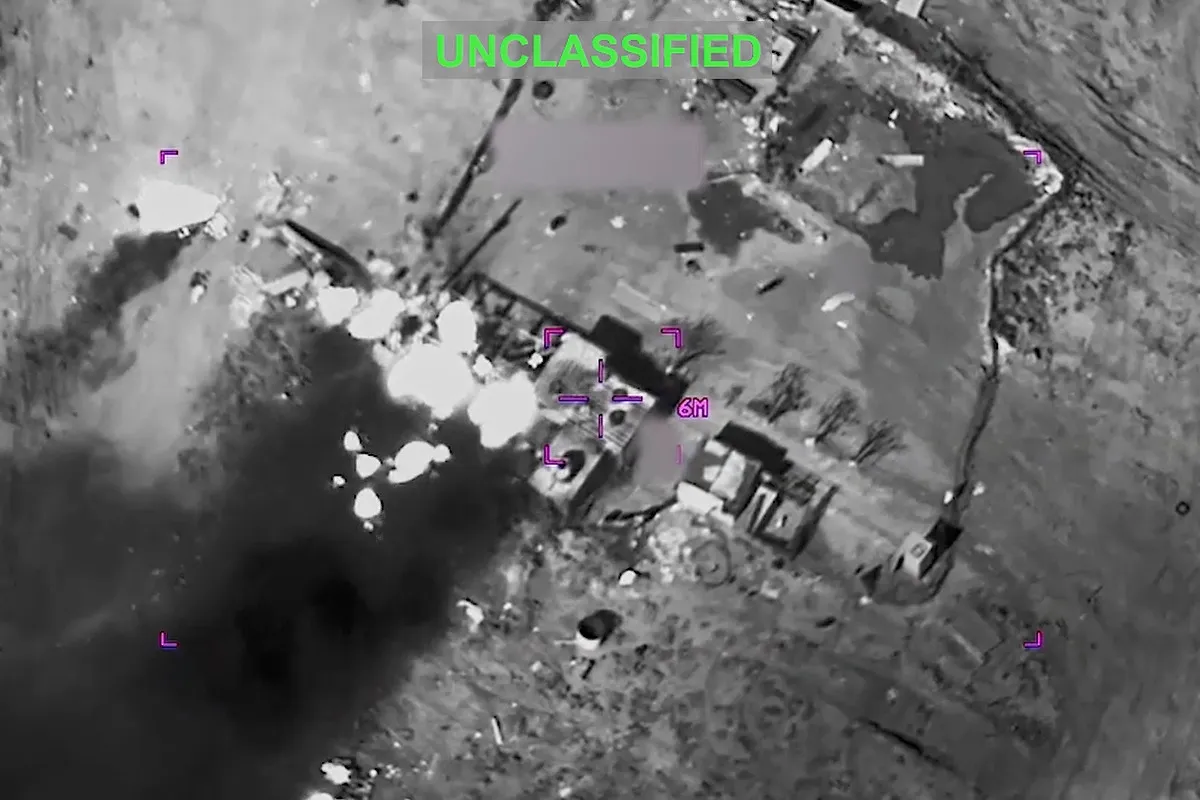
Within weeks of moving back into the White House, Trump ordered U.S. strikes on Islamic State (IS) operatives he said were hiding in caves in Somalia on February 1. The Pentagon said the strikes, carried out with Somalia's government, had killed "multiple operatives" in the Golis mountains and no U.S. personnel were harmed.
In March, a U.S. airstrike killed an IS leader and another militant in western Iraq. Trump said Abdallah Makki Muslih al-Rifai, a high-profile IS figure known for coordinating global terrorist operations, was "relentlessly hunted down by our intrepid warfighters" and Iraqi forces.
The U.S. Central Command (CENTCOM), which is in charge of U.S. troops in the Middle East, launched an operation known as Rough Rider in March 2025, intensifying long-running U.S. attacks on Houthi rebels in Yemen. The U.S. campaign against rebel strikes threatening ships in the Red Sea had some success damaging Houthi sites, but two U.S. fighter jets had careened into the sea by the time the White House ended the operation in May 2025.
In June, U.S. strikes on Iran's nuclear facilities brought the 12-day war between Israel and Iran to an end. More than 125 U.S. aircraft took part, some homing in on three Iranian nuclear sites, including B-2 stealth bombers that dropped 30,000-pound "bunker busting" bombs for the first time in combat. A U.S. submarine also fired two dozen cruise missiles.
By early September, the U.S. had turned its eyes southward. September 2 marked the first known U.S. strike on an alleged drug trafficking vessel in the Caribbean after a significant U.S. military buildup near Venezuela.
The White House said 11 "narco terrorists" from the Venezuelan Tren de Aragua gang had been killed onboard the vessel. It later emerged U.S. forces had killed survivors of the first strike in a "double tap" attack, increasing congressional and international scrutiny of U.S. actions off the Venezuelan coast.
The U.S. carried out its first aerial assault on a suspected drug boat in the eastern Pacific in October 2025. Combined, as of early March 2026, at least 150 people have been killed in these strikes. A U.S. Marine who fell overboard from the USS Iwo Jima amphibious assault ship in the Caribbean is the only known U.S. casualty in the region.
On December 25, the U.S. targeted Islamist militants in Nigeria's northern Sokoto state and said multiple IS operatives had been killed.
Trump had said the U.S. could launch more airstrikes in the West African nation if Christians face continued persecution there. Right-wing sources in the U.S. had circulated claims of a genocide against Christians in Nigeria, while experts said most of the victims of jihadist killings are Muslims.
Shortly after two U.S. soldiers and an American civilian interpreter were killed in an IS ambush in Syria in mid-December, the U.S. began "large-scale strikes" in the country. The American operation, named Hawkeye Strike, continued into early 2026 and had taken out more than 50 IS operatives by mid-February 2026, according to the U.S. military.
What Has Happened in 2026 So Far?
The year kicked off with a bang in Venezuela. Elite U.S. soldiers swooped into Caracas in early January, moving through then-President Nicolás Maduro's heavily-guarded compound under the cover of darkness and helicopter fire. One helicopter was damaged but there were no U.S. casualties by the time Maduro, along with his wife, were whisked up to New York on a U.S. Navy ship to face narcoterrorism charges.
On February 28, the U.S. launched what it has since dubbed Operation Epic Fury against Iran. The joint strikes with Israel, which entered a fifth day on Wednesday, have targeted Iran's ballistic missile and nuclear sites and other key capabilities.
Admiral Brad Cooper, the chief of the U.S. forces in the Middle East, called the operation "unprecedented." Two aircraft carriers, 200 fighter jets and bombers, as well as more than 50,000 U.S. troops are involved and have struck close to 2,000 targets, he said in a video statement posted to social media late on Tuesday.
It is the largest build up of U.S. firepower in the region for a generation, with strikes continuing around the clock, Cooper said. Iran has retaliated by targeting U.S. allies in the Middle East, including Qatar, Bahrain and Oman.
The U.S. government has signaled U.S. strikes could last for several weeks and more forceful attacks could still be on the way. Israel has separately launched an offensive on Iran-backed Hezbollah in Lebanon, although the U.S. is not thought to be involved in these attacks.
SOUTHCOM separately confirmed on Tuesday U.S. forces were working alongside the Ecuadorian military to take "decisive action" against narcotrafficking organizations in the Latin American country, shortly after Ecuador's president said Quito would be kicking off" a new phase" in its battles against drug trafficking and illegal mining with allies like the U.S.
The U.S. military offered no further details on the role that U.S. soldiers would have in operations in Ecuador. But an unnamed U.S. official told The New York Times that American special forces would support Ecuadorian commandos with planning, intelligence and logistics for drug busts.
View 0 Comments
Submit Correction
View Editorial & AI Guidelines