10
Loading video...

By Steve Mollman
News Editor
0
Share
Newsweek is a Trust Project member
See more of our trusted coverage when you search.Prefer Newsweek on Googleto see more of our trusted coverage when you search.
Iran's latest demands for reopening the Strait of Hormuz show Tehran believes it has gained the upper hand in its confrontation with the United States, former Defense Secretary Mark Esper said Sunday, as negotiations over one of the world's most important shipping routes enter a critical phase.
The comments came after Iranian officials said a deal with neighboring Oman on new shipping arrangements through the strait is in its final stages, while insisting the waterway will not fully reopen unless Washington meets a series of additional conditions, including compensation and sanctions relief.
Esper, who served as defense secretary during President Donald Trump's first administration, said the demands leave little room for compromise and reflect a more aggressive negotiating posture from Tehran.
Read More on News
"They've put forward demands of the United States, which frankly are ridiculous and should be rejected out of hand," Esper said during an appearance on ABC's This Week.
Newsweek reached out to the White House on Sunday.
Why the Strait of Hormuz Matters
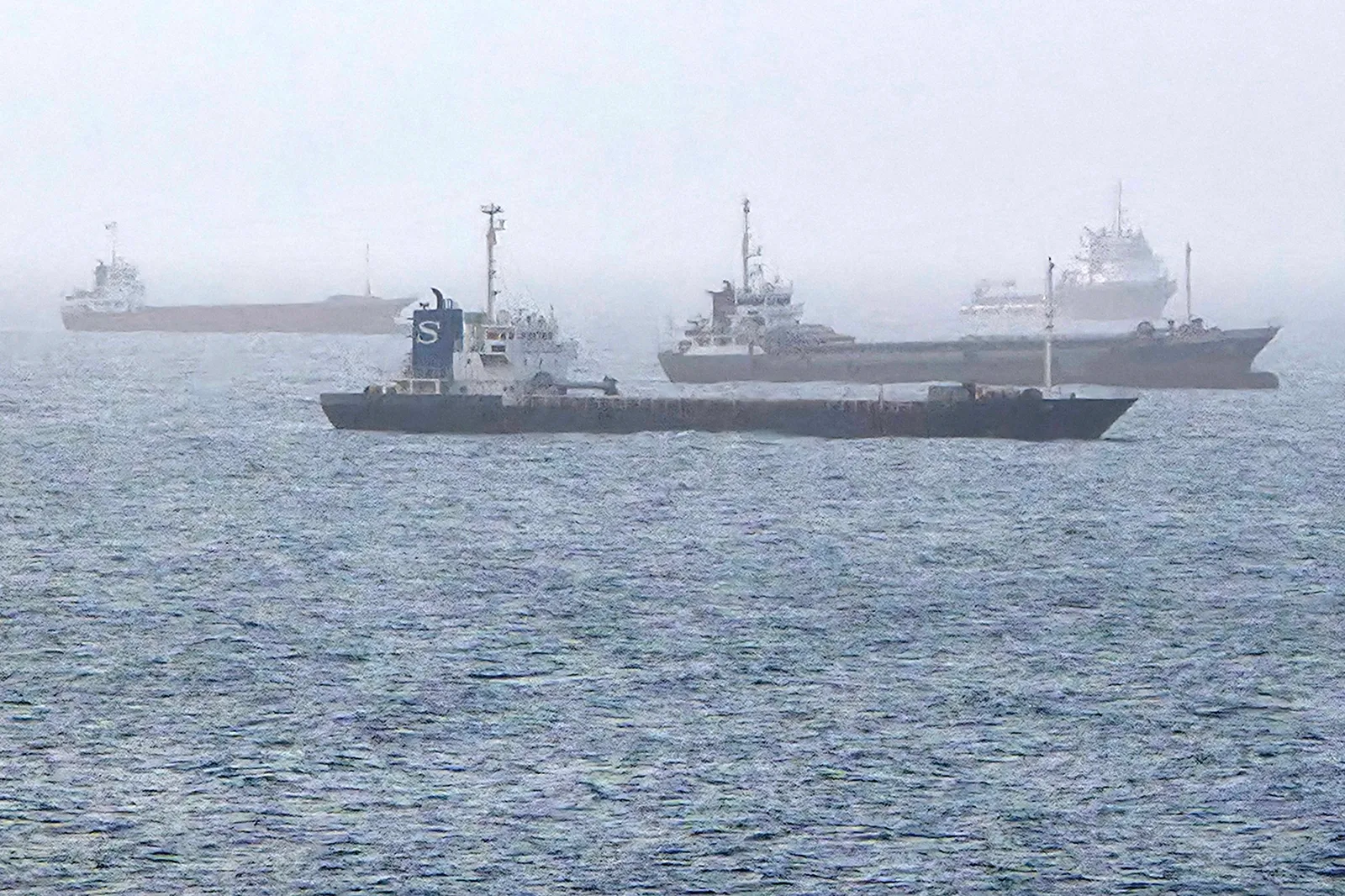
The Strait of Hormuz is one of the world's most strategically significant waterways, carrying roughly one-fifth of global oil shipments under normal conditions.
The route has been at the center of the conflict between Iran, the United States and its allies after Tehran moved to restrict commercial shipping following U.S. and Israeli military operations earlier this year.
On Sunday, Iranian Foreign Minister Abbas Araghchi said an agreement with Oman establishing new shipping routes through the strait was in the "final stages." However, he reiterated that Iran would not fully reopen the waterway unless a broader set of demands is addressed by the United States.
On Monday, Iranian Foreign Ministry spokesman Esmaeil Baghaei said talks with Oman were "progressing smoothly and constructively," adding that discussions have included navigation, maritime services, environmental protection and security arrangements. Baghaei also said such services would normally involve payment.
Separately, Iranian officials have said the conditions include compensation for damage caused during the conflict, the lifting of sanctions and other measures Tehran says are necessary before unrestricted commercial traffic can resume. Mohammad Bagher Zolghadr, secretary of Iran's Supreme National Security Council, said the demands reflected the will of the Iranian people and that Tehran would not back down "either in war or in negotiations."
The developments came just days after Trump expressed confidence that an agreement could soon be reached and suggested substantial progress had been made toward reopening the strait.
Esper Says Tehran Thinks It's Winning
Esper said Iran's latest position should be viewed as a sign of confidence rather than compromise.
The former Pentagon chief highlighted demands that include ending U.S. military operations against Iran and its regional allies, lifting sanctions and ending the U.S. naval blockade. Iran has also called for the withdrawal of American naval and air forces from around the country, compensation for war-related damage and the release of frozen Iranian assets.
"So it's gone beyond the pale," he said.
More importantly, Esper argued, the demands reveal how Iran views its bargaining position.
"But what it tells you is two things," he said. "First of all, they haven't apparently left any room for negotiation."
"Secondly and more importantly, it shows that they believe they have the upper hand, they believe they're winning, and they are emboldened."
Some analysts argue Iran is betting that its leverage over the Strait of Hormuz will force Washington to make concessions.
Joshua Tallis, a former senior U.S. Navy official now serving as director of the Center for Naval Analyses' Ally and Partner Security Affairs program, recently told Newsweek:
"With relatively few and inexpensive weapons, Iranian strikes on commercial shipping create a cascade effect throughout the global trading system as shipping lines, insurance companies, and seafarers reassess the risks of transiting.”
Critics of the emerging Oman proposal have also argued that formalizing Iranian authority over shipping routes in the strait could hand Tehran a significant strategic victory and challenge longstanding norms governing freedom of navigation through the critical waterway.
"These demands they've now raised show that they are emboldened, that they feel confident about their position in the world," Esper said.
On Tuesday, Araghchi struck a similarly defiant tone, telling reporters that Iran had "astonished the whole world" during the conflict and proved that it is "a tough and invincible power." Araghchi also reiterated that the Strait of Hormuz would not reopen until the United States met Tehran's conditions.
Trump Rejects Key Iranian Demand as Talks Continue
Esper's comments underscore a contrast between the Trump administration's public assessment of the situation and the sweeping list of conditions coming from Tehran.
Vice President JD Vance recently argued that Iran is under severe economic pressure and wants the conflict to end, while Trump has repeatedly pointed to progress in discussions involving the strait.
On Monday, Trump pushed back on one of Iran's key demands, rejecting suggestions that Tehran should receive compensation for damage sustained during the recent conflict. In a post on Truth Social, Trump said Iranian representatives had raised the issue despite it never being mentioned during previous negotiations, and argued instead that the United States should seek compensation from Iran for Americans killed or wounded in conflicts involving the country and its proxies.
Trump said he had instructed U.S. negotiators to include the issue in any future talks, writing that he was "likewise demanding compensation from Iran" for victims of attacks linked to the Islamic Republic, including U.S. service members and the families of those killed in the 2000 bombing of the USS Cole. In a follow-up post, he also argued Iran should be held responsible for damage and deaths in Lebanon, Syria, Yemen and Gaza.
Despite the escalating rhetoric, Esper argued that Iran's demands reflect a leadership that feels increasingly confident in its leverage.
Esper acknowledged that Iran is facing significant domestic economic challenges, but said those pressures have not translated into a weaker negotiating posture.
"It's true that they are struggling economically," he said. "They're in the worst crisis they faced as a regime in 47-plus years."
At the same time, Esper argued that Iran's military leadership remains in control and is driving decision-making.
"With the military in charge and at the same time the economy being weakened, I've argued that we should really pursue an economic blockade of the country," he said.
Esper also called for a broader international effort involving U.S. allies in Europe and Asia to increase economic pressure on Tehran.
Regional Attacks Fuel Concerns About Escalation
Esper pointed to recent attacks across the region as evidence that Iran is attempting to expand the conflict.
"We know that the Houthis just this morning attacked a Saudi refinery on the Red Sea," he said. "Yesterday, Iran attacked a UAE ship."
The comments follow reports that Yemen's Iran-backed Houthi movement claimed responsibility for a drone strike on Saudi Arabia's Jazan refinery. Separately, the United Arab Emirates accused Iran of attacking a vessel linked to its state oil company in the Strait of Hormuz.
The incidents have raised fresh concerns about disruptions to global energy supplies and the possibility of a broader regional confrontation.
...
What Happens Next
Attention is now focused on whether Iran and Oman finalize their shipping agreement and whether Tehran's demands leave room for a broader understanding with Washington.
The outcome could help determine when, or whether, commercial traffic through the Strait of Hormuz returns to normal levels.
Any eventual agreement could carry significance beyond the immediate conflict, with analysts arguing that a deal granting Iran a formal role in managing traffic through the strait would strengthen Tehran's regional influence.
Whether that occurs may become clearer as negotiations over one of the world's most vital waterways continue in the days ahead.
View 0 Comments
Submit Correction
View Editorial & AI Guidelines