...

By Ellie Cook
Senior Defense Reporter
0
Share
Newsweek is a Trust Project member
See more of our trusted coverage when you search.Prefer Newsweek on Googleto see more of our trusted coverage when you search.
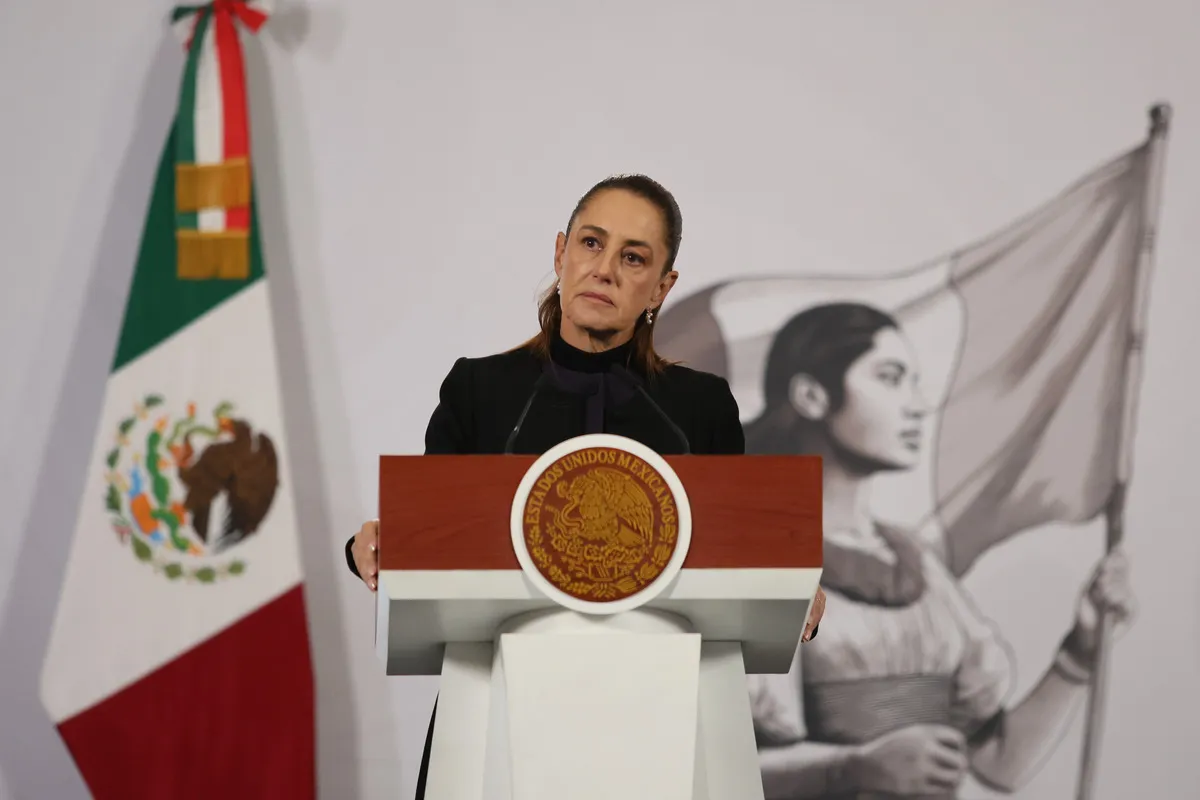
The Mexican government is considering legal action against Elon Musk after the tech billionaire suggested Mexican President Claudia Sheinbaum was connected to drug cartels in the country.
Musk's remark, posted to his X platform, came in the wake of lethal violence in Mexico sparked by the killing of cartel boss Nemesio Oseguera Cervantes, known as El Mencho, by security forces in the western state of Jalisco on Sunday.
Dozens of people were killed in the chaos that then erupted across the country, with armed supporters of the drug kingpin setting fire to cars and establishing road blocks Mexican officials said were mostly cleared by Monday as the violence ebbed.
Read More on World
El Mencho had headed up the notorious and powerful Jalisco New Generation Cartel (JNGC) in the state and was killed in a firefight with Mexican soldiers on Sunday.
...
Musk, reacting to a resurfaced clip of Sheinbaum saying an all-out war against narcotraffickers in Mexico was off the table, posted: "She’s just saying what her cartel bosses tell her to say."
Sheinbaum told reporters on Tuesday government lawyers were looking at possible options and dismissed Musk's comment as "absurd."
"What matters to me is what the people say," Sheinbaum added.
Sheinbaum's government has faced increasing pressure from the U.S. to crack down on cartels trafficking drugs like fentanyl across the border as President Donald Trump and his administration continue their strikes on alleged drug trafficking vessels in the Caribbean and eastern Pacific.
The Mexican president had ruled out a renewed war on drug cartels in November shortly after Carlos Manzo, the mayor of the city of Uruapan in the west-central state of Michoacán, was assassinated in public during local celebrations. Manzo had stood on an anti-corruption ticket and opposed cartels, his death sparking fresh public outrage at the long arm of organized crime.
“Returning to the war against el narco is not an option," Sheinbaum said at the time. "Mexico already did that, and the violence got worse."
Former Mexican President Felipe Calderón launched a war on the cartels from 2006, deploying tens of thousands of soldiers to the streets during his six years in office. The military push against organized crime, particularly in western Mexico, saw a surge in homicide rates and the following governments slowly moved away from armed crackdowns.
Sheinbaum's predecessor, Andrés Manuel López Obrador, popularized what became known as a "hugs, not bullets" approach.
The killing of El Mencho was hailed by U.S. and Mexican officials as a major win for Mexican security forces in an operation bolstered by U.S. intelligence.
An alleged close associate of El Mencho, named as El Tuli, was killed in clashes with Mexican security forces on Monday after attempting to escape by car from a town southwest of Jalisco's state capital, Guadalajara. Mexican authorities said El Tuli was responsible for inciting violence after El Mencho's death and had offered over $1,000 for the killing of law enforcement personnel and soldiers.
A total of 70 people were killed in the military operation against El Mencho and the violence that followed, officials said.
Most flights and daily activity had returned to normal by early Wednesday, although the U.S. embassy in Mexico said some roads in Jalisco had still not fully reopened.
A curfew is still in place for U.S. government personnel in Jalisco but all restrictions have been lifted for embassy and consulate staff in other states.
Some improvised road blocks and burnt-out cars are still being removed by Mexican authorities and not all bus routes were operating as usual, the country's security cabinet said on Tuesday.
View 0 Comments
Submit Correction
View Editorial & AI Guidelines