...

By Melissa Fleur Afshar
Reporter
0
Share
Newsweek is a Trust Project member
See more of our trusted coverage when you search.Prefer Newsweek on Googleto see more of our trusted coverage when you search.
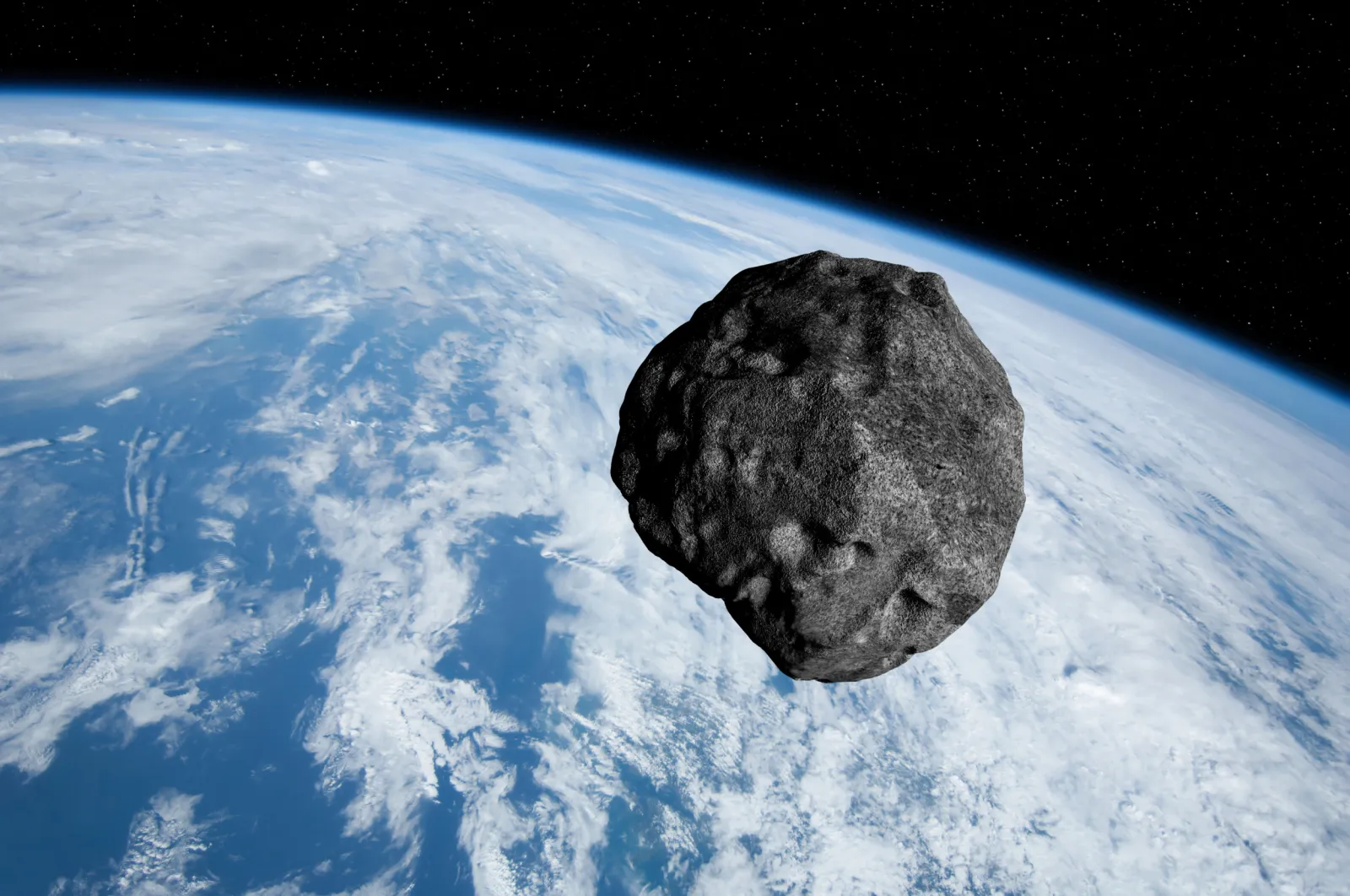
NASA is monitoring a bus-sized asteroid as it makes its closest approach to Earth today, among a group of five space rocks passing the planet this week.
The asteroid, known as "2025 DU25," will zip past at a distance of approximately 692,000 miles, according to NASA's Jet Propulsion Laboratory (JPL).
The asteroid, which is estimated to be around 42 feet across, is the closest among the next five asteroid approaches tracked by NASA's Asteroid Watch Dashboard.
Read More on Science
The other four space rocks due to hurtle past the Earth this week are also significantly larger than "2025 DU25," with the largest being approximately 540 feet.
While none of the approaching asteroids pose a threat to the planet, the space agency remains vigilant in its study of them. Newsweek reached out to NASA for more information outside of normal working hours.
Recent Asteroid Approaches
In February, the space agency had noted that "NASA significantly lowered the risk of near-Earth asteroid 2024 YR4 as an impact threat to Earth for the foreseeable future."
Asteroid "2024 YR4" had become a cause for concern after being shown to have the "highest impact probability NASA has ever recorded for an object of this size or larger," when it was being closely monitored earlier this year.
"2024 YR4" was shown to have an impact probability of 3.1 percent in 2032. The space agency said at the time that "the range of possible locations the asteroid could be on Dec. 22, 2032, has moved farther away from the Earth."
Further studies had brought the chance of Earth impact on December 22, 2032 down to just 0.004 percent.
...
Asteroids are rocky, airless remnants left over from the early formation of the solar system, about 4.6 billion years ago. Most are found in the asteroid belt, a region between the orbits of Mars and Jupiter, but some like "2025 DU25," have orbits that bring them closer to the Earth.
These space rocks vary in size and studying them can provide valuable insights into the history of the solar system, and the potential risks asteroids could pose to the Earth.
NASA's Center for Near-Earth Object Studies (CNEOS), part of JPL, maintains a comprehensive database of asteroids that come within 4.6 million miles of the Earth—a range that is roughly 19.5 times the distance to the Moon.
The agency uses sophisticated telescopes and radar technology to track these objects, keeping their trajectories and potential risks under its watchful eye.
NASA defines any object larger than 150 meters that comes within this threshold as a potentially hazardous object (PHO).
While "2025 DU25" falls below this size classification, the agency still keeps a close eye on smaller asteroids that could one day pose a risk.
Do you have a tip on a science story that Newsweek should be covering? Do you have a question about asteroids? Let us know via science@newsweek.com.
View 0 Comments
Submit Correction
View Editorial & AI Guidelines