...



By Dan Gooding, Billal Rahman, and Amanda Castro
0
Share
Newsweek is a Trust Project member
See more of our trusted coverage when you search.Prefer Newsweek on Googleto see more of our trusted coverage when you search.
The U.S. Department of Homeland Security has proposed raising fees for citizenship applications by about 75 percent, while eliminating fee waivers and reduced rates for most applicants, according to a notice published in the Federal Register.
The rule, published for public comment Monday, marks a major shift in federal policy by aligning naturalization fees with what DHS calls the “full costs” of adjudication, including expanded screening and vetting requirements mandated by recent executive orders.
The changes would affect hundreds of thousands of lawful permanent residents each year, potentially delaying naturalization for lower‑income immigrants and shifting more of USCIS’s operating costs directly onto applicants.
Read More on News
"The proposal represents a significant shift in the cost of becoming a U.S. citizen," Adam Klein, a former Department of Homeland Security official and co-founder of Globali.ai, told Newsweek. "While USCIS is largely a fee-funded agency and must recover its operational costs, substantially increasing naturalization fees risks turning citizenship into a benefit that is less accessible to those of modest means.
"Naturalization has historically been encouraged as a matter of public policy because citizens tend to experience greater economic mobility, civic participation, and long-term integration. Higher fees could undermine those goals."
A DHS official told Newsweek that the changes were part of a periodical adjustment of fees, as the current charge does not cover all the costs of processing applications. They added that naturalization was "the most significant" immigration benefit which can be given to an immigrant.
New Naturalization Costs: How Much Are Fees Increasing?
...
The rule is explicitly designed to shift the system to a “full-cost, beneficiary-pays” model, meaning applicants themselves must cover the full cost of processing their citizenship applications.
N‑400 (citizenship application)
- Paper: $760 → $1,330 (+75 percent)
- Online: $710 → $1,280 (+80 percent)
N‑336 (appeal of denial)
- Paper: $830 → $1,475 (+78 percent)
- Online: $780 → $1,425 (+83 percent)
What Are Forms N‑336 and N‑400 Used For?
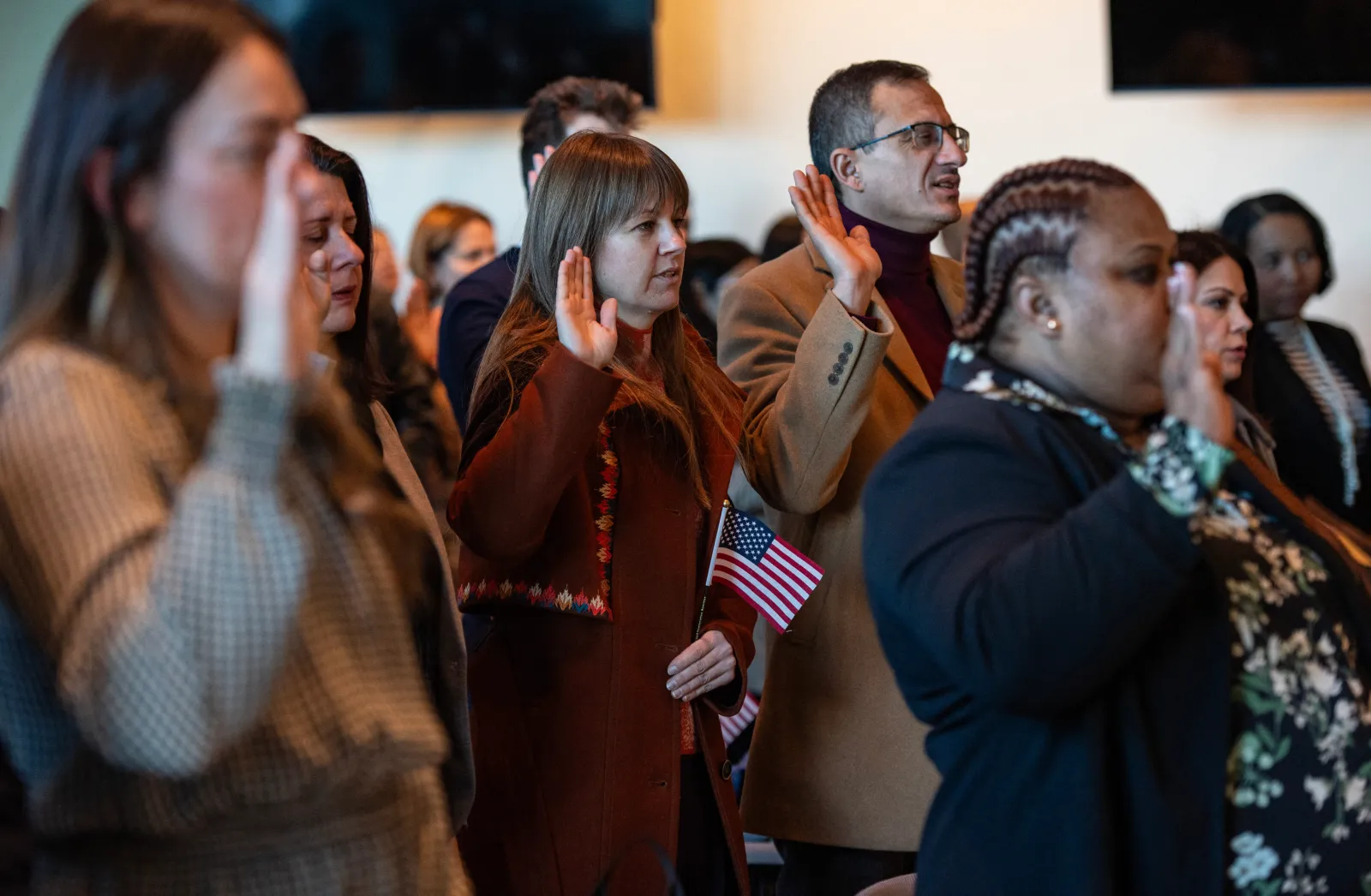
Form N‑400 is the primary application used by lawful permanent residents, otherwise known as green card holders, to apply for U.S. citizenship.
Form N‑336, by contrast, is used by applicants who have been denied naturalization and want to challenge that decision through a formal hearing.
As the rule explains, “the vast majority of aliens apply for naturalization by filing Form N-400,” and those denied may file Form N‑336 “to seek a hearing on the denial of the naturalization application.”
The process itself is resource-intensive, DHS says, noting that naturalization requires extensive background checks, interviews, testing, and reviews of an applicant’s immigration history and character, all of which drive up costs.
Can Fees Be Waived Under the New Proposal?
In short, no. Under the proposed rule, fee waivers and reduced fees would largely disappear.
Currently, applicants can receive fee waivers based on income, public benefits, or financial hardship. A reduced $380 filing fee is also available for some applicants earning up to 400 percent of the federal poverty guidelines.
DHS proposes to eliminate both, stating in its proposal that USCIS would “eliminate eligibility for fee waivers for aliens filing Form N-400 or Form N-336” and also remove “the reduced fee for Form N-400."
The agency argues that this will improve efficiency and reduce misuse of the system, saying that low- or no-fee filing options can encourage ineligible applicants to apply. DHS contends that “free filing or inexpensive fees may encourage aliens who know or suspect that they are ineligible…to apply anyway.”
One exception would remain: Current and former U.S. military service members would continue to be exempt from fees, as required by law.

...
Potential Impact on Applicants
DHS acknowledges the changes could have real-world consequences for many legal permanent residents, potentially delaying their applications. However, the government argues that demand for citizenship is relatively stable and unlikely to fall significantly over time, describing naturalization as an “inelastic” benefit that applicants still pursue despite rising costs.
Critics are likely to counter that eliminating waivers could disproportionately affect low-income immigrants, raising barriers to citizenship.
"USCIS does explain where much of the additional revenue would go—primarily toward enhanced screening, vetting, investigations, and related staffing and infrastructure costs," Klein said. "What is less clear is what additional services applicants themselves will receive in return. For many applicants, the perception may be that they are paying significantly more while receiving less in the way of accessibility and customer service.
"Ultimately, the question is not whether USCIS should recover its costs—it is whether the nation wants to place additional financial barriers in front of lawful permanent residents seeking to become Americans. Citizenship has traditionally been viewed as something to encourage, not discourage."
When Does the Change Take Effect?
The rule has not yet taken effect.
DHS published it as a Notice of Proposed Rulemaking, which means it is open to public comment before any final decision is made.
Comments must be submitted within 60 days of publication in the Federal Register; after that, DHS will review the feedback and may revise the policy before issuing a final rule.
Contact Newsweek editors on this story: Alfred Joyner and Sam Wilson.
View 0 Comments
Submit Correction
View Editorial & AI Guidelines