...

By Hollie Silverman
News Editor
0
Share
Newsweek is a Trust Project member
See more of our trusted coverage when you search.Prefer Newsweek on Googleto see more of our trusted coverage when you search.
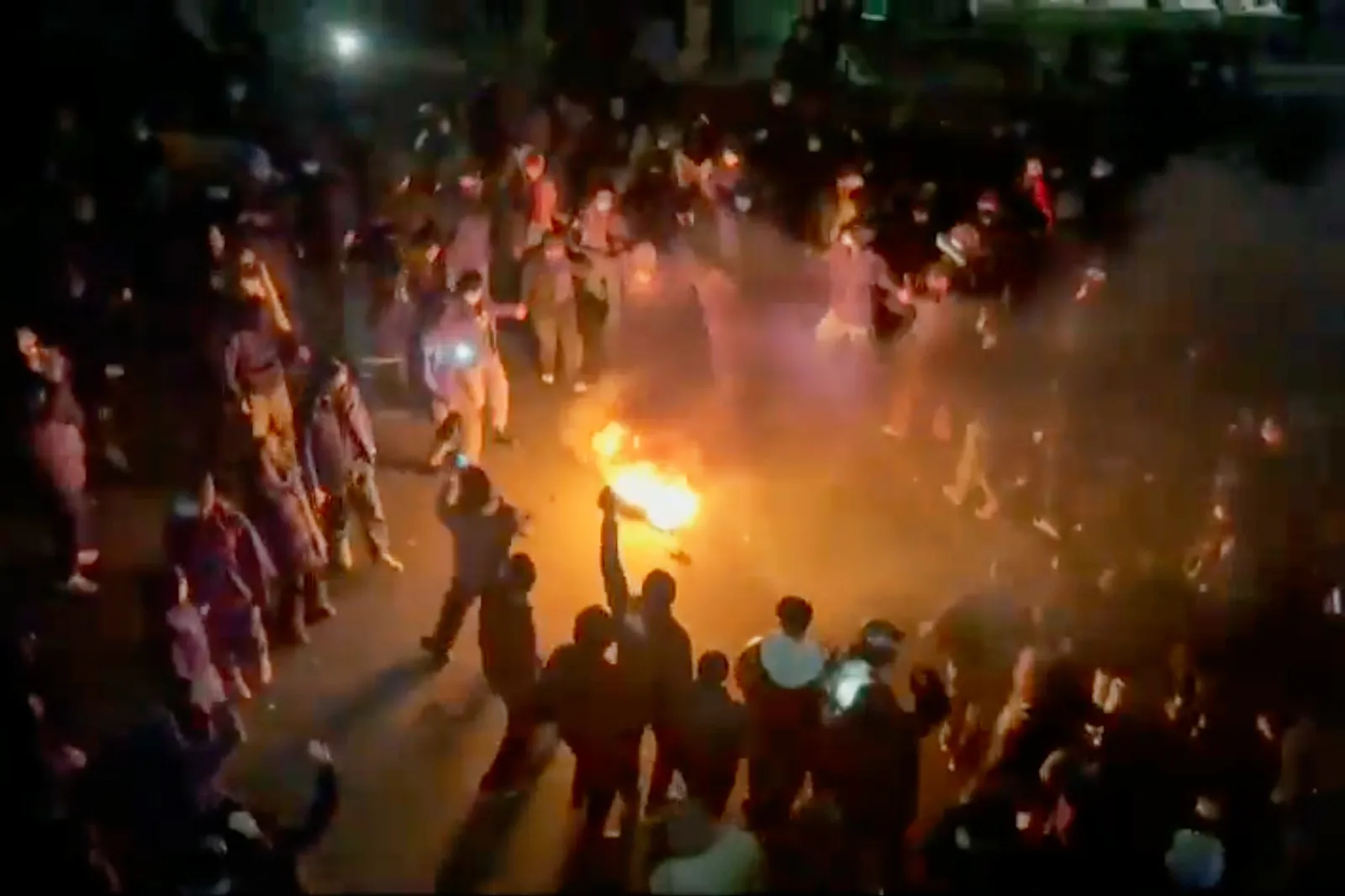
The U.S. State Department and Virtual Embassy Tehran issued a sweeping warning to American citizens in Iran to “leave now,” citing a surge in nationwide protests, violence and internet blackout.
The advisory came Monday as Iran entered its third week of anti-government demonstrations, with hundreds killed and thousands detained, according to rights groups and news reports.
Why It Matters
This urgent call to leave Iran highlights the soaring risks amid ongoing civil unrest in the Middle Eastern nation. The U.S. has no embassy or consulate there.
Read More on News
The Swiss Embassy in Tehran provides emergency services only, with routine consular assistance unavailable. U.S. citizens in detention—especially dual nationals—rarely receive outside aid.
Recent events—including security crackdowns, restrictions on foreign travel and a near-complete telecommunications blackout—have made conditions highly perilous for foreigners in Iran.
...
What To Know
The U.S. State Department has maintained its highest travel advisory—Level 4: Do Not Travel—for Iran, explicitly warning that U.S. citizens risk arbitrary detention, torture and denial of consular support as anti-government protests have spread nationwide.
Last month, the department reported cases in which Americans, especially dual U.S.-Iranian citizens, faced lengthy imprisonment and were denied legal due process. Iranian law does not recognize dual citizenship, treating U.S.-Iranian dual nationals solely as Iranians and excluding them from U.S. or Swiss consular intervention.
Human rights organizations on Sunday reported at least 503 protesters had been killed and nearly 10,700 arrested across the country.
Iranian authorities have imposed a near-total blockade of mobile, landline and internet services, with users losing connectivity for up to four straight days. In parallel, the government has intensified security across urban centers by closing roads, disrupting transit and raiding homes suspected of illicit satellite communications.
Authorities said the blackout would remain in place until they restore what they define as national security, CNN reported.
On Monday, U.S. President Donald Trump announced a 25 percent tariff on nations conducting business with Iran, as the administration weighed possible military options.
The White House said that while private messages from Iranian officials hint at a willingness to negotiate, public rhetoric remained hostile. Iranian officials, including Supreme Leader Ayatollah Ali Khamenei, blamed foreign interference for unrest and threatened retribution against U.S. interests in the region, CNN also reported.
Due to suspended flights and heightened risks, Americans are advised to leave Iran by land—particularly to Armenia or Turkey, where border crossings remained open as of Monday.
Those seeking to cross into Turkmenistan require advance authorization, while entry into Azerbaijan may be restricted, the embassy alert said.
What People Are Saying
Virtual Embassy Tehran, in a security alert: "Protests across Iran are escalating. Increased security measures, road closures, public transportation disruptions, and internet blockages are ongoing. Airlines continue to limit or cancel flights to and from Iran, with several suspending service until Friday, January 16. U.S. citizens should expect continued internet outages, plan alternative means of communication, and, if safe to do so, consider departing Iran by land to Armenia or Türkiye. U.S.-Iranian dual nationals must exit Iran on Iranian passports. The Iranian government does not recognize dual nationality and will treat U.S.-Iranian dual nationals solely as Iranian citizens. U.S. nationals are at significant risk of questioning, arrest, and detention in Iran. Showing a U.S. passport or demonstrating connections to the United States can be reason enough for Iranian authorities to detain someone."
The U.S. State Department, via its website: “Do not travel to Iran due to the risk of terrorism, unrest, kidnapping, arbitrary arrest of U.S. citizens, and wrongful detention. Do not travel to Iran for any reason. U.S. citizens in Iran should leave immediately. There is no U.S. Embassy in Iran."
Trump, in a Truth Social post Monday: "Effective immediately, any Country doing business with the Islamic Republic of Iran will pay a Tariff of 25% on any and all business being done with the United States of America. This Order is final and conclusive. Thank you for your attention to this matter!"
Mohammad Baqer Qalibaf, Iranian parliament speaker, via Press TV Monday, per CNN: “Come and see what will happen to American ships and military bases in the region. Come and burn in the fire of the Iranian nation so severely that it becomes a lasting lesson in history for all oppressive U.S. rulers. Come and find out what will happen to you and to the region."
White House Press Secretary Karoline Leavitt, on Monday: “What you’re hearing publicly from the Iranian regime is quite different from the messages the administration is receiving privately, and I think the president has an interest in exploring those messages."
What Happens Next
U.S. officials continue advising citizens to avoid travel to Iran and to leave the country immediately if present, warning that the risks—arrest, violence or prolonged detention—outweigh all other considerations. Flights remain restricted, making land borders the primary exit option.
The U.S. government is monitoring the developments for any opportunities to assist remaining citizens, but emphasizes that Americans should not rely on U.S. help. Diplomatic engagement between the U.S. and Iran remains strained, as both sides consider their response to the ongoing protests and crackdown.
View 0 Comments
Submit Correction
View Editorial & AI Guidelines