...

By Pandora Dewan
Senior Science Reporter
0
Share
Newsweek is a Trust Project member
See more of our trusted coverage when you search.Prefer Newsweek on Googleto see more of our trusted coverage when you search.
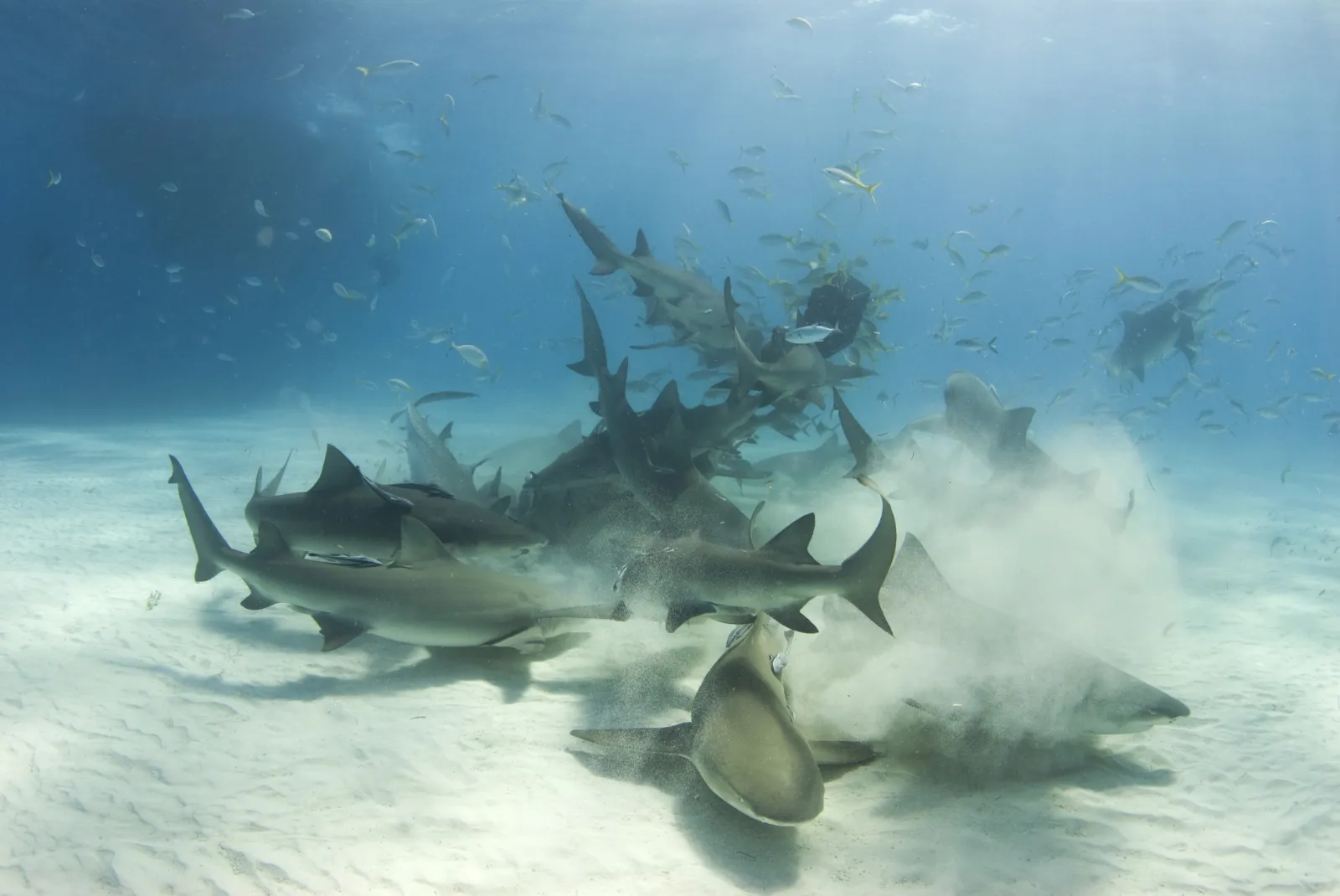
A shark feeding frenzy may be triggered by a mass stranding that saw over 230 pilot whales wash up on a beach in Australia—one of the worst such events in the country's history.
Hundreds of pilot whales were stranded on Ocean Beach in Tasmania on September 21.
Rescuers have successfully returned 30 to the water, but now authorities need to dispose of the remaining carcasses.
Read More
Watch Shark Leap From Water To Catch Fish in Extremely Rare Footage3 min read

Pregnant Orca Dies After Beaching Herself While Hunting3 min read

Hundreds of Whales Beached on Same Date as Record Stranding Two Years Ago3 min read

Depending on the disposal method, beaching events like this can lure hungry sharks to the area. Even a single whale carcass can elicit a shark feeding frenzy.
...
"Generally it is best to dispose of the whales at sea," Olaf Meynecke, research fellow at the Coastal Marine Research Center at Griffith University, Australia, told Newsweek. "When buried on site, the decomposition can take several months and also impact surrounding environments."
Out at sea, the carcasses begin to leak fluids, which attract other animals to the area.
"[Whale] blubber has a high energy content," professor Stephen Kajiura from Florida Atlantic University, told Newsweek. "You need big jaws to chomp through the side of a whale.
"Down there in Tasmania it's pretty cold...This limits the number of shark species that are potentially around. And the few shark species that are around are more likely to come and feed off these big blubbery whales.
"The sharks that you would be concerned about down there would be great white sharks—they do just fine in cold water."

...
Great white sharks have been involved in more attacks on humans than any other shark species, with nearly 300 unprovoked fatal attacks on record.
The impact of this potential feeding frenzy on humans, however, is likely to be relatively small. "The carcasses are disposed of away from the shoreline and sharks are unlikely to come close to shore when a food source is available at sea," said Meynecke.
Even so, Kajiura advised avoiding swimming in the area.
Sharks are not the only animals that will be attracted to these carcasses. "You've got this windfall of nutrients to the area," said Kajiura. "That's going to affect everything, from the microbial communities on up."

...
The causes behind this beaching event are uncertain, but researchers think it might have something to do with climate change. The current La Niña event taking place in the eastern Pacific may have forced the whales to search for food closer to land, which could also explain the sperm whale beaching in Bass Strait a few days before.
"As ocean conditions are changing, offshore species may visit places that they are not used to, leading to higher risks of strandings," said Meynecke.
View 0 Comments
Submit Correction
View Editorial & AI Guidelines