...

By Ryan Chan
China News Reporter
0
Share
Newsweek is a Trust Project member
See more of our trusted coverage when you search.Prefer Newsweek on Googleto see more of our trusted coverage when you search.
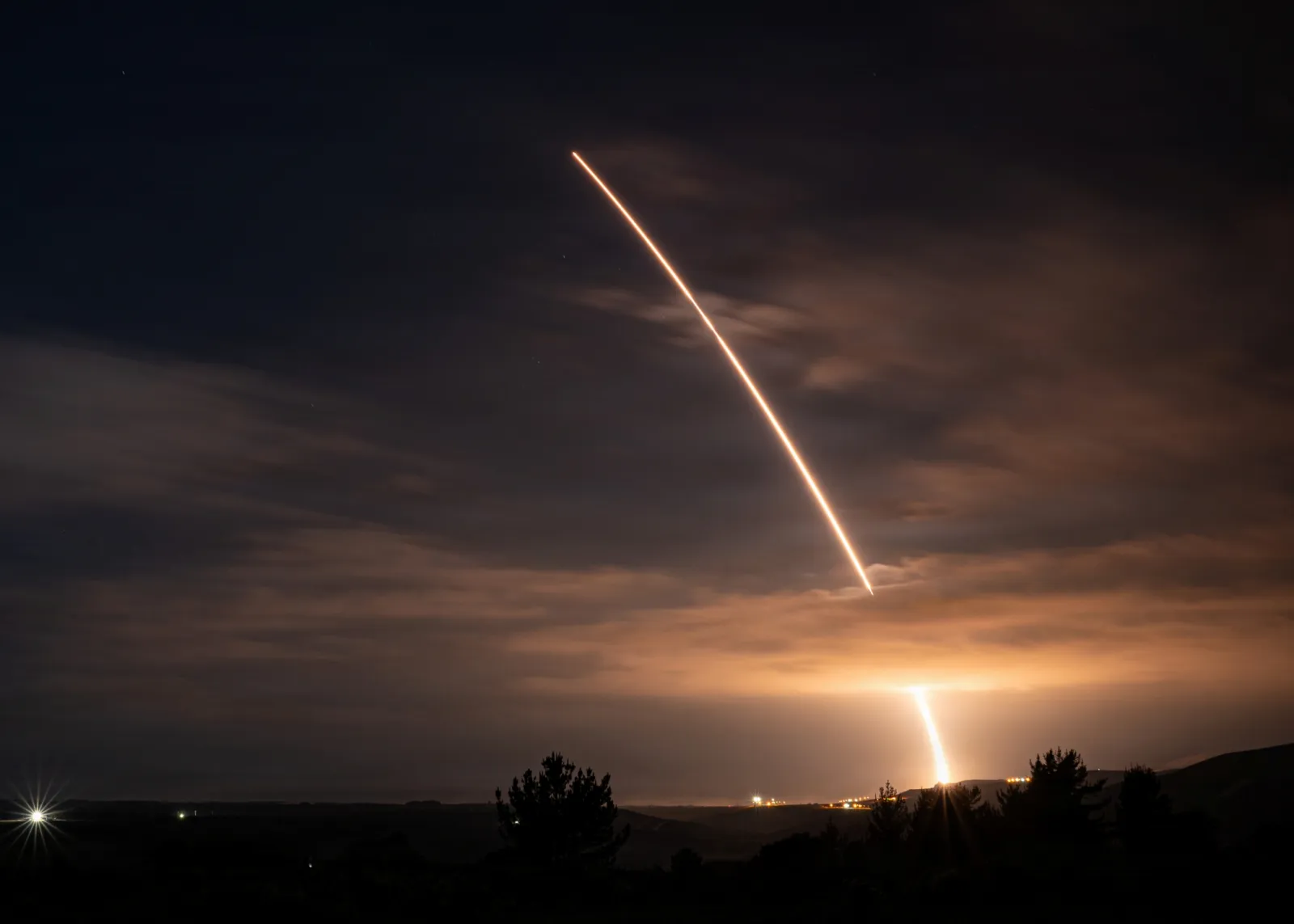
The United States test-fired an unarmed Minuteman III intercontinental ballistic missile (ICBM) on Wednesday, after President Donald Trump ordered nuclear weapons tests.
The test of the Minuteman III missile, which can carry up to three nuclear warheads, validated the reliability, readiness and accuracy of the nation's ICBM fleet, the U.S. military said, adding that the launch was routine and scheduled years in advance.
Why It Matters
Trump announced last week on social media that the process for nuclear weapons tests would begin "immediately," drawing widespread attention in the U.S. and among its nuclear adversaries, Russia and China. Energy Secretary Chris Wright later clarified that the tests would not include actual detonations, as had been carried out in the past.
Read More on World
While the U.S. has observed a moratorium on explosive nuclear testing since 1992, it continues to conduct unarmed test launches of its ICBMs and submarine-launched ballistic missiles (SLBMs) regularly to ensure both forces—along with nuclear-capable bombers, which complete the country's nuclear triad—provide strategic deterrence.
What To Know
The test launch was conducted by the U.S. Air Force Global Strike Command, which oversees ICBMs and nuclear bombers, at Vandenberg Space Force Base in California.
The unarmed missile carried a reentry vehicle—designed to hold a nuclear warhead—that flew about 4,200 miles west across the Pacific Ocean and reached the Ronald Reagan Ballistic Missile Defense Test Site on Kwajalein Atoll in the Marshall Islands.
...
The launch, designated GT 254, was initiated by the Airborne Launch Control System, a backup command and control system for the land-based ICBM force, from aboard a U.S. Navy E-6B aircraft to test the system's effectiveness and continuous availability.
U.S. Air Force Lieutenant Colonel Karrie Wray, commander of the 576th Flight Test Squadron, described GT 254 as a "comprehensive assessment" that ensured the ICBM weapon system's continuing reliability and accuracy by collecting "invaluable" data.
The test comes as the U.S. modernizes its ICBM force by replacing the Minuteman III missile, which has been in service since 1970, with the Sentinel missile. Maintaining the readiness of existing missiles is a top priority until the new missiles are deployed.
According to the Federation of American Scientists' Nuclear Information Project, the U.S. Air Force deploys 400 Minuteman III missiles, each currently armed with one warhead, in silos across Colorado, Montana, Nebraska, North Dakota and Wyoming.
While the Minuteman III force, with a stated range of more than 6,000 miles, is controlled by ground launch centers, it can alternatively be fired through the Airborne Launch Control System aboard the E-6B aircraft if ground launch is unavailable.
As of January 2025, the U.S. nuclear arsenal is estimated to include approximately 3,700 warheads in deployment and reserve, including up to 800 assigned to the ICBM force, of which about half are deployed, the Nuclear Information Project said.
What People Are Saying
General S.L. Davis, commander of the U.S. Air Force Global Strike Command, said in a press release on Wednesday: "As we modernize to the Sentinel weapon system, we must continue to maintain the readiness of the existing Minuteman III fleet. GT 254 helps fulfill that commitment, ensuring its continued accuracy and reliability."
U.S. Air Force Colonel Dustin Harmon, commander of the 377th Test and Evaluation Group, said in a press release on Wednesday: "This test validated the reliability, adaptability, and modularity of the weapon system … Through this comprehensive assessment, conducted by a dedicated team of [Air Force Global Strike Command] Airmen, we ensure the highest standards of integrity and reliability for the Nation's ICBM system."
What Happens Next
The Minuteman III missile test launch comes after Russia tested its nuclear-powered torpedo and cruise missile, and China showcased its newest ICBMs. It remains to be seen whether the U.S. will carry out additional tests to signal its nuclear capabilities.
View 0 Comments
Submit Correction
View Editorial & AI Guidelines