...

By Maria Azzurra Volpe
Reporter
0
Share
Newsweek is a Trust Project member
See more of our trusted coverage when you search.Prefer Newsweek on Googleto see more of our trusted coverage when you search.
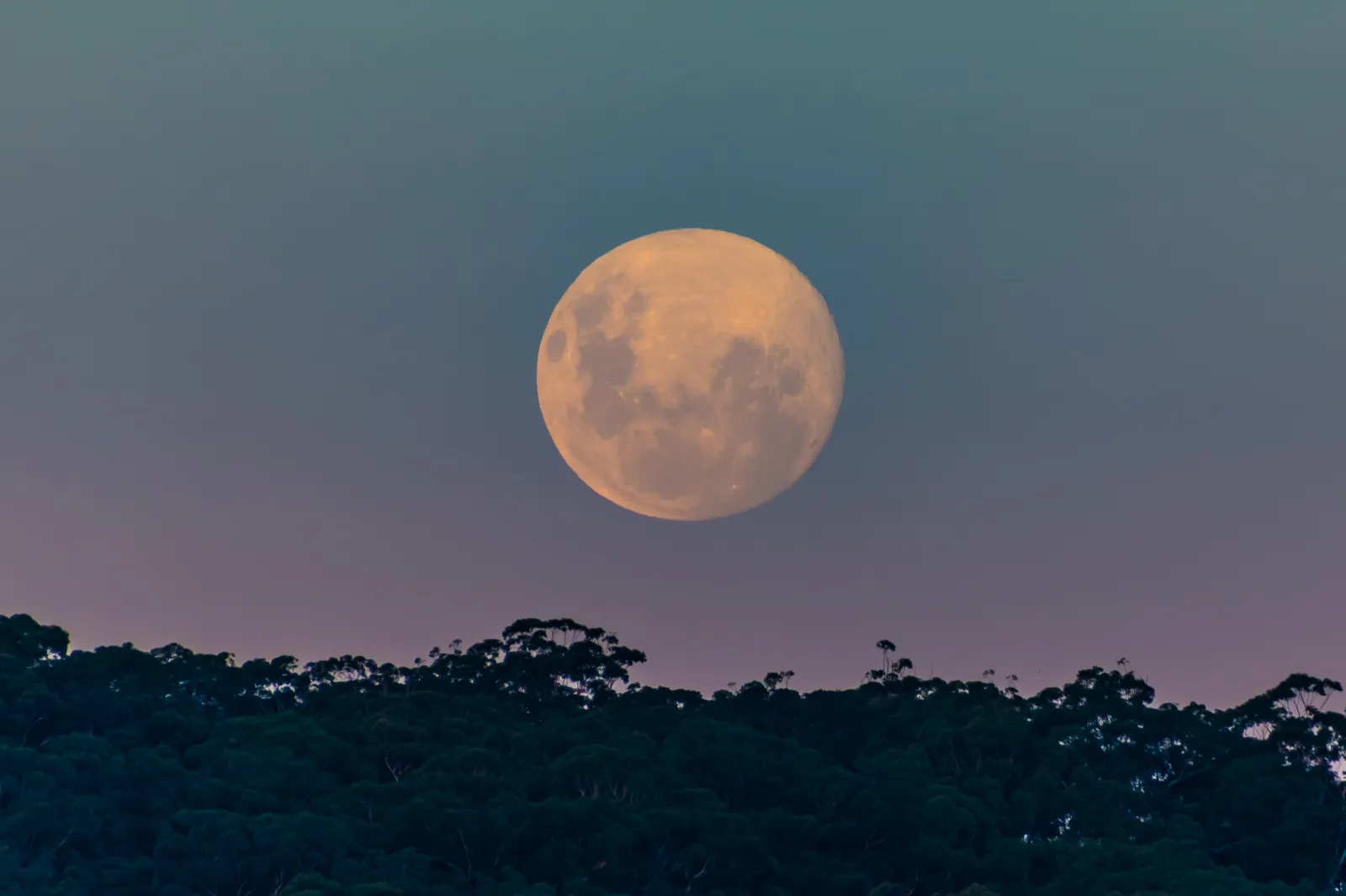
On Wednesday, the night sky will be putting on a dazzling display as April’s Pink Moon rises. Here's how to catch it at its brightest.
Reaching its peak at 10:13 p.m. EDT and 7:13 p.m. PDT on April 1, the Pink Moon, which is the fourth of 13 full moons in 2026, will be best visible just after moon-rise.
Don’t worry if you miss the exact peak time! The moon will still look full and bright the next evening, April 2, giving you plenty of chances to take in the beautiful sight.
Read More
Snow Moon 2026: How To Best See February’s Lunar Show3 min read

Pink Moon Visible During Lyrid Meteor Shower: When, What Exactly Is It?3 min read

US Going Back to the Moon in 2026—Sean Duffy Explains Why 3 min read

...
Where To See the Pink Moon in April
To fully enjoy the Pink Moon, a place with minimal light pollution offers the best visibility. Stargazers are recommended to find an elevated location, ideally an open field or a quiet coastline with a clear view of the horizon.
While the naked eye works for this annual lunar event, binoculars or a small telescope can offer a better view of the satellite's craters.
The exact best time to see the Pink Moon at its brightest varies depending on your location in the world. A moon-rise calculator can be helpful in identifying the best time to witness this phenomenon wherever you are.
In New York, moon-rise on April 1 will be around 7:15 p.m. EDT. In Los Angeles, meanwhile, it will be at 7:13 p.m. PDT.
Origins of the Name
According to the Old Farmer's Almanac, April’s full moon plays a key role in determining the date of Easter. In Christian tradition, it is known as the Lenten Moon if it is the last full moon before the spring equinox, and the Paschal Moon if it is the first Full Moon after it.
The ecclesiastical equinox is fixed on March 21, even though the astronomical equinox can fall on a different date, such as March 20 in 2026. When the full moon occurs after this fixed date, it becomes the Paschal Moon and is used to calculate Easter.
April’s full moon is also commonly called the Pink Moon, though it does not actually appear pink. The name comes from seasonal traditions, particularly the blooming of a North American wildflower known as creeping phlox, or moss pink, which flowers at this time of year.
Rather than describing the moon’s color, the name reflects the natural signs of spring and the changing seasons.
Florida and Georgia May Be In for a Surprise
Around the same time the Pink Moon reaches its peak in the night sky, NASA’s Artemis II mission—its first crewed moon mission in decades—could launch, creating a rare chance to see a rocket heading toward the moon while the full moon itself is rising or at peak brightness.
However, after launch, sightings of Artemis II in the sky will most likely be confined to areas within Florida and parts of southern Georgia, meaning observers outside these regions do not have high chances of seeing it.
How to Photograph the Moon
Photographing the moon can be challenging if you do not have the right equipment. Award-winning Hungarian astro-photographer Rafael Schmall previously told Newsweek that he recommends using DSLR or mirror-less cameras when capturing the moon.
He added that some bridge cameras with powerful zoom lenses are also capable of shooting the rising or setting moon. A light but strong tripod is also necessary.
Do you have a tip on a science story that Newsweek should be covering? Do you have a question about the moon? Let us know via science@newsweek.com.
View 0 Comments
Submit Correction
View Editorial & AI Guidelines