...

By Daniel Orton
News Editor
0
Share
Newsweek is a Trust Project member
See more of our trusted coverage when you search.Prefer Newsweek on Googleto see more of our trusted coverage when you search.
The Vatican has declined to take part in President Donald Trump’s Board of Peace, with its top diplomat saying international crisis management should be handled by the United Nations rather than a U.S.-led body.
Cardinal Pietro Parolin, the Holy See’s secretary of state, told reporters Tuesday that the Vatican would not participate in the initiative, which Trump has said would oversee Gaza’s temporary governance and potentially expand to address other global conflicts.
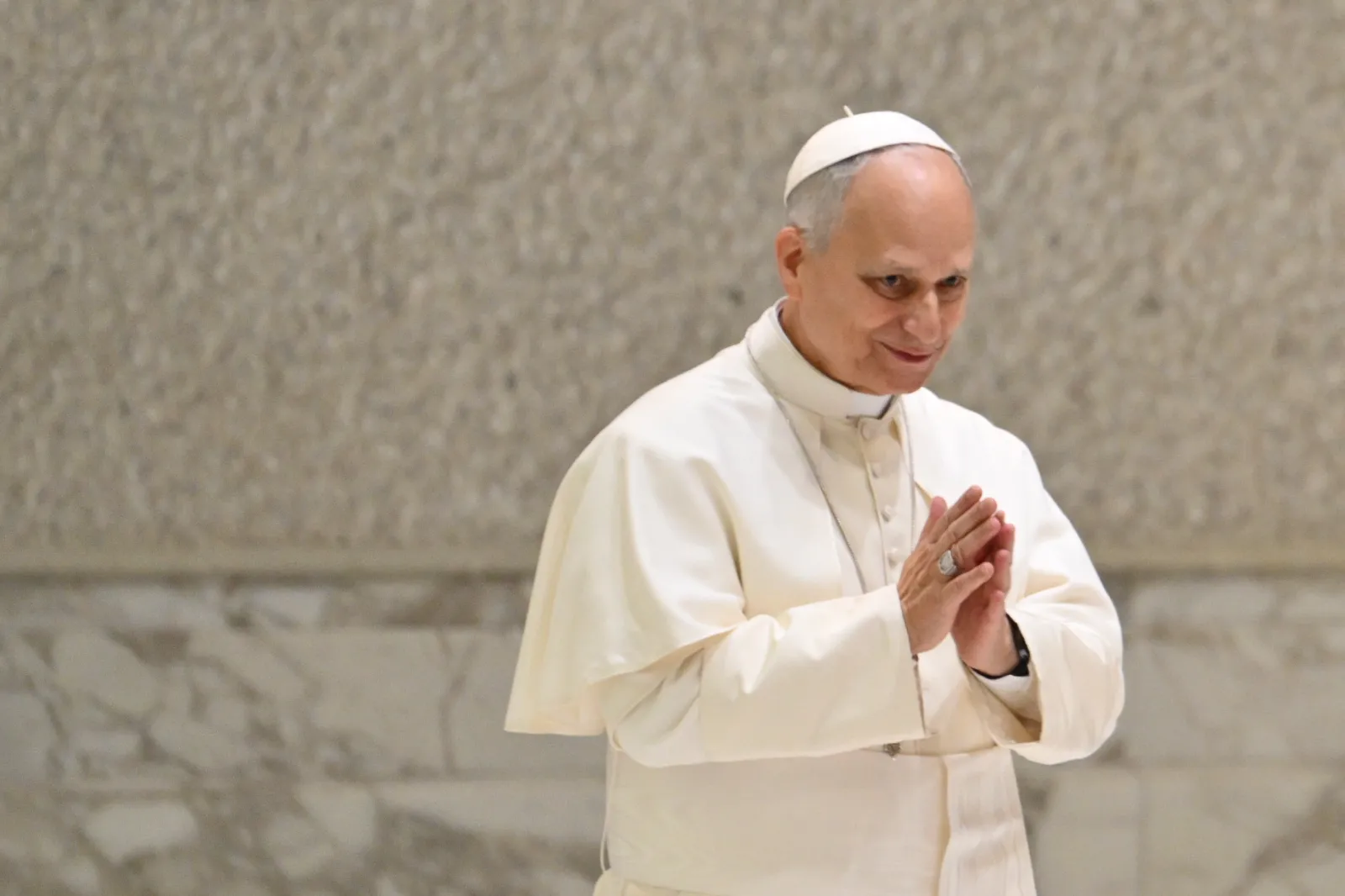
The decision comes despite an invitation extended in January to Pope Leo XIV—the first U.S.-born pontiff and a critic of some Trump policies—and as the board prepares to hold its first meeting in Washington to discuss Gaza’s reconstruction amid ongoing international skepticism about the initiative.
Read More on News
Trump said the Washington meeting would take place February 19 and include details of more than $5 billion in pledges for humanitarian projects in Gaza.
...
Why It Matters
The Holy See’s refusal removes a high-profile moral voice from a U.S.-led body pitched to guide Gaza’s postwar governance, and it underscores ongoing concerns among governments and church officials that such efforts should operate under United Nations leadership.
A number of Western U.S. allies have also declined to join the board, highlighting questions about the initiative’s legitimacy and its relationship to existing international institutions.
What To Know
Parolin said the Holy See "will not participate in the Board of Peace because of its particular nature, which is evidently not that of other States," emphasizing that "at the international level it should above all be the U.N. that manages these crisis situations."
In separate comments, Parolin said there were "points that leave us somewhat perplexed" and "critical points that would need to find explanations," while adding it was important that attempts were being made to respond to the crisis.
Under Trump’s plan that led to a fragile October 2025 ceasefire between Israel and Hamas, the board was intended to supervise Gaza’s temporary governance, with Trump later saying it would expand to address other global conflicts under his chairmanship.
The first meeting was scheduled in Washington, with Italy and the European Union attending as observers and not as members, according to officials.
Trump wrote on Truth Social that member states had pledged more than $5 billion for Gaza humanitarian projects and referenced personnel commitments to an International Stabilization Force and Local Police, without providing operational details.
While roughly 60 countries were invited, a limited number formally joined, with participation concentrated among Middle Eastern states, and several European governments declining to sign on.
A founding executive board listed by the administration included U.S. Secretary of State Marco Rubio, U.S. special envoy Steve Witkoff, Trump's son-in-law Jared Kushner, former U.K. Prime Minister Tony Blair, Apollo Global Management CEO Marc Rowan, World Bank Group President Ajay Banga, and U.S. Deputy National Security Adviser Robert Gabriel Jr.
What People Are Saying
Cardinal Pietro Parolin, the Vatican's secretary of state, told reporters Tuesday: "The Holy See will not participate in the Board of Peace because of its particular nature, which is evidently not that of other State [...] There are points that leave us somewhat perplexed...and some critical points that would need to find explanations [...] One concern is that at the international level it should above all be the U.N. that manages these crisis situations."
U.S. President Donald Trump in a Truth Social post Sunday: "The Board of Peace will prove to be the most consequential International Body in History, and it is my honor to serve as its Chairman."
What Happens Next
The board is set to meet in Washington, where Trump will announce pledges and outline next steps. European governments that have declined membership and others attending as observers will likely evaluate the board’s mandate, governance, and coordination with the U.N. before deciding on deeper involvement.
Update, 02/18/2026, 11:47 a.m. ET: This piece was updated with additional information.
In a polarized era, the center is dismissed as bland. At Newsweek, ours is different: The Courageous Center—it's not "both sides," it's sharp, challenging and alive with ideas. We follow facts, not factions. If that sounds like the kind of journalism you want to see thrive, we need you.
When you become a Newsweek Member, you support a mission to keep the center strong and vibrant. Members enjoy: Ad-free browsing, exclusive content and editor conversations. Help keep the center courageous. Join today.


View 0 Comments
Submit Correction
View Editorial & AI Guidelines