...

By Micah McCartney
Reporter
0
Share
Newsweek is a Trust Project member
See more of our trusted coverage when you search.Prefer Newsweek on Googleto see more of our trusted coverage when you search.
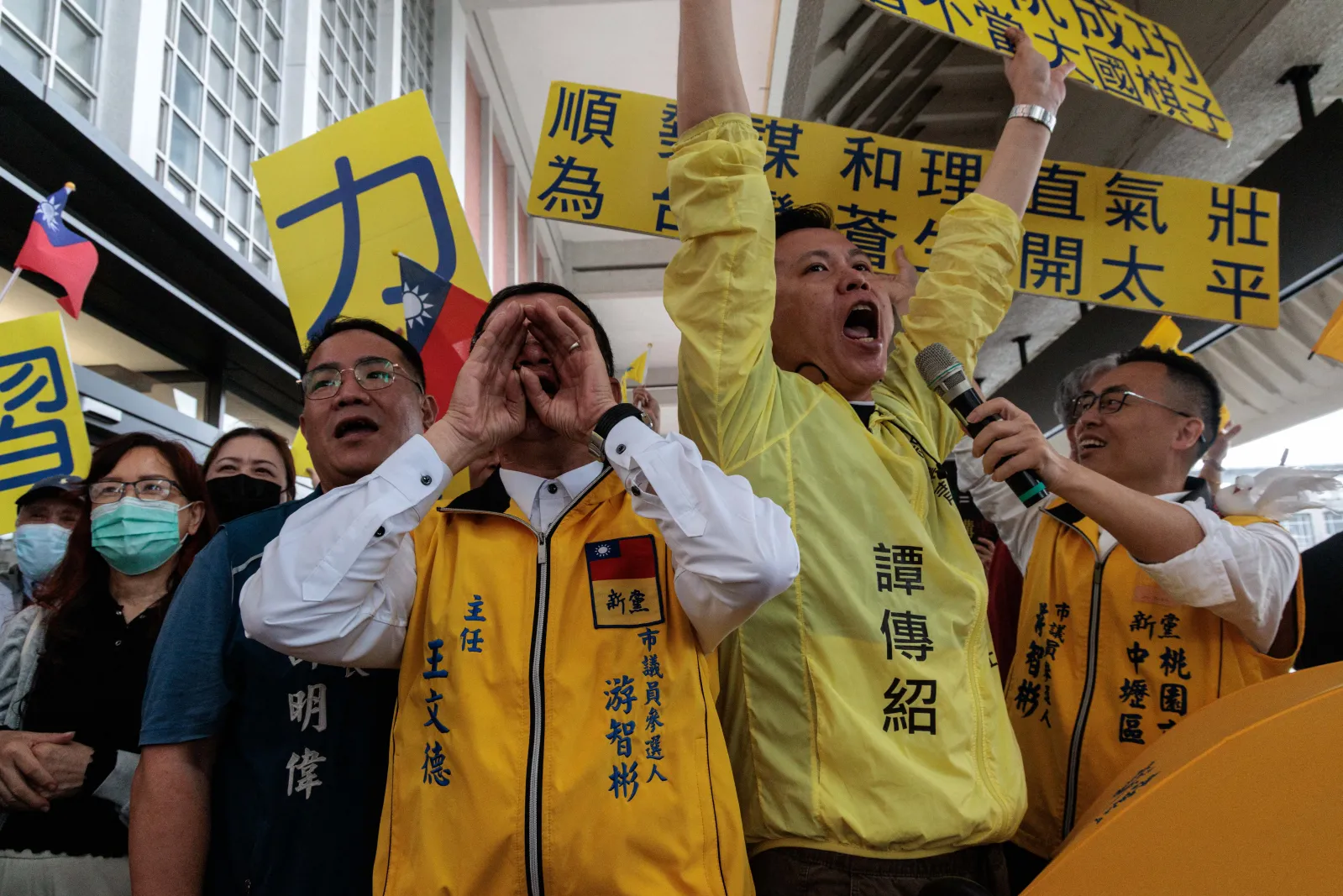
The leader of Taiwan's main opposition party arrived in Shanghai on Tuesday at Beijing's invitation on a five-day trip she says aims to reduce the risk of a devastating conflict.
It is the first trip to China by a major Taiwanese party head in a decade. Cheng Li-wen, who heads the Kuomintang (KMT), or the Chinese Nationalist Party, has dubbed the delegation a "peace mission." Cheng has said she hopes to meet with Chinese President Xi Jinping before she visits the United States, Taiwan's most important supporter and defense supplier.
Relations across the Taiwan Strait have soured since 2016, when the Beijing-skeptic Democratic Progressive Party (DPP) took control of the presidency. China has further stepped up military pressure since the 2024 election of President Lai Ching-te, whom Beijing considers a separatist.
Read More on World
Newsweek reached out to the KMT and Taiwan's de facto embassy in Washington with requests for comment.
...
In a speech soon after her arrival in Shanghai, Cheng emphasized the importance of resuming cross-strait dialogue and said the party was creating a new paradigm.
"Taiwan should not become a pawn of geopolitics, or an abandoned piece," she said. "The key role of stability, the peaceful cross-strait policy advocated by our party, it is correct and effective, the road that is most beneficial to all the people of Taiwan. Between destruction and prosperity, this offers the people of Taiwan a substantive opportunity to choose peace and prosperity. Even though the Chinese Nationalist Party is currently an opposition party in Taiwan, we cannot shirk our responsibility."
The delegation has drawn strong criticism from members of the ruling party, which has accused her of undermining Taiwan's sovereignty and national defense.
DPP legislative caucus secretary-general Chuang Jui-hsiung said that he wished Cheng Li-wen a successful visit but posed three questions on behalf of the Taiwanese people: "Do you accept any political premise from China? Do you accept what the other side said that both sides of the strait belong to one China? Is Taiwan part of the People's Republic of China?"
The Republic of China is Taiwan's official name; China's is the People's Republic of China.
President Lai has for more than a year been locked in a bitter dispute with parliament's KMT-led coalition over defense spending, with orders of big-ticket U.S.-made weapons systems currently in limbo. KMT lawmakers have cited transparency concerns, while the DPP has said the deadlock harms deterrence.
Taiwan's government fled there after losing the mainland to communist forces in 1949, and the island functions as a sovereign state with its own elected officials, military and diplomatic relations. Yet Beijing considers it a rogue province and has not ruled out the use of force to achieve unification.
U.S. intelligence and defense officials have said Xi aims to be at least capable of taking Taiwan by 2027, though they say this does not mean China has decided to launch an invasion that year or any other.
While the United States is Taiwan's main arms supplier, Washington has for decades maintained a policy of "strategic ambiguity," leaving it unclear whether it would come to Taiwan's direct defense in the event of a Chinese attack.
The last KMT leader to visit China was then-chair Hung Hsiu-chu in 2016. The previous year, then-President Ma Ying-jeou made history as the first Taiwanese head of state to meet with Xi when they held talks in Singapore.
View 0 Comments
Submit Correction
View Editorial & AI Guidelines