10
Loading video...

By Jess Thomson
Science Reporter
0
Share
Newsweek is a Trust Project member
See more of our trusted coverage when you search.Prefer Newsweek on Googleto see more of our trusted coverage when you search.
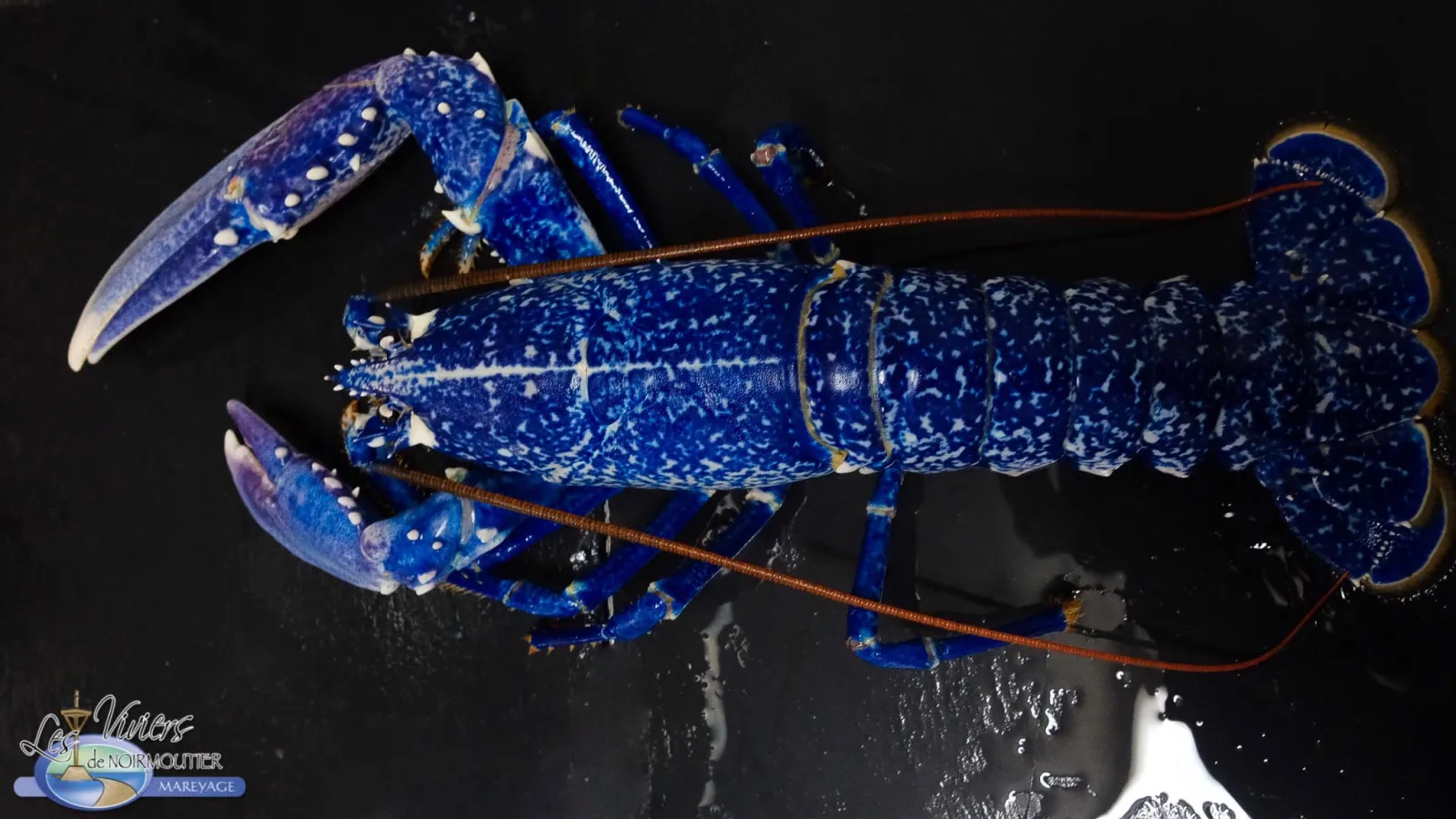
An extremely rare bright blue lobster spotted by a French fish merchant has been saved from the plate thanks to its unique hue.
The lobster was bought by Les Viviers de Noirmoutier, a fish and seafood merchant in Saint-Gilles on the west coast of France, who helped to return the cerulean crustacean to the deep.
"This lobster is rare because of its color, which is due to a genetic mutation. There are 1 case in 1 to 2 million," Les Viviers de Noirmoutier told Newsweek.
Read More
Scientists Link Ultraprocessed Foods to Depression5 min read

Scientists Discover Path to Treating Pain Without Addictive Opioids5 min read

Stone Age Humans Were Smarter Than Previously Thought, Archaeologists Say4 min read

"We did our best to get this beautiful blue lobster (by the way it's a small female), to prevent it from being sold for culinary purposes," Les Viviers de Noirmoutier said in a translated Facebook post, sharing pictures of the rare lobster.
...
Lobsters are usually a darker, dull orangey hue, turning bright orange after they're cooked. However, sometimes genetic mutations in genes that control shell color can cause these crustaceans to have uniquely bright colorations.
The color of a lobster's shell is due to a pigment called astaxanthin, which gives them their red shades, and crustacyanin—comprised of astaxanthin bound to a protein—which gives bluer shades, according to a 2005 New York Times report. Blue lobsters, and other rare color morphs, have an abnormality in how these pigments are produced, giving them their strange colorations.
Blue lobsters are thought to be a one-in-two-million find, while yellow lobsters are one-in-30-million, and a two-toned lobster is one-in-50-million, according to the Lobster Institute at the University of Maine.
This rare and lucky lobster was returned to the sea by the fish merchants, who helped it be dropped off into an area where fishing was restricted.
"We have found, with the help of the tourism office of l'Ile d'Yeu, a forbidden fishing area around the island to release it, so that it can live a long peaceful and happy life, with the assistance of Sebastian from the boat the LNA to escort us to our destination," Les Viviers de Noirmoutier said in the caption.

...
"We couldn't let her go without giving her a nickname though! Please help us by suggesting names in the comments."
Some suggestions from commenters include Smurfette, Azurelle, and Sapphire.

...
Only last year, a fisherman in Maine captured another blue lobster.
"I have never seen a blue lobster this bright of a blue or as pretty. We might see a lobster once in a while with a slight tint of blue on a claw or tail maybe but that's it. This is the first one I have ever seen this blue all over! And such a beautiful blue," Blake Haass, from Mount Desert Island, told Newsweek at the time. "I hope I find another blue lobster again but they are so rare you only hear of one being caught once in a great while across the state of Maine."
"I know a lot of my friends and older fisherman that have been fishing longer than me and they have never caught a blue lobster so I feel lucky to have caught this one for sure!"
Do you have a tip on a science story that Newsweek should be covering? Do you have a question about lobsters? Let us know via science@newsweek.com.
View 0 Comments
Submit Correction
View Editorial & AI Guidelines