10
Loading video...

By Soo Kim
Reporter
0
Share
Newsweek is a Trust Project member
See more of our trusted coverage when you search.Prefer Newsweek on Googleto see more of our trusted coverage when you search.
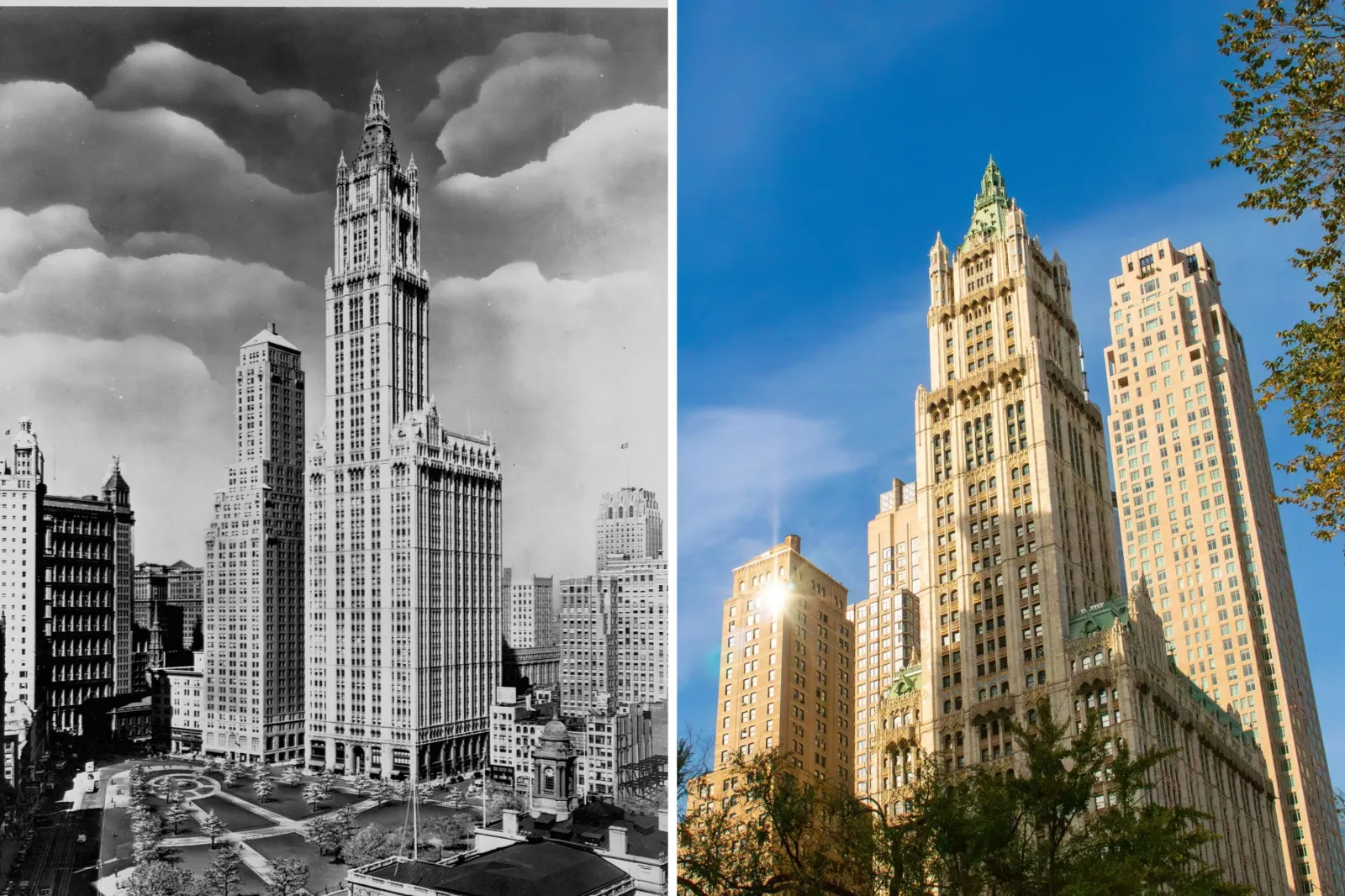
New Yorkers and beyond can now own a rare piece of the city’s history at the top of one of its iconic landmarks—The Woolworth Building.
Designed by Cass Gilbert, the famed American architect who designed the U.S. Supreme Court Building and other civic structures in the country, the Woolworth Building was completed in 1913, the year it was crowned the world’s tallest building at 792 feet tall, according to the Skyscraper Museum.
Set in the Tribeca neighborhood of Lower Manhattan, the Gothic-style skyscraper houses a collection of luxury residences, including Residence 40 (2 Park Place, 40) on its 40th floor, which is now on sale for $18.5 million.
Read More on News
The private office of Frank W. Woolworth, the founder of the Woolworth Company, has been transformed into a sprawling 4-bedroom, full-floor home spanning over 6,000 square feet, offering views from 516 feet above City Hall Park.

...
It is the only residence in the building that features soaring 15-foot ceilings and the building's original polychromatic terra-cotta detailing surrounding the windows, Catherine Juracich from The Corcoran Group, the lead real estate agent behind the listing, told Newsweek.
“What makes Residence 40 truly special is that it's not just a spectacular apartment, it's a piece of New York history,” Juracich said, describing it as a unique home, “with the rare combination of architectural significance, grand scale, and all the modern luxuries.”
Michelle Griffith, a luxury real estate broker at Douglas Elliman who is based in Tribeca, told Newsweek that “few buildings in the world carry more cultural weight and architectural provenance” than the Woolworth Building, with Gilbert considered to be “among the greatest American architects,” she said. “The Woolworth is one of his crowning achievements, along with the U.S. Supreme Court building in Washington and several other high-profile civic commissions.”

...
A Growing Trend in Adaptive Reuse Buildings
The Woolworth Building residence sale follows a rise in major historical building conversions, especially in New York City, such as the Flatiron Building, the iconic 1902 skyscraper that’s being converted into luxury apartments.
Earlier this year, the building was illuminated for the first time in its 124-year history, with a new exterior lighting installation.
More recently, in September, plans for a milestone conversion of Brooklyn's 1909 Hotel Bossert into the Ritz-Carlton Residences, Brooklyn Heights, were unveiled.
The conversions come amid a growing call for the adaptive reuse and improvement of existing buildings, in place of new construction. The trend is accelerating. According to RentCafe, nearly 25,000 apartments were created from repurposed buildings in 2024, a 50 percent increase from the previous year.
In June, Gordon Gill, the architect behind the Jeddah Tower in Saudi Arabia, which will be the world’s tallest building upon completion, told Newsweek that “the greatest opportunity in the U.S. for innovation is in the programming of cities,” noting that the real potential lies in rethinking what we already have. He said maintaining and refreshing existing building stock is vital for sustainability and for avoiding obsolescence.
According to the American Institute of Architects (AIA), nearly half of America’s 125 million buildings are more than 50 years old, highlighting the sheer scale of existing structures that could be reimagined. The conversions also come with environmental benefits. The AIA has found that reusing buildings can avoid 50 to 75 percent of the carbon emissions associated with new construction.
...
Rising Demand for Historic Residences
Juracich has seen a growing demand for homes created with historic landmark properties, with “today's luxury buyers are increasingly looking for homes with character, provenance, and a story behind them,” she said.
Discerning buyers are drawn to structures like the Woolworth Building and Flatiron Building for the level of “detailed craftsmanship, architecture, and authenticity that's incredibly difficult to find,” Juracich said. “They want all the modern luxury conveniences, but they also want something unique and irreplaceable.”

...
Architect Eric Robinson, principal and co-founder of RODE Architects in Boston, agrees that the biggest appeal of these conversions is their connection to history and craftsmanship.
“Older buildings have a connection back to historical detail, materials, and a quality of construction that creates a rich environment and would be difficult or too costly to replicate today," he told Newsweek. "Preserving those elements while adapting a building for modern living creates a place to live with warmth, character, and a distinct sense of place.”
For example, RODE is currently breathing new life into an early-1900s building in Boston that previously housed a stable and blacksmith shop, creating 44 residences. “The opportunity is to carry that history forward while giving the building a new purpose,” Robinson said.

...
Location is another major driver, Robinson noted, with many of these historic structures being set in desirable downtown neighborhoods, close to restaurants, shops, transit, and other amenities.
“There's also a practical opportunity to create housing from buildings that already exist, particularly at a time when building from the ground up has become more challenging,” he added, noting “cities including Boston are encouraging conversions through a variety of measures such as streamlining permitting and tax incentives, helping developers put existing buildings to new use.”
Ultimately, “discerning, tasteful buyers” seek these historic properties for “the singularity and provenance ground-up builds simply don’t offer,” Griffith said.
“These conversions bring together the best of both worlds," she added. "There’s a tremendous amount of prestige. There won’t be another Woolworth Building. More than real estate, these conversions are the chance to own your piece of a legend — and by buying in, you become part of its story.”

...
Do you have an architecture or design-related story to share? Let us know via s.kim@newsweek.com, and your story could be featured by Newsweek.
Contact Newsweek editors on this story: Sirena Bergman and Anthony Murray.
View 0 Comments
Submit Correction
View Editorial & AI Guidelines