...

By Andrew Stanton
Reporter
0
Share
Newsweek is a Trust Project member
See more of our trusted coverage when you search.Prefer Newsweek on Googleto see more of our trusted coverage when you search.
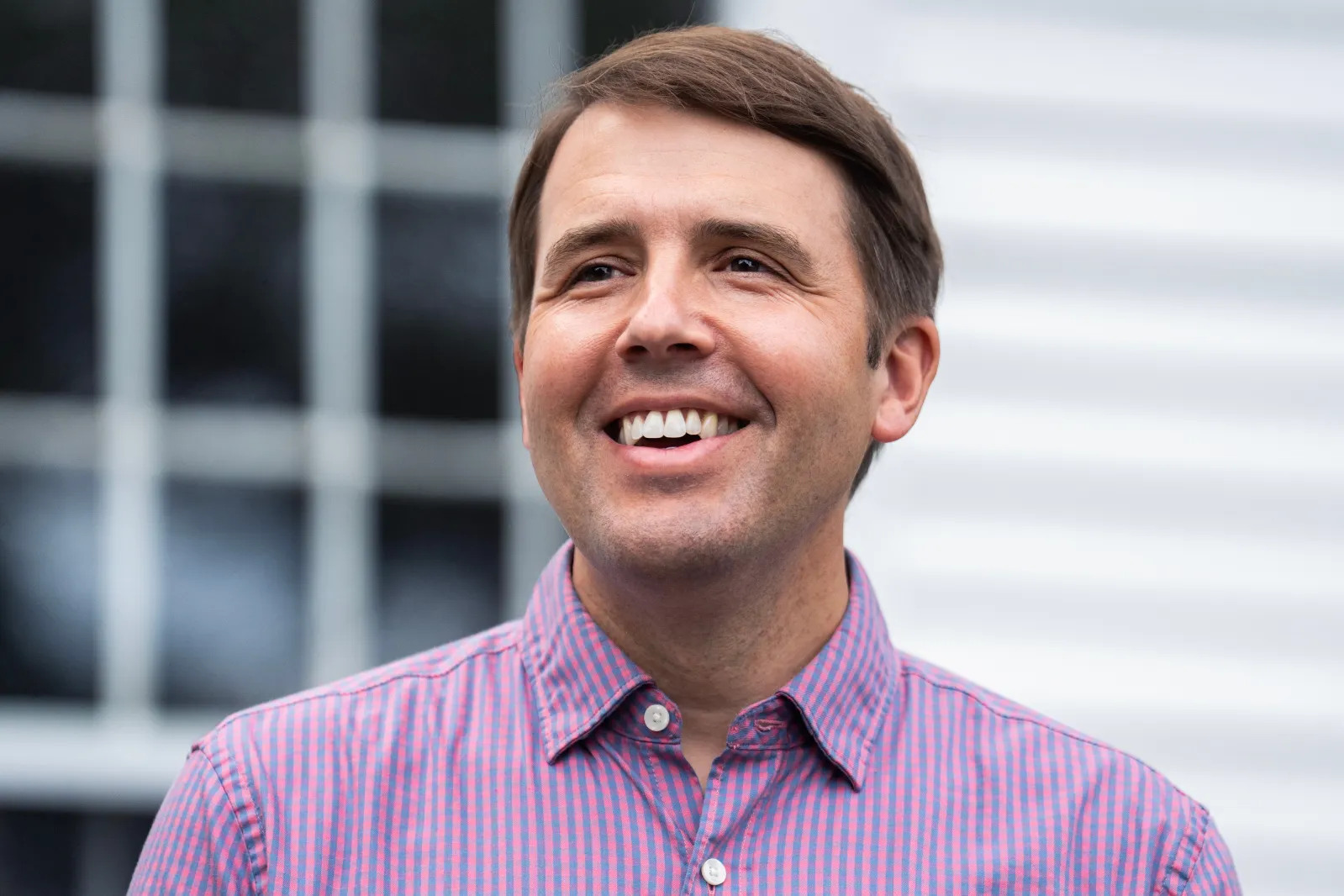
Republicans view the New Hampshire U.S. Senate race as one of their few pickup opportunities in this year's midterm elections, but a poll released this week showed Democratic Representative Chris Pappas with a lead over his two potential Republican rivals.
Democratic Senator Jeanne Shaheen is retiring at the end of her term, opening a seat in a state that former Vice President Kamala Harris won by 3 points in the 2024 presidential election. New Hampshire is often decided by slim margins, though it has backed Democrats in federal races over the past decade.
Historically, the party in the White House loses seats in the midterms, and President Donald Trump’s approval rating has slipped over the past few months amid growing economic concerns around the cost of living and inflation, so Democrats believe they will have an advantage in the state. But Republicans believe its open-seat status and a strong candidate could put the race in play for them.
Read More on Politics
Pappas is viewed as the front-runner to win the Democratic nomination against progressive Karishma Manzur, while former New Hampshire Senator John Sununu has led September 8 primary polls against former Massachusetts Senator Scott Brown for the GOP.
Newsweek reached out to the Brown, Pappas and Sununu campaigns for comment via email.
...
Chris Pappas Leads New Hampshire Senate Poll
The St. Anselm College poll released on Thursday found that Pappas would have an advantage over Brown and Sununu in the general election.
Sununu, who held the Senate seat from 2003 to 2009, faced a closer race against Pappas than Brown, who represented Massachusetts in the Senate from 2010 to 2013, according to the poll.
The poll found Pappas held a 7-point lead over Sununu, 48 percent to 41 percent, and a 12-point lead over Brown, 49 percent to 37 percent.
Pappas also held a large lead over Manzur in the Democratic primary, 59 percent to 28 percent. On the Republican side, Sununu led Brown by 30 points, 54 percent to 24 percent.
Related Story

Trump Ally Demands National Emergency to Place ICE at Midterm Poll Stations
The poll was conducted August 17-18 among 1,411 likely voters, with a margin of error of plus or minus 2.6 percentage points.
A Manzur spokesperson told Newsweek she is “focused on earning every vote between now and Election Day.”
“She’s running to give New Hampshire voters an honest choice: a candidate who will fight to raise the federal minimum wage, guarantee Medicare for All, and get corporate and AIPAC money out of our politics,” the spokesperson said. “There’s a lot of campaign left to run, but voters are responding to Manzur’s message and showing they’re ready for progressive change ending war profiteering and putting people first."
Pappas has represented New Hampshire's 1st Congressional District—viewed as the more competitive of the state's two districts—since 2019. Before entering Congress, he served on the New Hampshire Executive Council. His family owns the Manchester restaurant Puritan Backroom that has been credited with inventing chicken tenders.
What Other Polls Show
Other polling has shown Pappas with a lead, though surveys suggest a very close race.
A Peak Insights poll, sponsored by the National Republican Senatorial Committee, found Pappas up only a single point, 43 percent to 42 percent. It polled 500 likely voters June 24-27 and had a margin of error of plus or minus 4 percentage points.
A University of New Hampshire poll, conducted among 2,232 likely voters June 18-23, showed Pappas up 3 points against Sununu, 47 percent to 44 percent, and 14 points against Brown, 52 percent to 38 percent. It had a margin of error of plus or minus 2.1 percentage points.
Meanwhile, a poll from Emerson College earlier this year showed Pappas up 1 point against Sununu, 45 percent to 44 percent, and 9 points over Brown, 48 percent to 39 percent. It surveyed 1,100 likely voters March 21-23 and had a margin of error of plus or minus 2.9 percentage points.
Forecasters like the Cook Political Report and Sabato’s Crystal Ball view the race as Lean Democratic.
Democrats Favored in Prediction Markets
Prediction markets show Democrats as favorites to hold onto the seat in November. Kalshi gave Democrats an 89 percent chance of winning the race, while Polymarket put Democrats’ chances at 86 percent as of Friday afternoon.
Prediction markets let traders buy and sell contracts tied to political outcomes and current events, aggregating real-money wagers into probability estimates. Prices fluctuate as traders react to polling, fundraising, candidate developments and broader political trends. They measure trader sentiment at a given moment but do not always predict the future accurately.
Republican Kelly Ayotte Favored in Governor's Race
The new St. Anselm College poll showed that Republican Governor Kelly Ayotte has a lead over Democrat Cinde Warmington in the gubernatorial race. Although the state leans Democrat on the federal level, Republicans have been on a winning streak in gubernatorial races, winning every race since 2016.
The poll gave Ayotte an 11-point lead, 49 percent to 38 percent, with 13 percent remaining undecided.

...
Independents Key to New Hampshire
Winning over independents is critical to victory in New Hampshire as undeclared voters make up the largest portion of the electorate. In total, 351,815 New Hampshirites were not registered with either party, according to the New Hampshire secretary of state’s office as of August 3. There were 299,976 registered Republicans and 247,069 registered Democrats.
In 2024, the state narrowly went to Harris, 50.7 percent to 47.9 percent.
But it gave former President Joe Biden a wider victory in 2020, backing him by 7 points. In 2016, it was one of the country's closest races, backing former Secretary of State Hillary Clinton by less than half a percentage point.
New Hampshire’s southern and central region is fairly dense around cities like Manchester, Concord, Portsmouth, Dover and Nashua. Many of those cities are more Democratic, though not always overwhelmingly. Manchester, for instance, backed Harris by less than 8 points in 2024.
But many of the suburbs and smaller towns in southern New Hampshire are more Republican.
College towns like Durham and Keene are also critical for Democrats. The northern part is more rural. Areas in the White Mountains lean Democratic because they depend on tourism, though some other sparsely populated areas are more conservative.
New Hampshire is generally viewed as politically moderate with a libertarian streak, and it has backed politicians from both parties over the years.
Can Democrats Win Senate Control?
New Hampshire is a must-win for Democrats if they want to flip control of the Senate.
Republicans currently hold a 53-47 majority, so Democrats must defend all of their seats and flip four others to take control of the upper chamber of Congress.
Democrats are facing a difficult map, defending seats in two states Trump won in 2024—Georgia and Michigan. In Michigan, polls show a tight race between progressive Democrat Abdul El-Sayed and Republican Mike Rogers, while Democratic Senator Jon Ossoff has built a polling lead over Representative Mike Collins in Georgia.
Maine and North Carolina are viewed as Democrats’ top flip opportunities.
In Maine, which Harris won by about 7 points, longtime GOP Senator Susan Collins is up for reelection. She faces Democrat Troy Jackson, the former Maine Senate president, who won the nomination in a special election after scandal-plagued Graham Platner exited the race after winning the primary. Collins has shown a remarkable ability to win elections in Maine as she seeks her sixth term.
In North Carolina, which Trump won by about 3 points, Democratic former Governor Roy Cooper has built a polling lead against Michael Whatley, the former chair of the Republican National Committee. Republican Senator Thom Tillis is retiring.
But even if Democrats win all of those races, Republicans will still have a 51-49 majority, so Democrats must win at least two seats in states Trump won by double digits in 2024 to take control. Democrats view Alaska, Iowa, Ohio and Texas as being potentially competitive, and polls show close races in those states.
If Republicans pull off a victory in New Hampshire, Democrats will then need to flip three of those seats, a more difficult feat given their conservative leanings.
Prediction markets showed a close race for Senate control on Friday. Republicans’ chances of flipping the Senate stood at 54 percent on Kalshi, while Polymarket showed Democrats with a 51 percent chance of winning a majority.
Contact Newsweek editors on this story: Gabe Whisnant, Dave Siminoff, Sam Wilson.
View 0 Comments
Submit Correction
View Editorial & AI Guidelines