10
Loading video...

By Sam Stevenson
Associate News Editor
0
Share
Newsweek is a Trust Project member
See more of our trusted coverage when you search.Prefer Newsweek on Googleto see more of our trusted coverage when you search.
Sherrod Brown is courting young Ohioans in the Buckeye State’s U.S. Senate race as polls give the Democrat commanding age-group leads but identify weak voting enthusiasm as a potential vulnerability.
Brown holds a narrow statewide advantage over Republican Senator Jon Husted, leaving turnout capable of deciding the November 3 special election.
Younger voters could shape both the contest and which party wins the seat vacated by Vice President JD Vance.
Read More on Politics
Preference alone does not win elections. Brown must convert support from a group with historically lower participation into votes while Husted works to offset the Democrat’s advantage elsewhere.
Newsweek contacted Brown’s campaign for comment via email. Husted’s campaign told Newsweek via email that it did not comment on public polling.
Key Points
- A New York Times/Siena College poll gave Brown a 66 percent to 32 percent lead among likely voters aged 18 to 29.
- Quantus Insights placed the Democrat 20 points ahead among people under 30 but warned that the subgroup was small.
- InsiderAdvantage pollster Matt Towery said in a press release on his polling that younger Brown supporters reported limited enthusiasm about voting.
- National youth participation reached 47 percent in 2024, according to CIRCLE at Tufts University.

...
Brown Takes His Message to Students
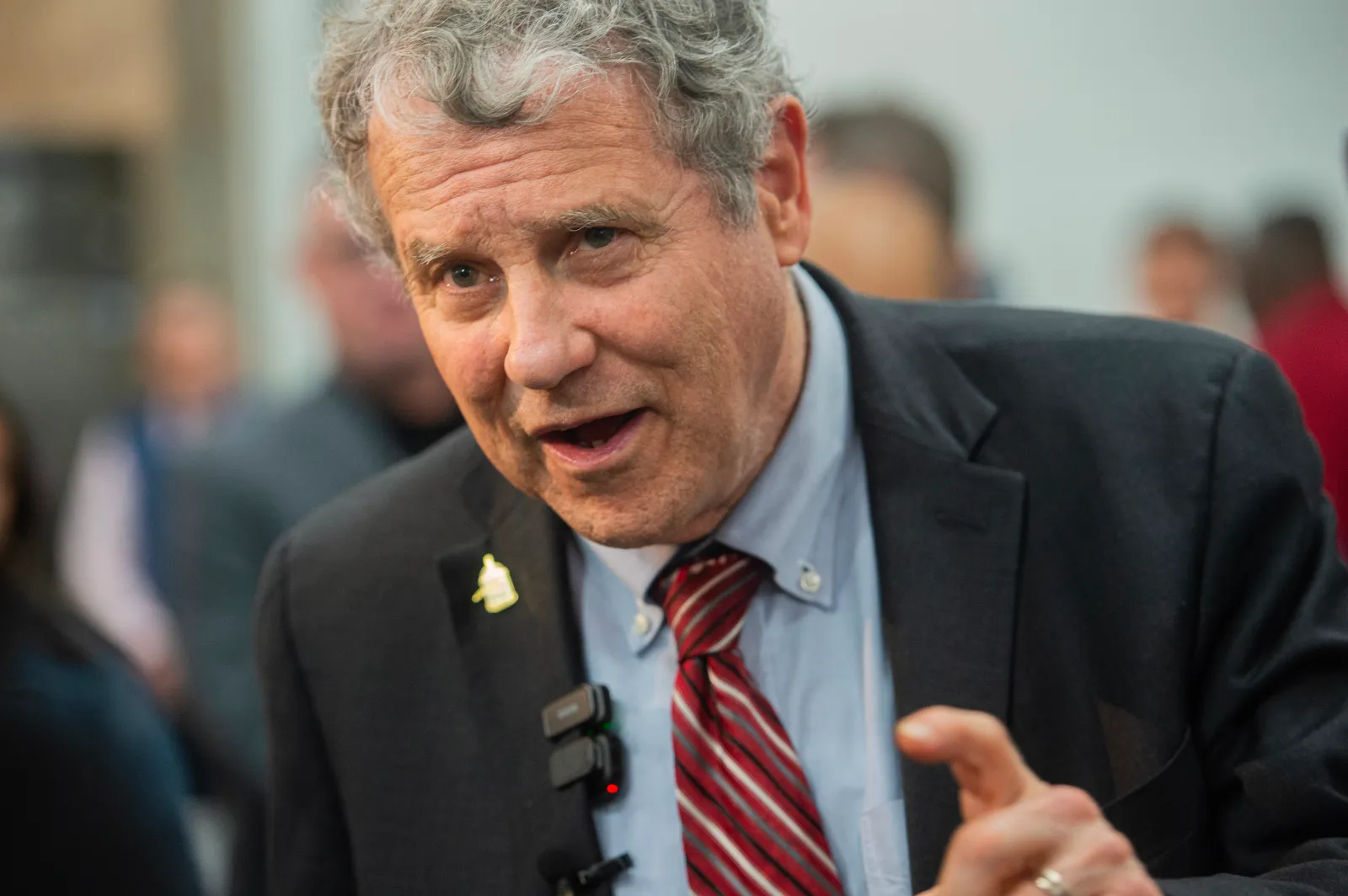
Brown brought his campaign to Ohio State University this week, speaking with more than 60 students about tuition, housing, employment, climate, voting rights and everyday expenses before casting an early ballot in Franklin County.
“I was at Ohio State yesterday. Students are unhappy about costs,” Brown told reporters Tuesday. “When they graduate, they want a chance to get ahead, and they don’t see that opportunity they saw a generation ago.”
The visit demonstrated an active effort to mobilize a constituency that appears receptive to his candidacy.
It also placed affordability at the center of his appeal to people entering adulthood amid concerns about education, work and homeownership.
Related Story
Sherrod Brown’s Polling Lead Defies Ohio’s Republican Shift
Polls Show Generational Divide
The age split is clear in the Times/Siena poll. Brown received 66 percent among likely voters aged 18 to 29, compared with 32 percent for Husted.
Among those aged 30 to 44, the contest stood at 49 percent to 41 percent.
That advantage reversed among respondents aged 45 to 64, who favored Husted by 51 percent to 43 percent.
Voters aged 65 and older divided evenly at 49 percent apiece.
The statewide survey of 616 likely voters was conducted September 22-October 1 and gave Brown a 3-point edge, 49 percent to 46 percent, meaning his lead fell within the Ohio subsample’s margin of error of plus or minus 4.5 percentage points.
Separate research reinforces the pattern.
Rasmussen Reports found Brown ahead 49 percent to 34 percent among Ohio voters under 30.
That survey comprised 1,115 likely voters and was conducted September 22-23, with a plus or minus 3 percentage point margin of error at the 95 percent confidence level.
A Quantus Insights survey produced a 51 percent to 31 percent split within that age group and put Brown up 50 percent to 39 percent among voters aged 30 to 44.
The poll surveyed 695 likely voters September 21-23, with a margin of error of plus or minus 4.2 percentage points.
Its methodology report, however, cautioned that uncertainty was greater within subgroups.

...
Enthusiasm Complicates Picture
Those substantial margins carry a warning.
“As expected, this race is narrowing,” Towery said after his InsiderAdvantage poll put Brown at 44 percent and Husted at 43 percent. “Brown continues to have a lead among younger voters, but they indicate a lack of enthusiasm about voting.”
The pollster said adjusting the survey’s weighting to account for motivation could place Husted ahead.
However, Towery also said that Republican enthusiasm trailed Democratic enthusiasm by 10 points overall, giving the incumbent a mobilization challenge of his own.
Democrats Cannot Take Young Voters for Granted
National history shows why campaigns distinguish between support and participation.
CIRCLE at Tufts University estimated that 47 percent of eligible Americans aged 18 to 29 voted in the 2024 presidential election, down from 50 percent in 2020. Participation fell to 41 percent among 18- and 19-year-olds.
The Democratic advantage within the group also narrowed dramatically.
Young people backed Kamala Harris over President Donald Trump by 51 percent to 47 percent, following a 25-point preference for the Democratic ticket four years earlier. That experience makes Brown’s campus outreach strategically understandable without guaranteeing its effectiveness.
Younger Ohioans may be among Brown's most favorable constituencies, but favorable polling cannot substitute for participation.
Why Ohio Race Matters in 2026 Midterms
Republicans hold a 53-47 Senate majority, counting two independents who caucus with Democrats.
Democrats need a net gain of four seats for outright control because Vance would break a 50-50 tie in Republicans’ favor. That makes Ohio a valuable pickup opportunity among the 22 Republican-held seats being contested in 2026.
A Brown victory would move Democrats a quarter of the way toward the four-seat gain they need; a Husted win would compel them to replace Ohio with another Republican-held target.
Data Centers Become Election Flash Point
AI data centers have become a dividing line in the Ohio race. Brown has attacked Husted’s past support for the industry and argued that large technology companies are driving up utility bills.
Husted, meanwhile, introduced the Ratepayer Protection Act, which sought to prevent consumers from bearing data centers’ infrastructure costs, but it failed in the Senate after Democrats argued that it was too weak.
Newsweek’s AI Policy Scorecard rates Husted as having a “mixed” position on AI, based on lawmakers’ voting records and public positions across areas including regulation, energy, employment, privacy and national security.
Close Race Leaves Little Margin for Error
Recent statewide surveys continue to show a competitive contest.
A CNN/SSRS poll conducted September 29-October 5 placed Brown 6 points ahead, while Marist found an 8-point advantage among registered voters in late September.
The CNN/SSRS survey questioned 760 likely voters September 29-October 5 and had a margin of error of plus or minus 4.5 percentage points. Marist surveyed 1,298 registered voters September 24-27, with a margin of error of plus or minus 3.8 percentage points.
RealClearPolitics classified the race as a toss-up and calculated a 3.2-point average lead for Brown using surveys conducted through October 1.
Differences in samples, methods and margins of error prevent any single result from settling the contest. For Brown, the remaining task is therefore more practical than persuasive: ensuring that the young Ohioans telling pollsters that they prefer him actually cast a ballot.
Contact Newsweek editors on this story: Sam Stevenson and Dave Siminoff.
View 0 Comments
Submit Correction
View Editorial & AI Guidelines