...

By Shane Croucher
Senior Editor
0
Share
Newsweek is a Trust Project member
See more of our trusted coverage when you search.Prefer Newsweek on Googleto see more of our trusted coverage when you search.
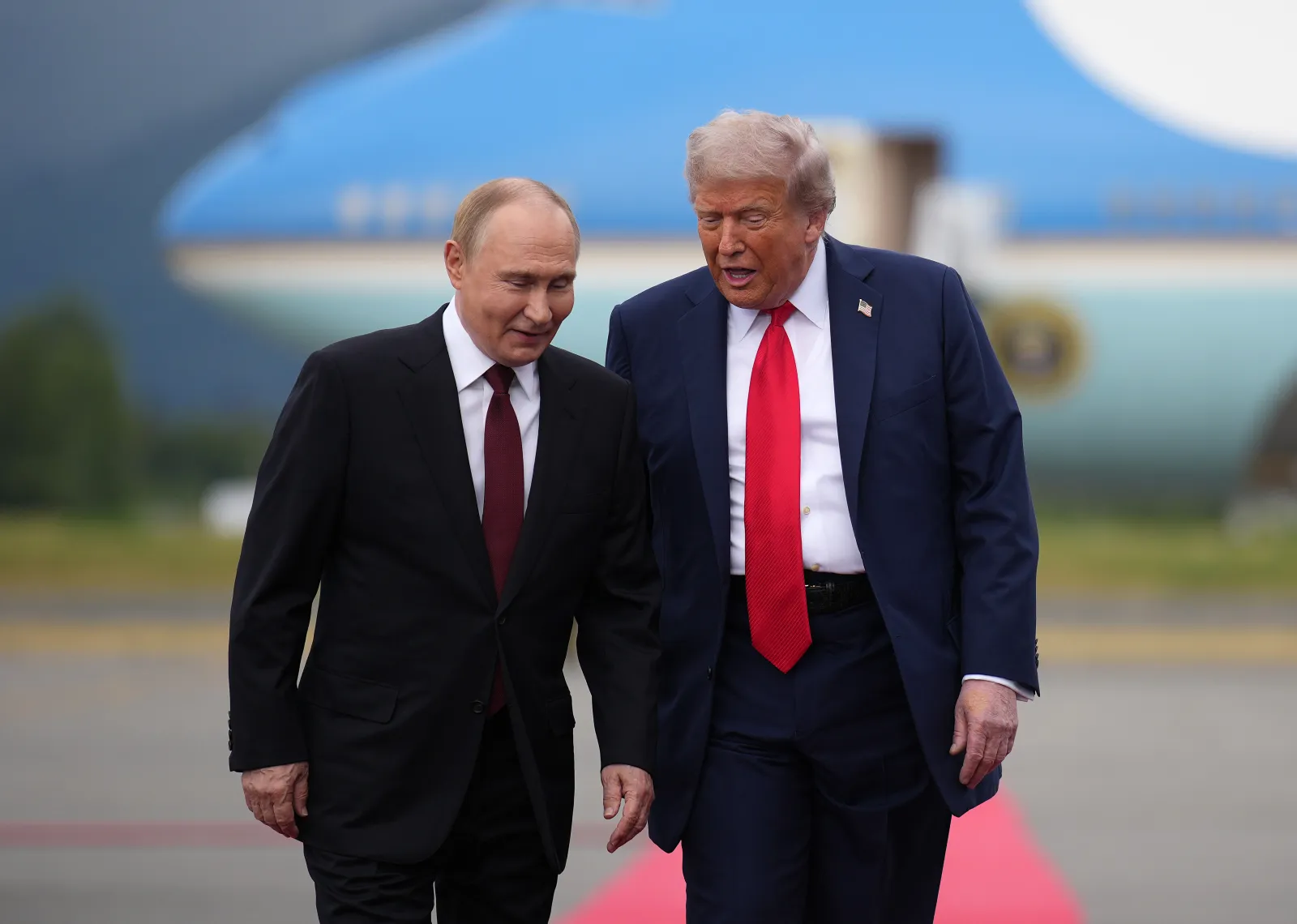
Russian Foreign Minister Sergey Lavrov has accused U.S. President Donald Trump of continuing "Bidenism" and doing the opposite of what he had agreed with Russian President Vladimir Putin at their summit in Anchorage, Alaska, in August 2025.
- Essential Reading: MAGA Is Losing the Culture War in the Strangest Places
- Conventional Wisdom: Super Bowl Edition
Why It Matters
Lavrov cited the extension of punishing U.S. sanctions against Russia initiated under the Joe Biden administration over Moscow's war on Ukraine, including the freezing of its gold and foreign exchange reserves, and the addition of new ones under Trump imposed against Rosneft and Lukoil, Russia's two largest oil producers.
Read More on World
What To Know
"This is pure 'Bidenism,' which Trump and his team reject. Yet they calmly extended the law, and sanctions against Russia continue to operate," Lavrov said in an interview with TV BRICS published on Monday morning, originally in Russian, noting that the Rosneft and Lukoil sanctions came "a couple of weeks after a very good meeting between Putin and Trump".
"So, on the one hand, we are told that the Ukrainian problem must be resolved. In Anchorage, we accepted the U.S. proposal. If approached straightforwardly, in a man-to-man way, they proposed it and we agreed—the problem should have been resolved," Lavrov continued.
Newsweek contacted the U.S. State Department outside of normal business hours for comment.
...
Russia's sanctions-hit war economy, heavily dependent on oil and gas revenues, is juggling soaring inflation and high interest rates. It has been propped up in large part by China's vast oil purchases.
The Trump administration has used a mix of economic potential and financial pressure to coax Russia into making peace in Ukraine, touting possible investments and imposing sanctions. Economic cooperation with the U.S. is one of the carrots dangled before Russia.
Talks are making slow progress, and there appears to be meaningful movement, though the sides are stuck far apart on the central issue of territorial control of Ukraine's eastern Donbas region, which Russia demands that Kyiv fully cede.
Ukraine still controls around a fifth of Donbas, which comprises the Donetsk and Luhansk oblasts, and there is intense fighting. Kyiv is refusing to cede control, citing constitutional and moral objections, though it has floated the idea of a ceasefire to allow for a referendum—a truce Russia rejects, saying Ukrainian forces will use the pause to regroup and rearm.
Lavrov said Moscow did not care what Ukraine or European nations thought about the negotiations, but "what mattered to us was the position of the United States."
"And having accepted their proposals [in Anchorage], we seemed to have fulfilled the task of resolving the Ukrainian issue and moving toward full-scale, broad, mutually beneficial cooperation," Lavrov said.
"But in practice, everything looks the opposite: new sanctions are imposed; a war is waged against tankers, as you know, on the high seas in violation of the Law of the Sea Convention; India and other partners are being pressured to stop buying affordable Russian energy resources."
He said the U.S. has "essentially declared a goal of economic domination" though "a very large number of coercive measures that do not fit within the framework of fair competition," such as tariffs.
In one such example, Trump imposed punitive secondary tariffs on India for its purchases of Russian oil during the Ukraine war. He has since said that India will now purchase oil from Venezuela, depriving Moscow of an important source of demand.
What People Are Saying
Ukrainian President Volodymyr Zelensky said on Sunday that the U.S. has given Ukraine and Russia a June deadline to reach a peace deal. If the June deadline is not met, the Trump administration will likely put pressure on both sides, he added.
“The Americans are proposing the parties end the war by the beginning of this summer and will probably put pressure on the parties precisely according to this schedule,” Zelensky said.
“And they say that they want to do everything by June. And they will do everything to end the war. And they want a clear schedule of all events.”
He said the U.S. proposed holding the next round of trilateral talks next week in their country for the first time, likely in Miami. “We confirmed our participation,” he added.
This article includes reporting by The Associated Press.
In a polarized era, the center is dismissed as bland. At Newsweek, ours is different: The Courageous Center—it's not "both sides," it's sharp, challenging and alive with ideas. We follow facts, not factions. If that sounds like the kind of journalism you want to see thrive, we need you.
When you become a Newsweek Member, you support a mission to keep the center strong and vibrant. Members enjoy: Ad-free browsing, exclusive content and editor conversations. Help keep the center courageous. Join today.


View 0 Comments
Submit Correction
View Editorial & AI Guidelines