...

By Alice Gibbs
Senior Reporter
0
Share
Newsweek is a Trust Project member
See more of our trusted coverage when you search.Prefer Newsweek on Googleto see more of our trusted coverage when you search.
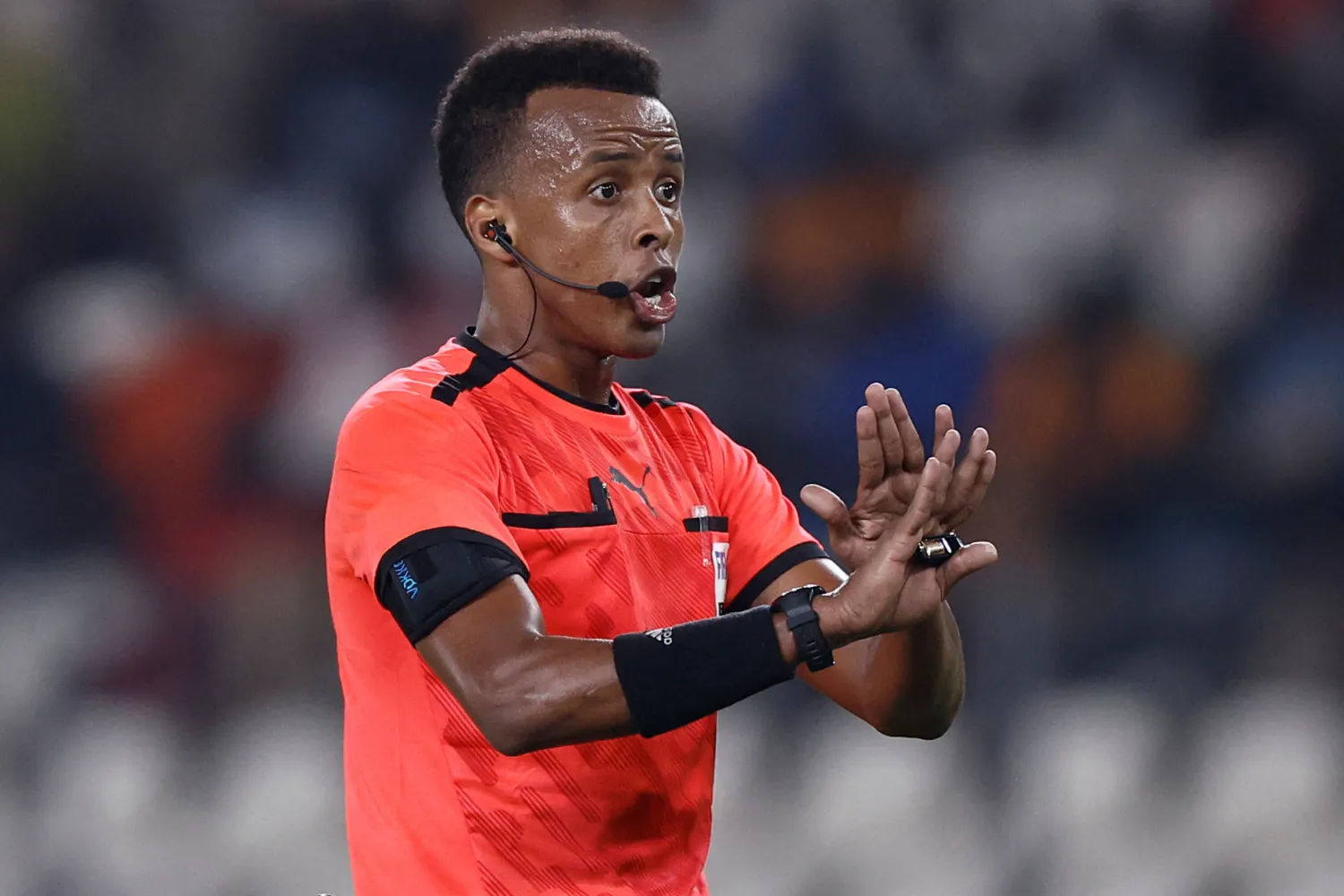
Canadian officials have said a World Cup referee denied entry to the United States would be welcome to officiate matches north of the border—but under FIFA’s tournament structure, that offer is unlikely to change anything.
Following backlash over Somali referee Omar Abdulkadir Artan being refused entry to the U.S., political leaders in British Columbia and Toronto publicly signaled he could still work matches in Canada. But the way the 2026 World Cup is organized means referees cannot simply operate independently in one host country.
Backlash to Entry Block
Artan, 34, would have been the first Somali to ever referee at a World Cup. Before leaving home, Artan told the BBC: “Every referee's ambition is to go to the World Cup. When you are selected, you feel that all your hard work was worth it. It was a moment where everything came into focus. Years of effort finally made sense.”
Read More
German World Cup Tourist on Road Trip Through America Is Taking US by Storm5 min read

Man Paid $1,400 for World Cup Tickets—Then FIFA ‘Killed the Dream’3 min read

ICE, Bag Searches and Denied Visas—How World Cup Teams Have Been Welcomed6 min read

But despite traveling on a diplomatic passport facilitated by the Somali Embassy in Nairobi, U.S. immigration authorities at Miami International Airport declared him inadmissible.
A spokesperson for the U.S. Customs and Border Protection told Newsweek: "On June 6, a Somali national arrived at Miami International Airport from Istanbul International Airport. During processing, the traveler underwent additional inspection, a routine part of CBP’s inspection process when officers need to verify information or determine admissibility. Following inspection, the traveler, a referee for the FIFA World Cup, was determined to be inadmissible due to vetting concerns and was denied entry."
The president of Somalia, Mohamed Farmaajo, said in a statement on X on Tuesday: "I had a phone call with the Somali international referee, Omar Artan, who is unable to participate in officiating at the 2026 FIFA World Cup, and I shared with him our feelings regarding the challenge he has faced. Omar is a symbol of our people and country's great potential."
ESPN has since reported that a United States official, speaking on the condition of anonymity, said that Artan was refused admission due to "association with suspected members of terror organizations," though this has not been formally confirmed by CBP. Newsweek reached out to CBP via email for clarification.
But since Artan was denied entry to the U.S., Toronto Mayor Olivia Chow said in a statement: “Denying entry to Omar Artan, who has earned his place on the world stage through hard work and perseverance, is not right.
“Toronto believes in fairness, inclusion, and giving talent the opportunity to shine. He would be welcome to referee here in our city. I will be writing to FIFA to let them know he is welcome to referee here.”
Meanwhile, Premier of British Columbia David Eby wrote on X: "Mr. Artan would be welcomed and celebrated in British Columbia for what he’s overcome and where he is today. Let’s have him referee in Vancouver."
Referees Must Report to Miami Before the Tournament
While the sentiment from Canadian politicians has gained attention, it is unlikely to make a difference for Artan on this occasion. This is because FIFA requires all match officials to take part in a centralized preparation phase in the United States ahead of the competition.
The governing body has said referees are expected to “arrive in Miami on 31 May," where they undergo training, assessment and tactical preparation before matches begin.
That preparation does not end once the tournament starts. FIFA says referees will train daily throughout the competition, remaining part of a coordinated program overseen by its refereeing team.
FIFA requires all match officials to take part in a centralized preparation phase in the United States ahead of the competition.

...
Why Artan Cannot Just Officiate in Canada or Mexico
Although the 2026 World Cup spans the U.S., Canada and Mexico, referees are not assigned separately by country.
Instead, FIFA operates a single global officiating group—referred to as “Team One”—which is managed centrally and deployed across all 104 matches.
FIFA has directly linked participation in the tournament to access to this centralized system.
In confirming Artan’s removal, FIFA said in a statement: “FIFA can confirm that match official Omar Abdulkadir Artan will be unable to train and officiate at the FIFA World Cup 2026 after he was denied entry into the United States.”
Without entry to the United States, a referee cannot complete the required preparation or be integrated into the assignment system—even if matches are being played in Canada or Mexico.
Newsweek reached out to FIFA via email for comment.
...
Wider Visa Tensions
Artan is not the only person involved in the World Cup to be caught up in issues with entry to the U.S., Iraqi forward Aymen Hussein was detained for several hours after arriving at Chicago O’Hare Airport before being allowed into the country, while the Iraq team’s photographer Talal Salah, was detained for more than 10 hours before being denied entry altogether.
Meanwhile members of the Iran national team have faced strict travel constraints, with reporting indicating that players may be required in some cases to enter the United States only for matches and leave shortly afterwards, rather than remain in the country between fixtures.
View 0 Comments
Submit Correction
View Editorial & AI Guidelines