...

By Jesus Mesa
Reporter
0
Share
Newsweek is a Trust Project member
See more of our trusted coverage when you search.Prefer Newsweek on Googleto see more of our trusted coverage when you search.
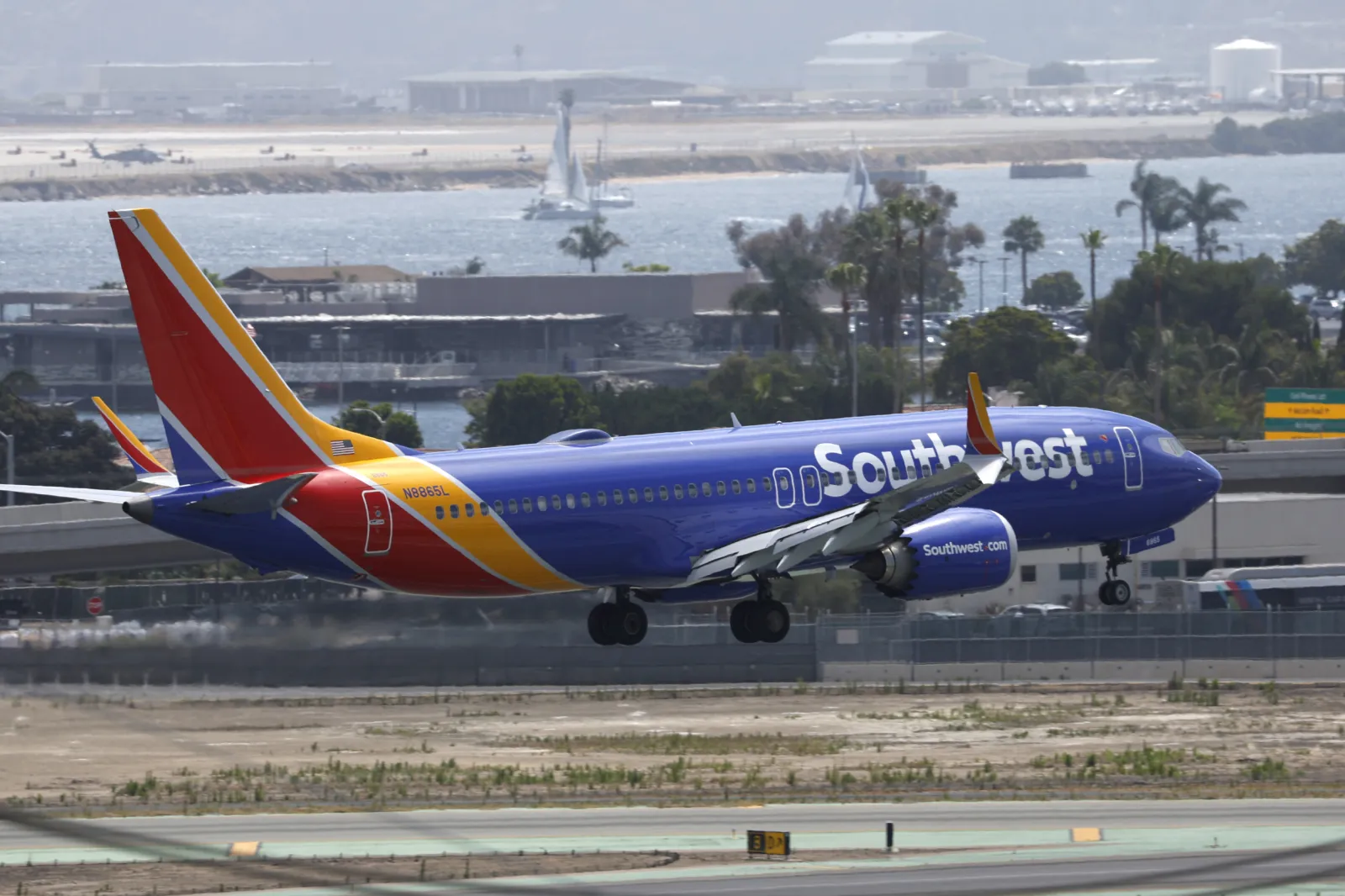
A Southwest Airlines jetliner that experienced an unusual "Dutch roll" in flight this May was not suffering from a malfunction of the aircraft, a Boeing 737 MAX, but was instead damaged by severe weather while parked, U.S. safety investigators said Tuesday.
The aircraft had undergone regular maintenance two days before, but an inspection after the flight revealed substantial damage to the tail, particularly around the rudder system and the standby Power Control Unit (PCU).
"The examination revealed damage to the vertical stabilizer trailing edge ribs above and below the standby rudder PCU. The damage to the stabilizer ribs adversely affects the structural strength of the fitting," according to the National Transportation Safety Board's (NTSB) preliminary report on the incident.
Read More on U.S.
...
The NTSB believes that the severe weather the plane endured while parked at New Orleans' Louis Armstrong International Airport contributed to the damage. The storm included gusts up to 84 mph and heavy rainfall, potentially causing the rudder to slam back and forth, leading to structural damage.
More From Newsweek Vault: Southwest Rapid Rewards® Priority Credit Card Review
John Cox, a former airline pilot and now a safety consultant, told the Associated Press that the NTSB report indicates that the plane was most likely damaged during the storm. He said the near hurricane-force winds could have caused the rudder on the parked jet to slam back and forth.
Cox said there was "absolutely no way in the world" the Dutch roll itself caused such severe internal damage, nor does he think it was related to the maintenance work. "I do not see this as a Max issue. I do not see this right now as a Boeing 737 issue," he said. "I see this as a one-off."
According to the NTSB's report, the flight crew noticed the rudder pedals moving during the oscillations known a Dutch roll, a swaying, rhythmic combination of movements that can feel terrifying to unsuspecting passengers on board.
More From Newsweek Vault: How to Choose a Travel Credit Card
"The flight crew discussed the event and noted that they felt the rudder pedals move during the oscillations. They deduced that the oscillations were not caused by the turbulence, as the rudder pedals should not move with the yaw damper system, but rather by the airplane," the report said.
While at 34,000 feet, the year-old 737 Max 8 experienced the issue, which involves "tail-wagging" and the aircraft rocking side-to-side. The movements continued even after descending to 32,000 feet. The plane managed to land safely in Oakland, and 175 passengers and six crew members arrived without incident.
The Dutch roll, which has caused fatal plane crashes in the past, would likely have been stomach-turning for those passengers and crew, as it causes the aircraft to roll in one direction and yaw in another.
The deadliest single-aircraft crash in history — the 1985 crash of Japan Air Flight 123, a Boeing 747 — was preceded by a Dutch roll. More than 500 people died in that accident.
Do you have a story Newsweek should be covering? Do you have any questions about this story? Contact LiveNews@newsweek.com
View 0 Comments
Submit Correction
View Editorial & AI Guidelines