...

By Ian Randall
Deputy Science Editor
0
Share
Newsweek is a Trust Project member
See more of our trusted coverage when you search.Prefer Newsweek on Googleto see more of our trusted coverage when you search.
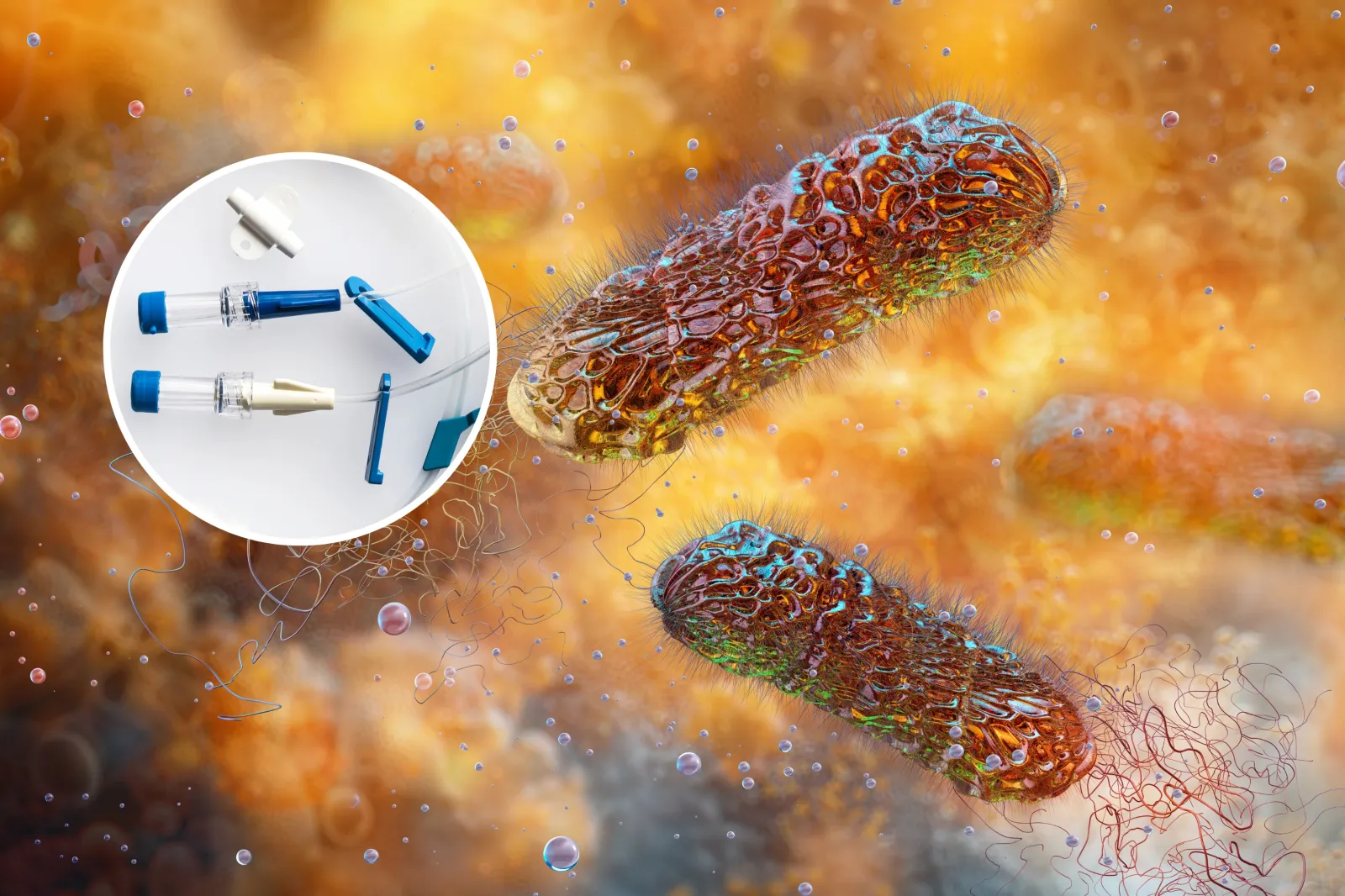
A potentially deadly hospital superbug is able to feast on and break down medical-grade plastics—including those used to make implants, sutures and wound dressings.
This is the conclusion of a study by researchers from Brunel University of London, England, who warn that this trick could allow the bacteria, Pseudomonas aeruginosa, to survive longer both within patients and on surfaces around hospital wards.
The common hospital-acquired, antibiotic-resistant bacterial infection is known to cause infections in the blood, lungs and urinary tract after surgery. While symptoms can vary depending on the site of infection, they can include pus discharge, aches, cough, fever, tiredness, confusion and shock.
Read More
Ozempic May Lower Risk of Alzheimer’s and Dementia4 min read

Trendy Ice Baths Change Your Body’s Cells, Physiologists Reveal3 min read

Measles May Make Comeback as US ‘on the Precipice of Disaster’7 min read

Notably, the bacteria is known as a major cause of catheter-related urinary tract infections (UTIs) and ventilator-associated pneumonia—both of which are associated with plastic-based medical equipment.
The findings challenge the long-held assumption that pathogens are unable to degrade medical plastics, say the researchers.
"Plastic is everywhere in modern medicine—and it turns out some pathogens have adapted to degrade it," said paper author and biomedical researcher professor Ronan McCarthy. He added: "We need to understand the impact this has on patient safety."
...
In their study, McCarthy and colleagues isolated an enzyme known as Pap1 from a strain of Pseudomonas aeruginosa that was originally sampled from a patient's wound.
In lab tests, the enzyme degraded 78 percent of a sample of polycaprolactone (PCL) within just seven days. PCL is a plastic commonly used in drug-delivery patches, stents, surgical mesh, sutures and wound dressings.
This capacity, the team says, allows the bacteria to consume PCL as its sole source of carbon.
Moreover, the researchers found that Pseudomonas aeruginosa can use broken-down plastic fragments to form tougher biofilms—coatings of protective slime that can increase antibiotic resistance and make infections harder to treat.
With signs of similar enzymes seen in other pathogens, the team fears that other medical-grade plastics may also be vulnerable to becoming a bacterial feast—including such commonly used materials as polyethylene terephthalate (PET) and polyurethane (PUR).
These compounds are used, for example, to make bone scaffolds, breast implants, bandages, catheters, dental implants and wound dressings.
McCarthy said the findings mean that we need to reconsider how pathogens such as Pseudomonas aeruginosa exist in hospital environments.
"Plastics, including plastic surfaces, could potentially be food for these bacteria. Pathogens with this ability could survive for long in the hospital environment," McCarthy added.
"It also means that any medical device or treatment that contains plastic could be susceptible to degradation by bacteria."
Further studies will be needed, the researcher added, to determine how many pathogenic bacterial species use plastic-degrading enzymes, as well as what impacts such might have on their virulence.
Going forward, McCarthy concluded, we may need to switch to using different, harder-to-digest plastics in medical applications, alongside factoring in the possibility of plastic-degrading enzymes playing a role in unexplained, long-lasting outbreaks.
Do you have a tip on a health story that Newsweek should be covering? Do you have a question about superbugs? Let us know via science@newsweek.com.
Reference
Howard, S. A., Dios, R. de, Maslova, E., Myridakis, A., Miller, T. H., & McCarthy, R. R. (2025). Pseudomonas aeruginosa clinical isolates can encode plastic-degrading enzymes that allow survival on plastic and augment biofilm formation. Cell Reports. https://doi.org/10.1016/j.celrep.2025.115650
View 0 Comments
Submit Correction
View Editorial & AI Guidelines