
...

By Gabe Whisnant
News Editor
0
Share
Newsweek is a Trust Project member
See more of our trusted coverage when you search.Prefer Newsweek on Googleto see more of our trusted coverage when you search.
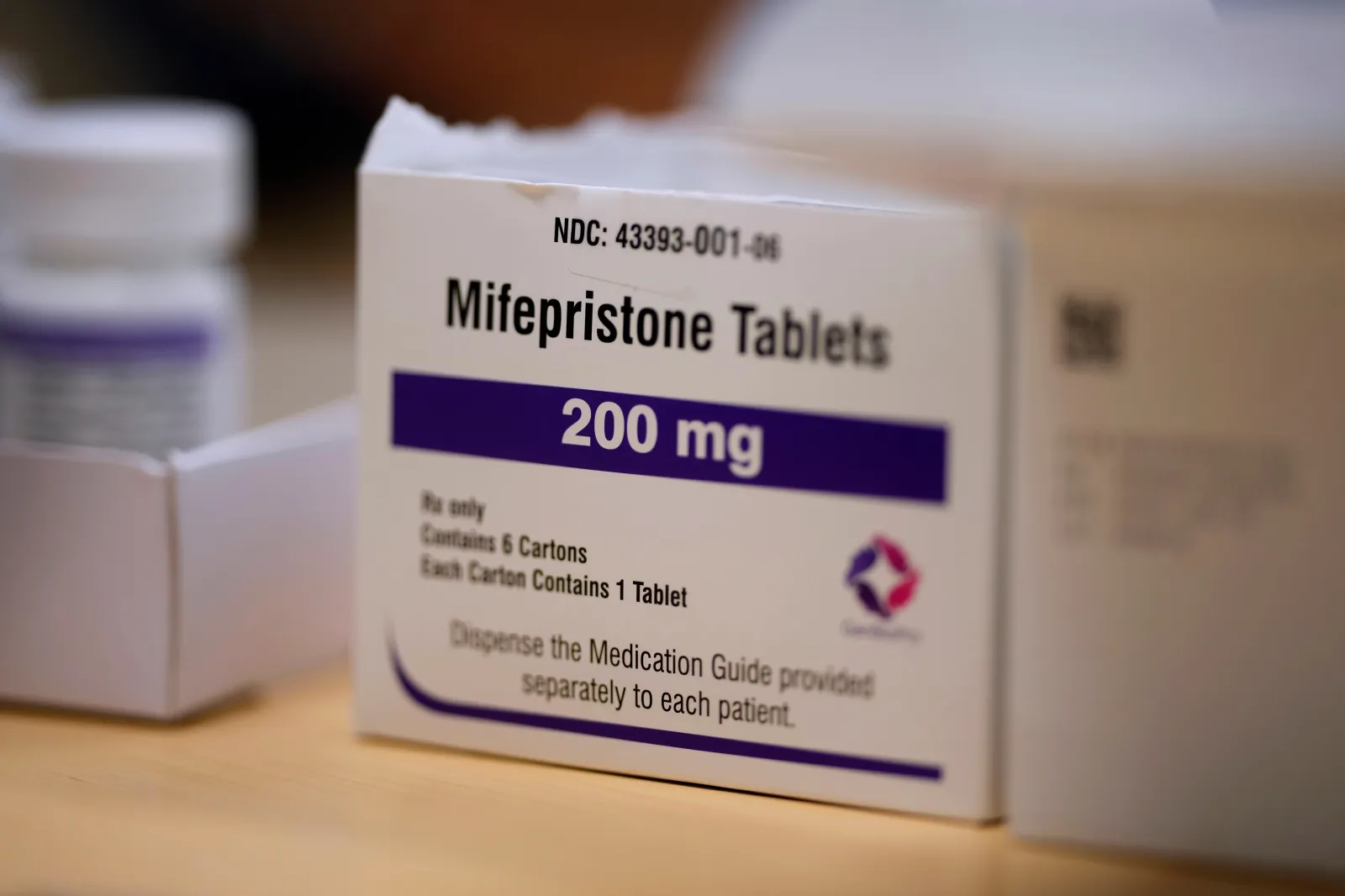
The Supreme Court on Monday temporarily restored broad access to the abortion pill mifepristone, blocking lower court restrictions that threatened to significantly change how abortion is provided across the country.
In an order signed by Justice Samuel Alito, the court allowed existing federal rules to remain in place for now, letting patients obtain mifepristone at pharmacies or by mail without requiring an in-person doctor visit. Those policies had been in effect for several years before a federal appeals court imposed new limits last week.
The action preserves access to the drug while the justices consider emergency appeals filed by the manufacturers of mifepristone, who asked the court to intervene. Alito’s order will remain in effect for at least another week as both sides submit additional filings and the court weighs whether to take further action.
Read More on Politics
...
Legal Fight Over Abortion Pills Draws Sharp Reaction
Louisiana sued to restrict access to mifepristone, arguing the drug’s availability undermined the state’s abortion ban. In contrast, several Democratic-led states have adopted laws aimed at protecting providers who prescribe abortion pills through telehealth to patients in states with bans.
The state's Attorney General Liz Murrill, who filed the lawsuit against the FDA with a woman who says her boyfriend coerced her into taking abortion pills to end a pregnancy, criticized drugmakers for their role in the case.
Kristan Hawkins, president of the anti-abortion group Students for Life, decried Monday's decision.
"Pill pushers receive every benefit of the doubt, including today, as Justice Alito allows pill traffickers and big pharma to operate temporarily while arguments are sent to the Court,” she said in a statement.
Advocates Bash ‘Junk Science’ in Appeals Court Ruling
Medication abortions account for the majority of abortions in the U.S. and typically involve a combination of mifepristone and a second drug, misoprostol. The availability of the pills has softened the impact of abortion bans enacted by Republican-led states following the Supreme Court’s 2022 decision overturning Roe v. Wade.
Abortion rights advocates told Newsweek last week the decision in a New Orleans appeals court that blocked the distribution of mifepristone through the mail is "one step closer to a national abortion ban."
Mini Timmaraju, president and CEO of Reproductive Freedom for All, in an email comment wrote: "It is now much more difficult for people to access abortion care. Anti-abortion politicians know their policies are unpopular, so they are using every lever of government they can.
"Louisiana built this case on debunked, junk science," Timmaraju wrote. "The safety of mifepristone has never actually been in question. As this case moves towards the U.S. Supreme Court, we will fight until every person has access to the care they need.”
The National Women's Law Center (NWLC) in a statement labeled the decision as "reinstating outdated, medically unnecessary restrictions" on the drug's use. The NWLC called mifepristone "one of the most accessible, safe, and effective forms" of abortion care.
Goss Graves, CEO and president of the NWLC, said the decision will make it "impossible to access...the only way for [patients] to obtain health care."
"The decision is also deeply out of step with both the public and fact-based science," Graves said. "This ruling is just the latest attack in a coordinated, nationwide campaign to eliminate abortion access for everyone in this country, one court case at a time."
Similarly, Planned Parenthood President and CEO Alexis McGill Johnson, in a statement, said the ruling was "another attack on abortion," noting it restricts access for many who have few options to obtain mifepristone or similar products.
...
How Mifepristone Access Expanded—And Drew Legal Challenges
Mifepristone was first approved in 2000 and has been gradually made more accessible. The FDA authorized the first generic version, manufactured by GenBioPro, in 2019.
Two years later, under Democratic President Joe Biden, the agency permitted telehealth prescribing and mail-order delivery of the drug, a policy shift that dramatically expanded access. Abortion opponents have been challenging that decision in court ever since.
In a letter to Republican attorneys general last year, Health Secretary Robert F. Kennedy Jr. and FDA Commissioner Dr. Marty Makary pledged to conduct a full review of mifepristone, which was approved 25 years ago and has repeatedly been deemed safe and effective by FDA scientists.
Federal regulators in October 2025 then approved a second generic version of mifepristone, a routine step that quickly drew backlash from anti-abortion groups and some Republican lawmakers.
Drugmaker Evita Solutions announced on its website that the Food and Drug Administration had cleared its low-cost version of the pill, which is approved to end pregnancies up to 10 weeks.
View 0 Comments
Submit Correction
View Editorial & AI Guidelines