


By Joshua Rhett Miller and Jesus Mesa
0
Share
Newsweek is a Trust Project member
See more of our trusted coverage when you search.Prefer Newsweek on Googleto see more of our trusted coverage when you search.
The family of Wong Kim Ark, the man whose 1898 Supreme Court case established birthright citizenship as the law of the land, marked Tuesday's decision upholding that right as vindication of a struggle that began 128 years ago.
"My great grandfather, Wong Kim Ark, never set out to become a symbol," Norman Wong, 76, a retired carpenter, said in a statement to Newsweek. "He was one man, only a cook, and yet he stood up for what was right, and I believe that it has made a difference."
"As a result, he stood up for the rights of all of us Americans – it just so happens that I am related to him," Wong said. "Today's ruling shows that his victory remains as important now as it was in 1898."
Read More on U.S.
The Supreme Court rejected President Donald Trump's executive order denying citizenship to children born to people in the United States illegally or temporarily, relying fundamentally on Wong's case as precedent. Wong Kim Ark, born in San Francisco in 1873 to Chinese immigrants, was denied reentry upon his return from visiting family in China and challenged that denial, winning in the Supreme Court by a 6-to-2 vote.

...
Sandra Wong, who lives outside San Francisco, welcomed the “victory” days ahead of America’s 250th birthday and believes her great-grandfather would be equally pleased.
“I don’t want to put words in his mouth because I don’t know the man, but I think he would be relieved,” she told Newsweek. “Everything he had to go through, you know, going through immigration and being questioned, and all the paperwork that he had to provide just to come back into the place where he was born. And you know, he had to go through this time and time again.”
But Wong cautioned that the ruling may not end the broader fight.
"I feel at this point, this got through as far as it did," she said. "So I think we do have to be on alert."
Wong said she believes many in San Francisco's Chinatown district will celebrate the ruling in the coming days.
“I think a lot of people are relieved and happy that, you know, we can’t rewrite the Constitution,” she told Newsweek. “I think the community will be really happy about it. This is a positive outcome that validates the way it’s always been—if you’re born here, you belong here.”
Supreme Court's 6-3 Decision Upholds Birthright Citizenship
Chief Justice John Roberts wrote for the majority that the court was relying on a long-settled understanding of the 14th Amendment.
"Citizenship, then and now, was the right to have rights—to freely participate in our political community," Roberts wrote. "The Framers of the Fourteenth Amendment extended that promise to 'every free-born person in this land.' We keep that promise today."
The court voted 6-3 to reject the Trump administration's reinterpretation of the citizenship clause of the 14th Amendment. Three conservative justices would have allowed the restrictions to take effect.
The executive order sought to bar citizenship for babies born in the U.S. to parents who either entered the country illegally or who are living and working here legally with temporary visas. More than one-quarter of a million babies born in the U.S. each year would have been affected by the executive order, according to research by the Migration Policy Institute and Pennsylvania State University's Population Research Institute.

...
Estuardo Cifuentes, Program Manager of Project Corazon at Lawyers for Good Government, called the decision "a landmark victory for the Constitution, for immigrant families, and for every child born on American soil."
"No president can erase that promise with the stroke of a pen," Cifuentes said in a statement shared with Newsweek. "This ruling is a decisive rejection of executive overreach and a reaffirmation of the rule of law."
Jennie Murray, President and CEO of the Forum, said the decision reaffirmed fundamental American values. "America is strong because people born here are citizens," Murray said. "This fundamental American principle has helped make us a great nation and global leader."
Wong Kim Ark's 1898 Precedent: How Birthright Citizenship Became Settled Law
Wong Kim Ark was born in San Francisco in 1873 to Chinese immigrants. Back then, no documentation was required for immigrants entering the United States, and his parents ran a business in San Francisco until they ultimately returned to China. In 1895, their son visited his family in China, but was denied reentry upon his return to the U.S., on the grounds that he was not a citizen. He challenged that denial and won in the Supreme Court.
By a 6-to-2 vote, the justices interpreted the words, "subject to the jurisdiction thereof," to mean that all children born in the U.S. were citizens.

...
The decision in the Wong Kim Ark case was so widely accepted that, even during periods of great hostility toward immigrants, the notion of birthright citizenship remained untouchable. So much so that in World War II, when Japanese citizens were held as enemy aliens in detention camps in the United States, their newborn children were automatically granted American citizenship because they were born on U.S. soil.
Norman Wong said the ruling vindicated his ancestor's sacrifice.
"Today's ruling shows that his victory remains as important now as it was in 1898," he said.
White House Rejects Ruling, Signals Push for Congressional Action
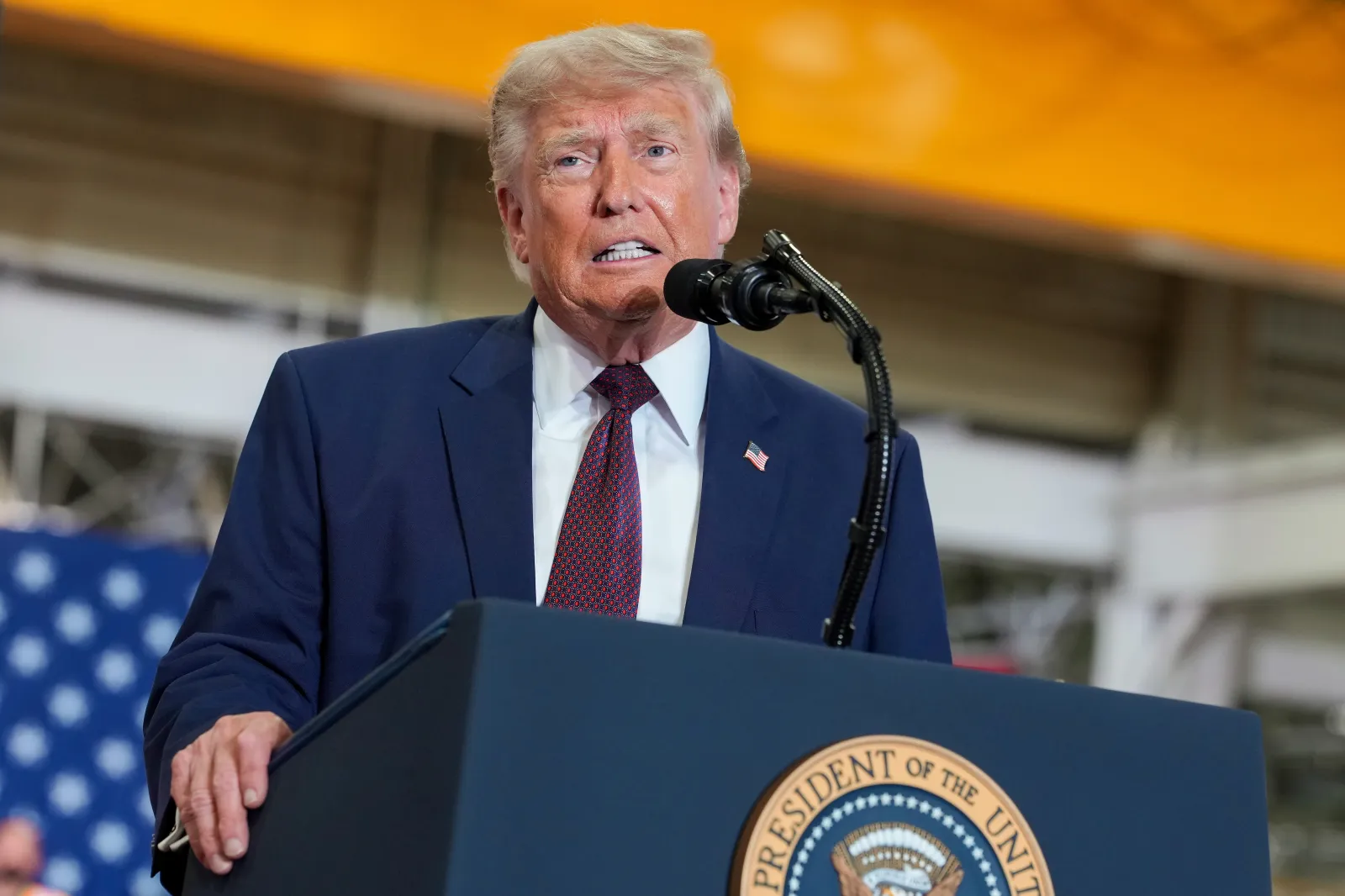
The White House rejected the ruling and signaled intent to pursue legislative action. Trump, in a social media post, wrote that "The Supreme Court upheld Birthright Citizenship, which is too bad for our Country, but we can easily make it up in Congress through Legislation." He called on Congress to "start TODAY to work on ending expensive and unfair to our Country, Birthright Citizenship" and pledged "my Complete and Total Support."
Stephen Miller, a senior White House official, escalated the rhetoric, calling the decision "one of the most destructive and outrageous decisions in the long history of the Supreme Court."
"American citizenship is not the birthright of the world. It belongs only and solely to Americans," Miller said on social media. "No provision of the Constitution can be read to require our national self-obliteration."
Related Story
Can Trump Still End Birthright Citizenship? What Options Are Left
Heritage Foundation President Kevin Roberts expressed equal frustration with the outcome. Justice Clarence Thomas's 91-page dissent signaled the depth of conservative opposition, with the justice arguing that the court had "add(ed) to the sad history of the Fourteenth Amendment, which was designed and understood to secure equal rights for the freed blacks but has instead been repurposed for political projects that the Reconstruction Congress did not support."
Yet advocates cautioned the fight was far from over. Estuardo Cifuentes, Program Manager of Project Corazon at Lawyers for Good Government, warned that future challenges remain possible.
"Justice Kavanaugh's separate opinion is a reminder that the future scope of birthright citizenship may continue to be contested," he said in a statement.
"While the Court rejected this attempt to end birthright citizenship by executive order, questions remain about how future efforts to narrow this constitutional guarantee could be pursued. Immigrant families deserve certainty that their children's citizenship will never become a political bargaining chip."
Contact Newsweek editors on this story: Gabe Whisnant, Dan Gooding, and Sam Wilson.
View 0 Comments
Submit Correction
View Editorial & AI Guidelines