...

By Monica Sager
Live News Reporter
0
Share
Newsweek is a Trust Project member
See more of our trusted coverage when you search.Prefer Newsweek on Googleto see more of our trusted coverage when you search.
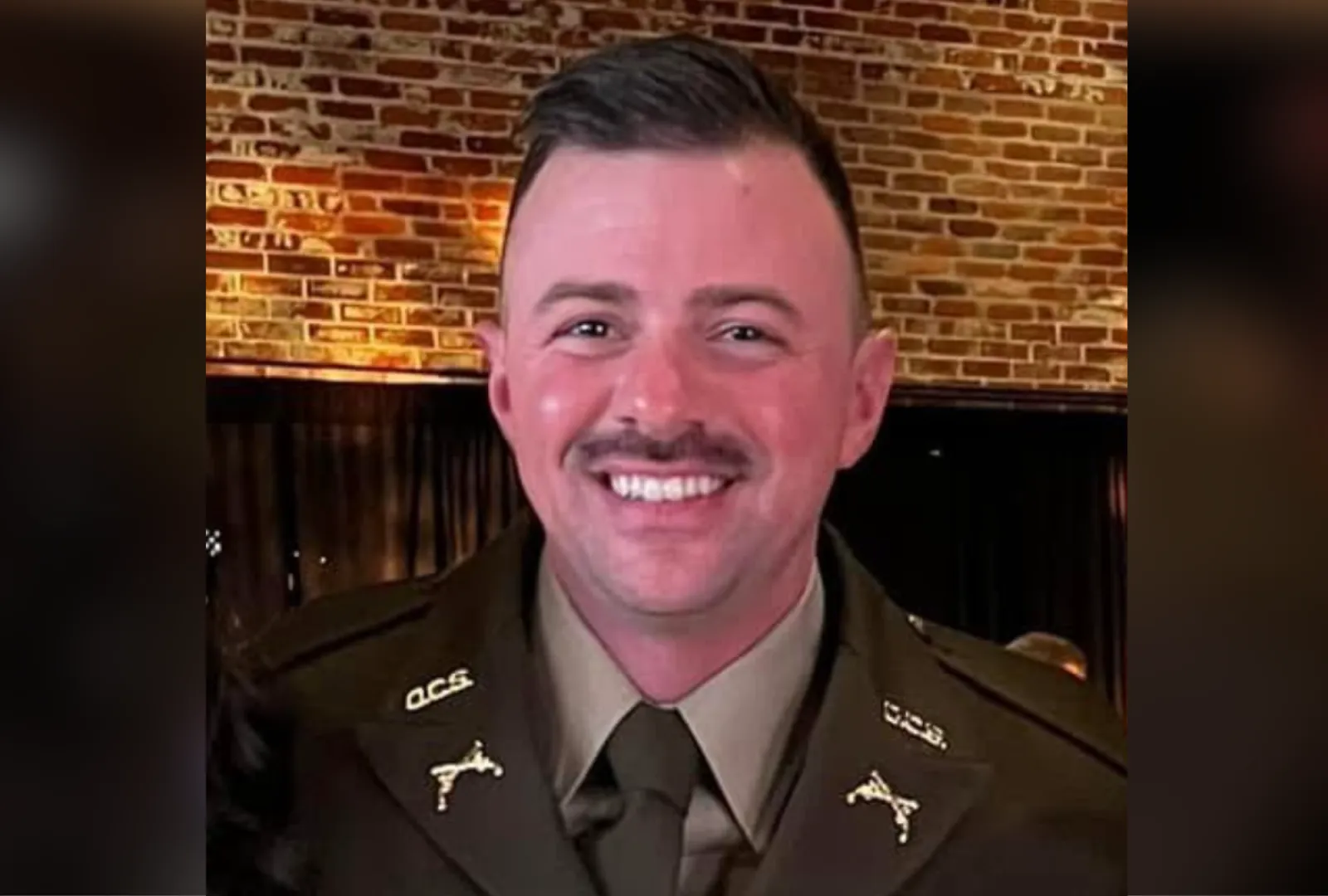
Nicolas Talbott had a lifelong dream to go into the military, having been raised "to be a person who is called to serve others," he told Newsweek. He said counterterrorism was his "bread and butter," noting that the work always piqued his interest.
But after graduating high school and looking at his options, Talbott was blocked from serving because he identified as transgender. In 2011, he started transitioning socially, and in 2012 he took the first medical steps toward his transition.
"I just kind of accepted that this was something that was not an option on the table for me," Talbott told Newsweek.
Read More on News
This week, Talbott – along with five other active-duty service members and two who would like to join the military – filed a lawsuit against Trump, Defense Secretary Pete Hegseth and secretaries of the different branches of the military, kicking off what is likely to be a long legal battle that could wind its way to the Supreme Court — again.
A Long and Winding Road
In 2016, toward the end of the Obama administration, the Pentagon overturned the long-standing ban on transgender troops and allowed them to serve openly, providing access to medical care including gender transition procedures deemed medically necessary by their doctors.
...
"That was absolutely thrilling," Talbott, now 31, told Newsweek. "It took me a while to find a recruiter who was willing to work with a transgender individual with this policy being so new in the United States and with them having no experience processing a transgender individual before, and with the medical entrance processing stations not having any experience with transgender individuals. It was certainly a tough task."
Then, six months into his first term, Trump announced via tweet he was not going to allow transgender people to serve in the military "in any capacity," kicking off a legal battle that ended with the Supreme Court in 2019 allowing the Trump administration's revised transgender military ban to take effect while litigation proceeded in lower courts.
The revised rule allowed those currently serving to continue with plans for hormone treatments and gender transition if they had been diagnosed with gender dysphoria. But it barred new enlistments of anyone with gender dysphoria who was taking hormones or had transitioned to another gender. And it said in the future those diagnosed with gender dysphoria must "serve in their birth gender" and were barred from taking hormones or getting transition surgery.

...
That was overturned in 2021 by former President Biden, who added that the Pentagon would cover transition expenses for those who needed them.
Finally, last March, almost eight years after Obama's original policy reversal, Talbott was sworn into the Army Reserve. In July, he graduated from basic training and went straight to officer candidate school.
On January 10, days before President Trump was inaugurated, Talbott graduated as a second lieutenant in the United States Army.
But with Trump back in the White House, Talbott's future in the armed services is again in doubt. Among the president's first executive orders was to pave the way for a renewed ban on transgender service members, directing Defense Secretary Hegseth to determine how to implement such a policy.
Talbott's suit was filed in the United States District Court for the District of Columbia on Tuesday. Attorneys Jennifer Levi, Mary Bonauto, Joseph Wardenski and Shannon Minter are representing the plaintiffs.
"It's very unusual for the government to adopt a policy that on its face explicitly overtly discriminates against a group of people," Minter, the legal director for the National Center for Lesbian Rights who is leading the legal challenge, told Newsweek. "That is a cause for great alarm."
Newsweek reached to the Pentagon for this story and was directed to Hegeseth's past comments on the issue. "We do not discuss potential (and on-going) lawsuits," a spokesperson said.

...
How Many Transgender Troops Are There?
A Congressional Research Service paper from January 2024 referred to a 2016 RAND Corporation report which estimated that, of the 1.3 million active-duty service members, 1,320 to 6,630 personnel serving in the active component and 830 to 4,160 in the selected reserve identified as transgender.
The Department of Defense, according to the same paper, had provided gender-affirming care (surgical and non-surgical) to 1,892 service members between January 2016 and May 2021.
Research from the UCLA School of Law Williams Institute from 2014, based on the National Transgender Discrimination Survey, estimated that 15,500 transgender individuals were serving in the armed forces at the time. It also estimated there were more than 134,000 transgender individuals who were veterans or had retired from Guard or Reserve service. This, it said, implied that an estimated 0.6 percent of adults who reported service in the armed forces were transgender.
Minter told Newsweek that the U.S. military is the most diverse workforce in the nation, and a ban on transgender troops would only deter other people who are not necessarily transgender themselves from joining the forces.
"Who wants to go work in a workplace that can arbitrarily discriminate against people?" Minter asked. "It's demoralizing."
'Blatantly Unconstitutional'
This is not Minter's first time litigating a case like this. Known for his work securing numerous landmark legal victories for the LGBTQ+ community, Minter was lead counsel for the 2008 California marriage equality case in which the state Supreme Court held that same-sex couples have the fundamental right to marry.
It's also not his first tangle with the Trump administration, having been part of the legal team that filed one of the first suits against Trump's original transgender troop ban.
At that time, Talbott said his initial attempts get recruited into the military "fell apart" because "we were fighting an uphill battle and it just wasn't something that [the recruiter] was able to invest the time into anymore."

...
"I continued to do my advocacy work during that time period," Talbott told Newsweek. "Through lots of different court happenings and policy updates, we eventually landed in a place where trans folks who were already in the service were okay."
Talbott said after Trump won the November election, he fully expected the president to sign a new ban against transgender service members in his second term in office. His legal team had been "gearing up for this for months," he said.
"It's blatantly unconstitutional," Minter told Newsweek, adding the team was "very optimistic about our chances of blocking enforcement of this ban."
Changing Political and Cultural Landscape
Certainly, the work will be different this time around. Since the first legal battle, the Supreme Court has solidified with a 6-3 conservative majority, and the public has shifted rightward on trans and other culture issues, according to polls.
In a social media video that's been viewed more than three million times since it was posted Monday, the conservative influencer Rob Smith, a gay combat veteran, laid out the argument in support of the transgender ban, saying that trans service members are "non-deployable" for combat because of their medical needs.
"This does not bode well for Pete Hegseth's mission of a lethal military," Smith said.
In 2019, General Jim Mattis, who was then Trump's defense secretary, argued that transgender troops should not be able to serve for the same reason someone with asthma or heel spurs couldn't: because their need for ongoing medical care was not compatible with military readiness.

...
Talbott called these opinions, held by many Trump allies and supporters, little more than "fantasies" and "an expression of bias against trans people."
"One of the most inspiring and uplifting aspects of military services is that it brings together people from such diverse backgrounds and as people say when you put on the uniform, those differences fall away and people are focused on their shared purpose and mission," he said.
Minter added that if Trump's ban new would "justify discrimination across a whole range of areas," eventually making its way to the private sector.
"I think at the end of the day, what this boils down to is: can transgender people serve in the United States military like anybody else," Talbott said.
"We have spent the last four years proving that we can. When we're in uniform, we have the same goal and the same mission and the same space as everybody else. We've proven that we are able to do that."
View 0 Comments
Submit Correction
View Editorial & AI Guidelines