...


By Gabe Whisnant and Anna Commander
0
Share
Newsweek is a Trust Project member
See more of our trusted coverage when you search.Prefer Newsweek on Googleto see more of our trusted coverage when you search.
President Donald Trump said Thursday the United States will deploy an additional 5,000 troops to Poland, linking the move directly to the 2025 election of conservative President Karol Nawrocki, whom he endorsed.
The decision signals a potential shift in U.S. force posture in Europe amid heightened tensions and uncertainty about Washington’s commitment to NATO. Trump said the strengthened U.S.-Poland relationship under Nawrocki drove the move, which could bolster security on NATO’s eastern flank amid Russia’s war in Ukraine.
"Based on the successful Election of the now President of Poland, Karol Nawrocki, who I was proud to Endorse, and our relationship with him, I am pleased to announce that the United States will be sending an additional 5,000 Troops to Poland," Trump said in a Truth Social post.
Read More on World

...
Trump's Ties to Nawrocki: What to Know
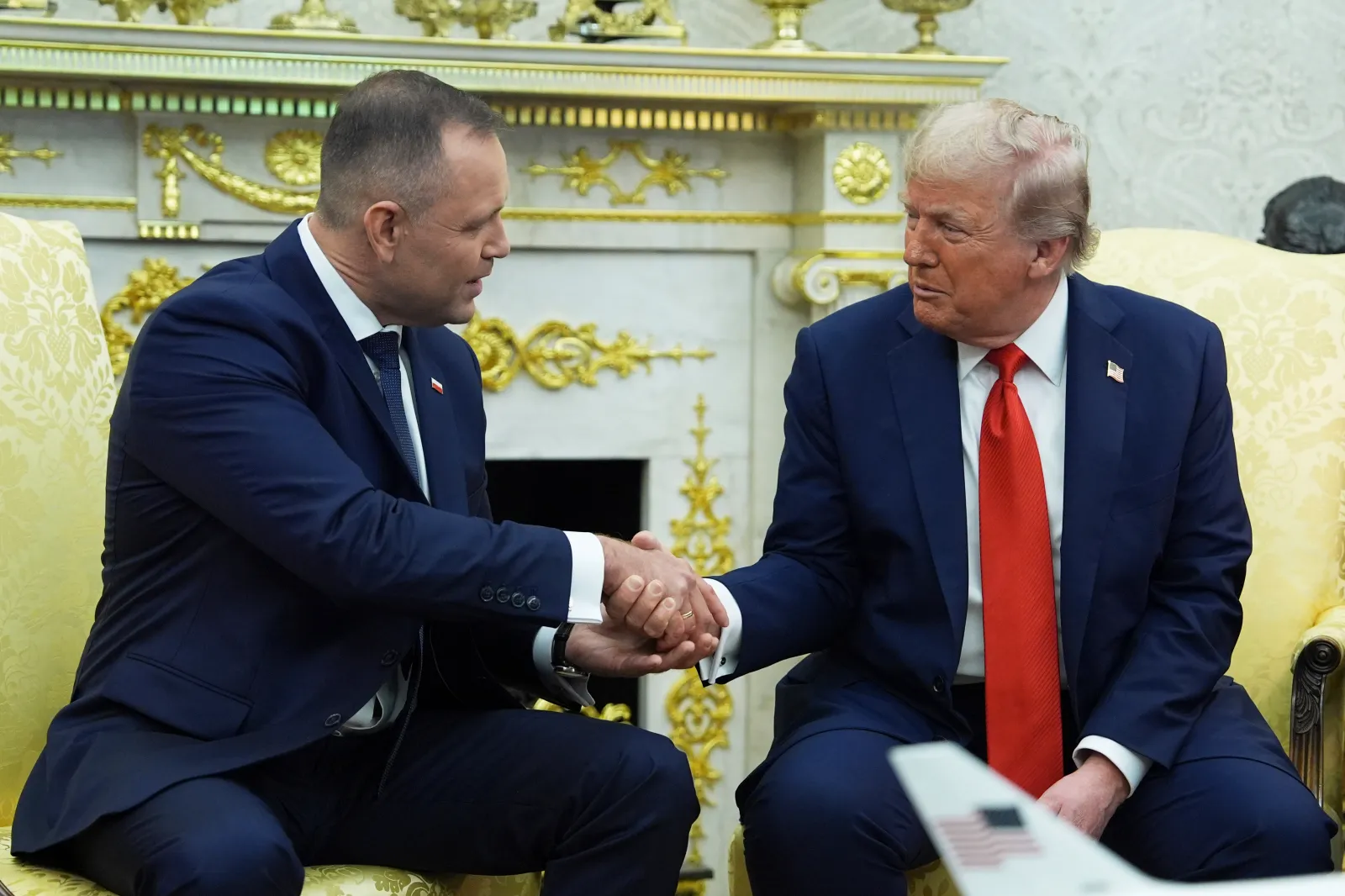
Trump hosted Nawrocki at the White House last year and backed his candidacy ahead of the Polish election, which Nawrocki went on to win against a contender aligned with Prime Minister Donald Tusk’s pro-European centrist camp. The two leaders met again in September, when Trump said the U.S. could expand its troop presence in Poland and pledged to bolster the country’s defense.
Trump Shifts Europe Strategy, Balancing Troops Cuts With Poland Boost
The United States had been reviewing its military presence in Europe and was widely expected to reduce it, amid Trump’s calls for NATO allies to take on a larger share of regional defense. Thursday's announcement came two days after Vice President JD Vance told reporters that a planned U.S. troop deployment to Poland had been delayed.
Trump has repeatedly argued that European allies should shoulder more of the burden for their own defense, signaling a broader shift away from the longstanding U.S. role as the primary guarantor of security on the continent. The review of troop levels has been part of a wider reassessment of commitments across NATO, with officials weighing whether to scale back forces or redistribute them to partners seen as more aligned with Washington’s strategic priorities.
That approach has coincided with tensions between the United States and some Western European allies, particularly Germany, where the Trump administration has already moved to withdraw thousands of U.S. troops. German Chancellor Friedrich Merz has had an ongoing dispute with Trump over the Iran war. The decision has raised concerns among European leaders about the durability of U.S. support, even as the war in Ukraine continues to heighten security risks along NATO’s eastern flank.
Trump previously expanded on his threat of removing U.S. troops in Europe to include those in Spain and Italy, after saying he was examining soldiers' presence in Germany.
At the same time, the administration’s move to send additional troops to Poland underscores a more selective posture—reducing presence in some parts of Europe while reinforcing ties with countries that have pushed for a stronger U.S. military footprint. Poland, which already hosts thousands of American troops, has been among the most vocal supporters of expanding U.S. deployments, positioning itself as a key partner as Washington recalibrates its strategy in Europe.
Rajan Menon, professor emeritus of International Relations at the City College of New York, told Newsweek via email on Thursday night that, "It must be confusing to the rest of NATO, and should be to most people. The deployment of American troops to—or withdrawal from—other countries should be guided by a strategic rationale, not by a president’s approval or disapproval of individual leaders in those countries."
Republican Congressman Don Bacon of Nebraska, who has been a recent critic of Trump and the administration, took to X reacting to the news, saying, "This is good news for Poland and our Baltic allies. I’m glad the President reversed the SecDef decision to withdraw the Brigade from Poland. Poland walks the talk and deserves our close partnership."
Chief Pentagon Spokesperson Sean Parnell said on X earlier this month, quoting acting Pentagon Press Secretary Joel Valdez, that "The decision to withdraw troops follows a comprehensive, multilayered process that incorporates perspectives from key leaders in EUCOM and across the chain of command. This was not an unexpected, last-minute decision, and it would be false to report it as such.”
In a previous response, Bacon called it "baloney."
View 0 Comments
Submit Correction
View Editorial & AI Guidelines