
...

By Jesus Mesa
Reporter
0
Share
Newsweek is a Trust Project member
See more of our trusted coverage when you search.Prefer Newsweek on Googleto see more of our trusted coverage when you search.
Once seen as a pivotal force in his 2024 comeback, young male voters are now expressing growing disappointment and disillusionment with Donald Trump's second term.
A CBS News/YouGov survey published last weekend found that Trump's net approval among 18- to 29-year-olds had all but collapsed—from 55 percent in February to just 28 percent by July.
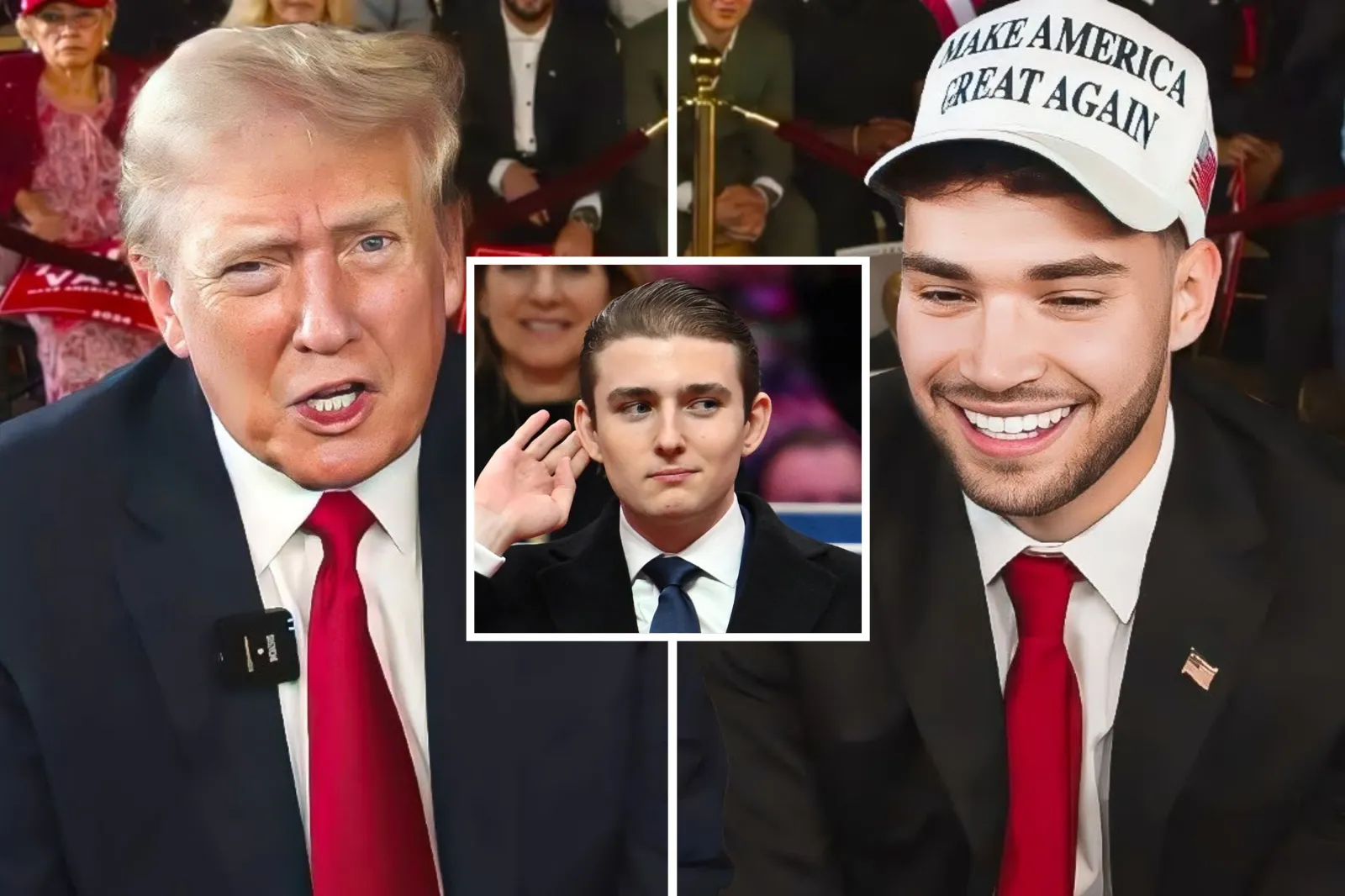
The reversal is especially striking given how aggressively Trump's 2024 campaign targeted young men. His appearances on shows hosted by Joe Rogan, Theo Von, Andrew Schulz and Adin Ross—paired with a calculated push into the "manosphere" podcast ecosystem—helped him win this demographic by a 14-point margin over Vice President Kamala Harris, according to exit polls.
Read More on Politics
It worked—until it didn't. Barely six months into his second administration, influential voices like Schulz and Rogan have both raised their concerns, as have many of the low-propensity voters who make up their audiences who are now expressing buyer's remorse across social media and in polling.
A recent Harvard Youth Poll found that nearly half of young men believe Trump is hurting the economy. Only 17 percent say they trust Congress, while 70 percent believe elected officials are mostly motivated by self-interest. Another 37 percent say they are "struggling to get by," and a majority report feeling pessimistic about the future. And that survey was taken before accounting for public opinion on the Jeffrey Epstein saga that has blotted out news coverage this summer, morphing into a growing political problem for the White House.
...
'Trump Overpromised'
Trump's winning campaign messaging tapped into frustrations over economic instability, identity politics and cultural marginalization. But now, months into his second term, a number of these voters are reconsidering their support — even as the president has delivered for his base on many of the culture war promises he made.
Part of the disillusionment stems from a belief that Trump overpromised and underdelivered. Rachel Janfaza, a writer and researcher who has conducted listening sessions with Gen Z voters, told Newsweek that many young men she interviewed were frustrated by the disconnect between Trump's campaign rhetoric and real-world results.
"They voted for him because he met them where they were," said Janfaza, who writes The Up and Up, a Substack focused on the forces shaping Gen Z. "But the message has to match the messenger. They're not seeing results—rent is still unaffordable, jobs are scarce, and their degrees feel obsolete the moment they graduate."
A Harvard Institute of Politics poll in April — just three months into the new administration — found that 47 percent of men aged 18 to 29 believed Trump was hurting the economy, with 40 percent saying they were worse off than during the Biden administration. SocialSphere polling earlier this year also showed Trump's economic approval among young men dropping 14 points in just two months.
According to youth researcher Professor Lucas Walsh from Monash University, inflation and rising living costs are hitting young people hardest. "Economic downturns impact upon young people quickly and disproportionately compared to other age groups," he said. "Young people feel these in their hip pocket, as the old saying goes."
But the dissatisfaction appears to have since grown, and it extends beyond economics. Many young men expected Trump to act on uncovering conspiracy theories he amplified during the campaign—particularly those involving Jeffrey Epstein.
"He promised to release the Epstein files, to expose the deep state—and they believed him," Janfaza said. "Now that he's in office and hasn't followed through, they're asking, 'Why not?'"
...
Many are no longer willing to accept the administration's explanations. "It's not just that they're disappointed—they feel duped," she added.
Up for Grabs
Data from the Cooperative Election Study, one of the largest politically focused surveys in the U.S., suggests that although more young men voted Republican in 2024, they haven't become more conservative. In fact, they remain broadly progressive on issues like abortion rights, systemic racism, and immigration—indicating their shift may have been circumstantial, not ideological.
Many online commentators refute that theory, suggesting the dissatisfaction among Gen Z with Trump is that he hasn't gone far enough on promises like mass deportations. "Gen Z is so much further to the right than Trump they disapprove of his job because they feel he's not going hard enough," wrote one popular anonymous X account.
Richard V. Reeves, founding president of the American Institute for Boys and Men, doesn't buy that explanation. He said the original swing toward Trump was mostly a reflection of a generational rejection of Democratic messaging. "Democrats just didn't compete for their vote," Reeves told Newsweek. "When they did reach out, it was as allies—never directly as men."
He also dismissed the idea that 2024's backlash was rooted in anti-feminism, as some commentators suggested after the election. "It wasn't angry young men rebelling against feminism," he said. "It was a backlash against overreach—against being constantly told they were the problem."
As Reeves pointed out, this discontent does not appear to be translating into strong support for Democrats. Put another way, the opposition is not benefiting from its opponents' missteps, as is usually the case. A Quantus poll conducted between June 30 and July 2 among 1,000 registered voters, suggests that young voters are feeling politically homeless, with 43 percent of Gen Z respondents saying that neither party represents American values.
As Reeves put it: "They're not tribal. Their votes are up for grabs."
Writing for Scientific American, Adam Stanaland came to a similar conclusion, arguing that young men's support for Trump was not just political—it was personal. "In a culture that equates 'being a man' with financial success and protection, their anger was a direct response to pressures and threats," he wrote.
Polling backs up this volatility. Jean Twenge, a psychology professor at San Diego State University and author of Generations: The Real Differences between Gen Z, Millennials, Gen X, Boomers, and Silents, wrote in The Atlantic that Gen Z's partisan shifts are largely driven by independents breaking right—not by deeply rooted ideological change.
"If young people's attitudes persist as they get older, Gen Z might never be pleased with how things are going in the country," Twenge said. "They'll want to 'vote the bastards out' in the next election no matter which party is in power".
View 0 Comments
Submit Correction
View Editorial & AI Guidelines