10
Loading video...

By Sam Stevenson
Associate News Editor
0
Share
Newsweek is a Trust Project member
See more of our trusted coverage when you search.Prefer Newsweek on Googleto see more of our trusted coverage when you search.
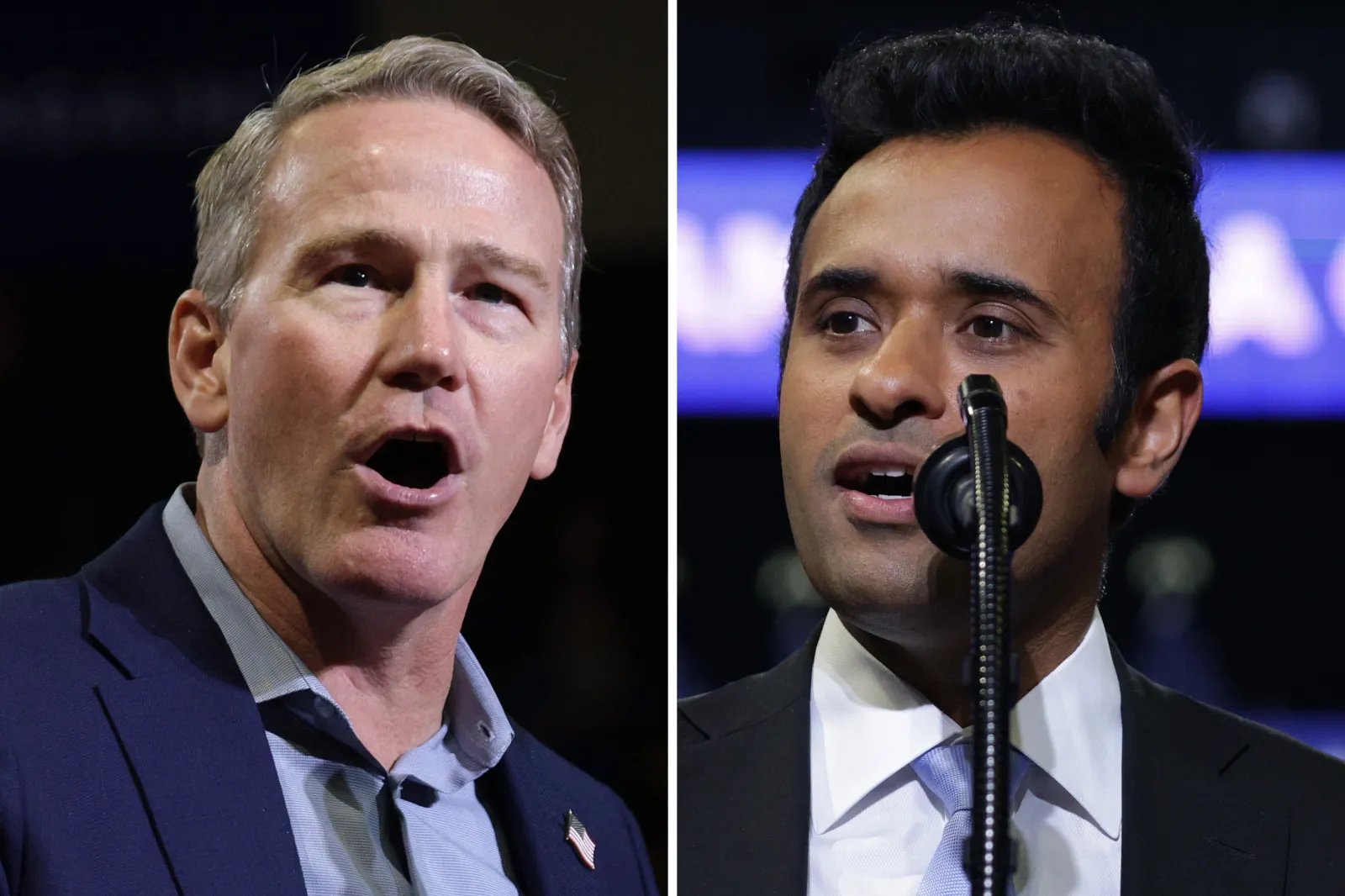
President Donald Trump said that Republican senatorial and gubernatorial candidates Jon Husted and Vivek Ramaswamy had gained ground in Ohio after his rally in Vandalia on October 3, sharing a chart that showed both running ahead of an unspecified generic-ballot benchmark.
“Look what happened in Ohio since my last rally,” Trump wrote on Truth Social, ahead of another campaign appearance at the Covelli Centre on October 12, in Youngstown. “It’s The Golden Age of America!”
Read More on Politics
A chart accompanying Trump’s post placed Husted 2 points and Ramaswamy 1 point above the generic ballot.
Those figures measure the candidates against a party benchmark rather than directly against Democratic senatorial challenger Sherrod Brown or Democratic gubernatorial candidate Amy Acton.
Trump’s graphic provides no source or polling methodology, nor does it cite a pollster or explain how its generic-ballot comparisons were calculated.
A separate co/efficient poll does, however, offer more favorable evidence for Trump’s candidates, though their leads fall within the survey’s reported margin of error.
Conducted October 5 to 6 among 925 likely voters, it found Ramaswamy leading Acton 45 percent to 43 percent and Husted ahead of Brown 44 percent to 43 percent, with a margin of sampling error of plus or minus 3.5 points.
But the graphic Trump shared did not show either Republican leading the overall polling average against their Democratic opponent in the Buckeye State, leaving his interpretation broader than the evidence he presented.
In fact, at the time of writing, polling averages from RealClearPolitics continued to show Democrats leading both contests.
Newsweek emailed the White House and all of the campaigns mentioned above for comment on Tuesday morning outside of working hours.
A spokeswoman for Husted’s campaign previously told Newsweek that it did not comment on public polling.
At a Glance
- Ohio voters will decide a Senate special election and open governor’s race on November 3 for which recent surveys have produced sharply different results.
- At the time of writing, RealClearPolitics averages covering September 1 to October 6 in the governor’s contest and September 18 to October 6 in the Senate race showed Acton leading Ramaswamy 48.1 percent to 44.3 percent, while Brown was ahead of Husted 47.4 percent to 44.3 percent.
- RealClearPolitics and the Cook Political Report both rate the Senate and gubernatorial contests as toss-ups.
- Prediction market Polymarket gives Acton a 69 percent chance of winning the governorship, whereas Kalshi puts her chances at 68 percent as of Tuesday morning.
- Meanwhile, Polymarket puts Brown ahead in the Senate race, with a 62 percent chance of winning, while Kalshi puts it at 60-40 in Brown’s favor.
- Likely-voter surveys measure people considered most apt to cast ballots, while registered-voter polls draw from a broader electorate.
Why Ohio Could Shape the Senate Majority
Republicans hold a 53-47 Senate majority. Democrats need a net gain of four seats because Vice President JD Vance would break a 50-50 tie.
An Ohio victory would make that route more attainable.
A Husted win would force Democrats to find the necessary seat elsewhere, including in another state Trump carried comfortably in 2024.
For now, Trump can point to one recent favorable poll. But the fuller picture remains less conclusive: Husted has one narrow lead, Ramaswamy has two, and the race averages still lean toward Brown and Acton.
What the Governor Polls Show
Recent governor polling has produced widely varying results.
- CNN’s September 29 to October 5 survey of 760 likely voters put Acton ahead 50 percent to 42 percent, with a margin of sampling error of plus or minus 4.5 points.
- A New York Times/Siena poll of 616 likely voters, conducted from September 22 to October 1, found a smaller Democratic advantage, 49 percent to 45 percent, with a plus or minus 4.5-point margin.
- Big Data Poll questioned 680 likely voters from September 26 to 27 and recorded a 48 percent to 47 percent Ramaswamy edge when leaners were included; its margin of sampling error was plus or minus 4 points.
- Marist’s September 24 to 27 poll of 1,298 registered voters had Acton leading 50 percent to 44 percent, with a plus or minus 3.8-point margin.
- YouGov surveyed 3,777 likely voters between September 18 and 30, reporting a 48 percent to 44 percent Acton advantage and a plus or minus 2.5-point margin.
The Senate Numbers
Brown’s position is somewhat more consistent across recent Senate polls.
- CNN found him ahead 49 percent to 43 percent in the same 760-person likely-voter sample, subject to a plus or minus 4.5-point margin.
- InsiderAdvantage’s September 28 to 29 survey of 1,200 likely voters gave Brown a 44 percent to 43 percent edge, with a margin of plus or minus 2.8 points.
- The New York Times/Siena result was 49 percent for Brown and 46 percent for Husted among 616 likely voters, with a plus or minus 4.5-point margin.
- Big Data Poll placed Brown in front 46 to 43 percent, when undecided voters were asked to lean, questioning 678 likely voters from September 26 to 27; the margin was plus or minus 4 points.
- Marist recorded the largest Democratic lead, 51 percent to 43 percent, in its 1,298-person registered-voter sample, carrying a plus or minus 3.8-point margin.
...
Gubernatorial Candidates Make Closing Pitch
Away from polling, Acton and Ramaswamy are presenting competing answers to the financial pressures confronting Ohio households.
During an October 9 interview on MS Now, Acton said residents were “doing everything right” but had “no more breathing room,” casting her campaign as a defense of public schools, libraries and health care.
Campaigning at Fox’s Bagel and Deli in Bexley last week, Acton bought a baker’s dozen and discussed rising business costs with local restaurant owners.
Acton promised to give small businesses “a voice” in state government while discussing startup loans and lower health-insurance costs, the Ohio Capital Journal reported.
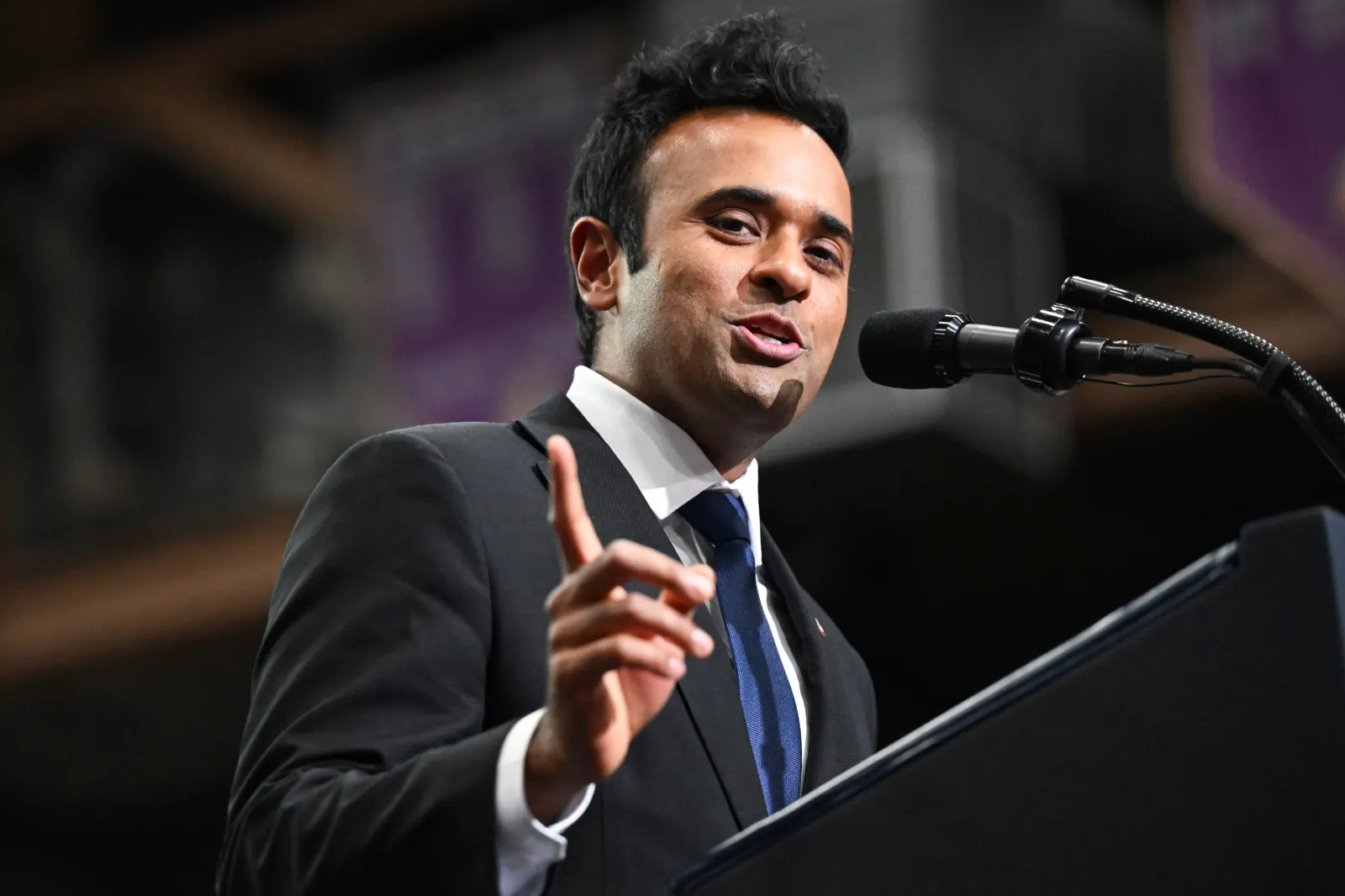
Ramaswamy has also centered affordability, promoting lower property taxes, electricity bills and health care costs while campaigning across the state.
...
Data Centers at the Center of Senate Race
Data centers powering the AI boom have become a kitchen-table issue in the Senate contest, with Brown and Husted arguing over who should bear the cost of their enormous electricity demands.
Campaigning at a coffee shop in Lima this month, Brown described driving past farmland before encountering cranes and trucks at a data-center construction site.
“They eat up our land. They swallow up our water,” he said, adding that residents’ electricity prices rise after the facilities are built, The Guardian reported.
Brown has pledged to require operators to pay the full cost of their electricity, rather than pass it on to households.
Husted has said the industry can generate private investment, skilled construction work and revenue for schools, provided local communities approve projects and technology companies cover the resulting infrastructure costs.
“If you create the cost, you should pay the cost,” he said, according to a press release promoting his Ratepayer Protection Act, which passed the House 417-3 before stalling in the Senate.
Newsweek’s AI Policy Scorecard measures lawmakers on a five-point scale from AI Skeptic to AI Booster using their voting records and public positions on regulation, data centers and energy, employment, privacy and national security.
Brown is not rated because he is not currently in Congress, and Husted receives a 3.2 “Mixed” rating.
Newsweek*’s reporters and editors used Martyn, our AI assistant, to produce this story. Learn more about Martyn* here.
View 0 Comments
Submit Correction
View Editorial & AI Guidelines