10
Loading video...

By Hannah Parry
Associate News Editor
0
Share
Newsweek is a Trust Project member
See more of our trusted coverage when you search.Prefer Newsweek on Googleto see more of our trusted coverage when you search.
President Donald Trump is facing new questions over his Iran strategy as his administration continues to push for a diplomatic solution nearly six months into a military campaign that officials initially said would be resolved in weeks.
Trump has repeatedly maintained that negotiations with Tehran are nearing an agreement, while simultaneously warning of a major military escalation if Iran rejects his demands. These mixed signals have drawn sharp criticism from former allies, including former White House chief of staff Mick Mulvaney, who cautioned that the administration is developing a credibility problem regarding the conflict.
The administration's stance has been further complicated by Tehran's denials that any negotiations are underway, directly contradicting Trump's assertions that talks have commenced and that a resolution could be near.
Read More on Politics
Related Story

Is Trump Losing Support Over Iran? The Conversation
Mulvaney Cites Credibility Concerns
Mulvaney served as Trump's chief of staff from January 2019 to March 2020. He later served as the special U.S. envoy for Northern Ireland. He resigned from that post following the January 6, 2021, riot at the U.S. Capitol when Trump supporters violently tried to block certification of Biden's Electoral College victory.
Appearing on the Australian news outlet News24 on Sunday, Mulvaney said Trump’s frequent shifts between threats of military force and declarations of diplomatic progress have left international partners uncertain about Washington's objectives.
When asked whether the United States was nearing a deal with Iran, Mulvaney responded: “We don’t have any clue."
He argued that the president's shifting posture has sown confusion among the parties involved.
“Trump has gone back and forth now so many times on the status of the negotiations with the Iranians, the impending battles, etcetera that you have to wonder if he’s lost credibility right now with all the major players,” Mulvaney said.
Mulvaney added that Trump would need to show “real progress” either through diplomacy or on the battlefield to restore confidence in his approach.
“Right now, it’s sort of hard to know what to believe,” he said. "Anytime he says something, it seems like some of the actions on the ground don’t bear it out. So, he’s got a credibility problem, at least a growing credibility problem, and he’s going to have to show progress," he said.
Mulvaney’s remarks underscore a central critique of the campaign: that alternating between threats of imminent military strikes and renewed calls for talks risks diluting American leverage.

...
Trump Repeatedly Changes Course on Iran
Critics argue that the president has repeatedly altered his approach, moving between threats of overwhelming force and assertions that diplomatic breakthroughs are imminent.
Since April, Trump has called off planned airstrikes at least five times to allow space for negotiations. Recently, the president stated he was prepared to order what he termed the “biggest attack since World War II,” before halting the operation after claiming that Iranian officials and regional mediators requested a pause. Iranian authorities disputed that narrative and denied that talks were taking place.
These recurring pivots have intensified debate over whether the administration's threats are extracting concessions or signaling to Tehran that the United States is reluctant to execute a full escalation.
Trump Says Talks Are Moving Quickly
Addressing reporters on Monday, Trump asserted that negotiations with Iran could move swiftly toward ending the conflict.
“They’re going to go quickly one way or the other,” he said.
The president also addressed the status of the Strait of Hormuz, suggesting it could reopen “literally by tomorrow,” while noting that negotiations concerning Iran’s nuclear program would require a more extended timeline.
"We're talking about the strait, the opening of the strait, having it open, literally by tomorrow. Completely open. And that's phase one, and phase two is we then will talk about the nuclear capacity … the denuclearization of Iran," he said.
While maintaining that maximum pressure remains the primary vehicle for forcing a settlement, the president expressed frustration over Tehran's public posture regarding the talks.
“Iranian Leadership is unbelievably duplicitous!” Trump wrote on Truth Social. "They ask for a meeting, some would say 'beg,' talks begin, with more scheduled in the immediate future, and they say, openly and proudly, that they're not having any discussions, that nothing is being talked about, and they're only dealing with 'Oman.'"
"Nothing gets through to Iran, unless we want it to, and nothing will get through, unless a Deal, or Total Surrender, is accomplished," he added. "Whether Iran wants to admit it or not, we are, in fact, talking of a solution to a problem that they have caused, for decades. It is very simple, IRAN WILL NEVER HAVE A NUCLEAR WEAPON!"

...
Republican Divergence on Strategy
The administration's approach has generated divergent views within the Republican Party.
Former Vice President Mike Pence said Monday during a Fox News appearance that he believes Trump will eventually abandon his push for a diplomatic agreement and return to military action.
“I honestly think the time has come for the president of the United States to unleash the armed forces of the United States,” Pence said. He added that he believed Trump would eventually decide that negotiations were no longer effective.
“Given [Iran’s] posture and their attitudes and even denying negotiations are happening, I have every confidence there will come a moment where my old running mate has had enough and we oughta turn loose the greatest military,” Pence said.
The former vice president also argued that the U.S. and Israel should “finish the job” against Iran.
Trump has maintained that diplomacy remains his preferred option to avoid further casualties while achieving his strategic aims. A Fox News poll conducted from July 17-20 indicated that 48 percent of respondents doubted a U.S.-Iran agreement would ever materialize, while 25 percent anticipated the conflict would conclude with an unfavorable deal.
Meanwhile, GOP Representative Mike Turner, a member of the House Armed Services Committee and former chairman of the House Intelligence Committee, said Sunday that lawmakers remain dissatisfied with the level of information being provided about the war in Iran and other major national security issues.
Speaking on CBS News' Face the Nation, the Ohio congressman was asked by host Margaret Brennan whether he was satisfied with the information Congress has received from the administration since lawmakers began raising concerns about war briefings earlier this year.
"The administration could be sharing more with Congress," Turner said. "I don't think anybody is satisfied with the level of information we're receiving, although it is a dynamic conflict...Both the House and the Senate have registered that the Pentagon needs to be sharing more information with Congress."
Related Story
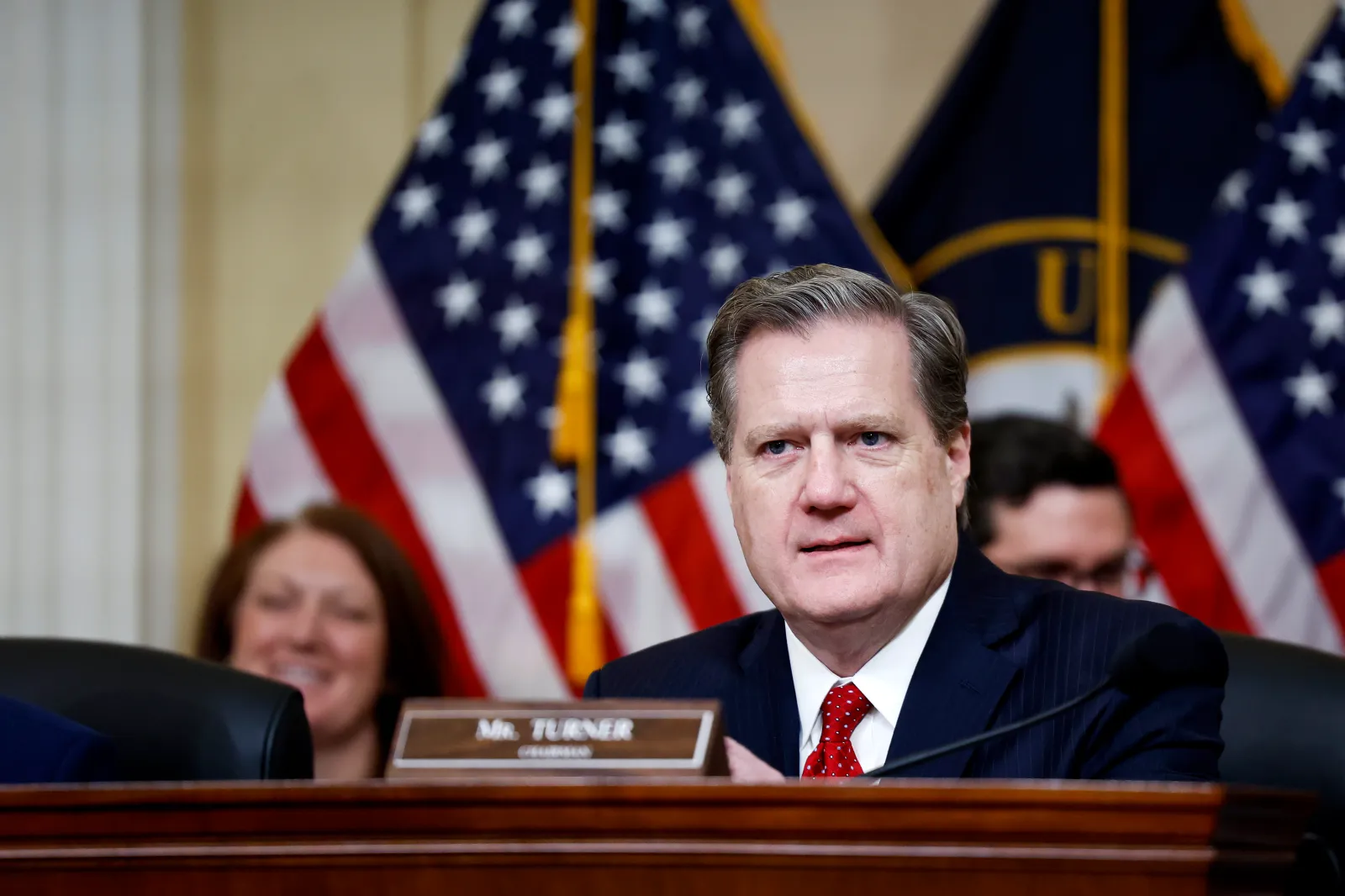
GOP Defense Hawk Presses Trump Admin as Congress Seeks Iran War Details
Contact Newsweek editors for this story: Samantha Beech and Anthony Murray.
View 0 Comments
Submit Correction
View Editorial & AI Guidelines