
By Amanda Castro
Associate News Editor
0
Share
Newsweek is a Trust Project member
See more of our trusted coverage when you search.Prefer Newsweek on Googleto see more of our trusted coverage when you search.
Omani Foreign Minister Badr Albusaidi announced that the latest round of indirect negotiations between the United States and Iran had wrapped up, describing the day’s discussions as productive. In a statement posted on X, he said the delegations had “finished the day after significant progress” and would pause for consultations in their respective capitals before reconvening.
The meeting is viewed as one of the last viable chances to prevent a wider regional conflict. The discussions come as President Donald Trump continues to threaten limited military action if no nuclear agreement is reached, while Iran warns it will respond forcefully to any strike.

...
What to Know:
- Talks were held at the Omani ambassador’s residence, with Oman’s foreign minister again mediating.
- Omani says negotiators showed “unprecedented openness” to new ideas, but the path to a deal remains uncertain.
- Albusaidi added that technical‑level talks are scheduled to continue next week in Vienna, signaling that the diplomatic track remains active despite the high‑stakes atmosphere surrounding the negotiations.
- The US has deployed its largest military buildup in the Middle East since 2003, including two aircraft carriers and thousands of troops.
- Trump says diplomacy is his preference, but continues to float the possibility of a limited strike to pressure Iran.
- The president has not clearly outlined what concessions he is demanding or why military action is needed now.
- Iran rejects halting uranium enrichment but signals willingness to consider concessions on its nuclear program.
- Iran’s foreign minister says the country will “under no circumstances ever develop a nuclear weapon,” calling the moment a “historic opportunity.”
- US media reports say Trump is weighing an initial strike on Revolutionary Guards or nuclear sites if talks stall.
- Senior US military officials have reportedly warned that strikes could trigger a prolonged conflict.
- Israel urges any deal to include limits on Iran’s missiles and regional proxies, while regional allies fear escalation.
- Iran threatens to retaliate against US and Israeli military assets if attacked.
- The talks follow last year’s US and Israeli strikes on Iranian nuclear facilities, which Iran says halted enrichment but remain unverified by inspectors.
This live blog is now closed.
Feb 26, 2026 at 04:10 PM EST
Pro-Israel commentator urges Trump to reject any deal with Iran
Conservative commentator Mark Levin, a close ally of President Trump and a vocal supporter of Israel, is urging the administration to walk away from any potential agreement with Iran — even if Tehran offers major concessions. In a social media post, Levin argued that there is “no basis” to trust Iran’s leadership to uphold any deal, framing the regime as fundamentally hostile to the United States.
Levin wrote that the U.S. should not expose itself to what he described as a “death cult,” asserting that the only real question is whether Washington should act to “destroy this enemy regime before it destroys us.” His comments reflect a hard‑line view shared by some conservative figures who believe diplomacy cannot meaningfully constrain Iran’s nuclear or military ambitions.
He also repeated his frequent call to “get Khamenei,” referring to Iran’s supreme leader, underscoring his long‑standing position that the country’s leadership is the root of regional instability.
Feb 26, 2026 at 03:56 PM EST
Cruz says Iran’s leadership poses direct threat to U.S. security
Sen. Ted Cruz said Thursday that Iran’s supreme leader represents a serious and ongoing threat to the United States, arguing that Tehran’s weapons programs are designed to make good on its hostile rhetoric. In a post on social media, the Texas Republican wrote that when Iran’s leader chants “Death to America,” he “means it,” adding that he believes Iran is actively building capabilities to carry out such threats.
Feb 26, 2026 at 03:41 PM EST
WATCH: Trump touts ‘Operation Midnight Hammer’ and warns Iran in SOTU
Feb 26, 2026 at 03:27 PM EST
Graham says Trump’s Iran strategy could spark a ’21st-century Berlin Wall moment’

...
Sen. Lindsey Graham argued Thursday that President Donald Trump’s pressure campaign on Iran could lead to a historic political shift comparable to the fall of the Berlin Wall. Writing in a Fox News opinion piece, the South Carolina Republican said that if the U.S. provides meaningful support to Iranians protesting their government, “history is watching every move we make,” and the outcome could resemble the collapse of Soviet power in 1989.
Graham framed Trump’s approach as an opportunity to weaken Iran’s leadership from within, drawing a parallel to Ronald Reagan’s stance against the Soviet Union. He said Reagan’s resolve “paid dividends for the entire world” and suggested a similar moment of “new birth of freedom” could emerge if the U.S. backs demonstrators challenging Tehran’s authority.
Feb 26, 2026 at 03:18 PM EST
Araghchi says latest U.S.–Iran talks made ‘good progress’ but gaps remain
Iran’s chief negotiator Abbas Araghchi said Thursday’s round of indirect talks with the United States produced “good progress” on both the nuclear file and sanctions relief, offering one of Tehran’s more upbeat assessments in recent weeks. Speaking to reporters, he cautioned that key disagreements are still unresolved and will require further consultation.
Araghchi said both delegations will now return to their capitals for internal discussions before reconvening. “Consultations should be held in the capitals, and then we will have the fourth round of talks next week,” he told Iranian media, according to the IRNA news agency.
Feb 26, 2026 at 03:13 PM EST
Analyst warns Washington wants more than ‘positive atmosphere’ from Geneva talks
A senior analyst says the Biden administration is unlikely to view vague optimism from the Geneva negotiations as meaningful progress, warning that anything short of concrete outcomes will be interpreted in Washington as a setback. Alex Vatanka of the Middle East Institute told Al Jazeera that if the talks end with little more than statements about a “positive atmosphere,” officials in the U.S. capital will read that as evidence that “nothing major was achieved.”
Vatanka said such an outcome would raise a sharper question: whether President Donald Trump is running out of patience with diplomacy. He noted that the president must weigh the political risks of embracing a potential conflict with Iran. “He obviously has to calculate whether this war would be something that he’s politically willing to adopt as a cause that he’s committed to. That is a huge ‘if’,” he said.
For the talks to be seen as successful, Vatanka argued, negotiators would need to produce at least one specific, substantive point that clarifies what the two sides are actually discussing. Without that, he said, Washington will not be persuaded. “Just a statement by [Iranian] Foreign Minister Abbas Araghchi, as was the case last time around, saying it was constructive — that’s not going to cut it here in Washington.”
Feb 26, 2026 at 02:50 PM EST
USS Gerald R. Ford heads to Middle East as military buildup reaches new peak
The USS Gerald R. Ford, the world’s largest aircraft carrier, departed the U.S. naval base at Souda Bay on Crete earlier today, adding to what officials describe as the most significant American military presence in the Middle East in decades. The nuclear-powered carrier spent four days at the deep‑water port refueling and taking on supplies before setting sail.
The vessel is expected to reach waters off Israel within the next 24 hours, where it will join the USS Abraham Lincoln and a broader U.S. naval group that arrived in the region last month. Together, the deployments mark a substantial show of force at a moment of heightened tensions with Iran and uncertainty surrounding ongoing diplomatic efforts.
One diplomat familiar with the talks said the scale of the buildup underscores the stakes. “It’s hard to see how such a powerful military presence can simply be de‑escalated without very significant progress in today’s talks,” the diplomat noted, reflecting concerns that the window for diplomacy may be narrowing.
Feb 26, 2026 at 02:36 PM EST
House Democrats push vote to curb Trump’s authority on Iran strikes
Democratic leaders in the House say they will force a vote next week on legislation requiring President Donald Trump to obtain congressional approval before launching military action against Iran. The move comes as tensions escalate and lawmakers debate the limits of presidential war powers.
In a statement, Democratic leaders condemned what they called Iran’s “brutal and destabilizing” behavior, citing the killing of thousands of protesters. But they warned that entering “a war of choice in the Middle East, without a full understanding of all the attendant risks to our servicemembers and to escalation, is reckless.”
To bring the War Powers Resolution to the floor, Democrats plan to use a procedural tool known as a discharge petition, allowing them to bypass Republican Speaker Mike Johnson’s opposition if they gather enough signatures. Even if the measure passes the House, it would still need approval from the GOP‑controlled Senate before reaching the president.
Trump is widely expected to veto the bill, and opponents of military action acknowledge they likely lack the two‑thirds majorities needed in both chambers to override him. Still, supporters argue that passing the resolution would send a clear signal of congressional and public resistance to entering a new conflict with Iran.
Feb 26, 2026 at 02:22 PM EST
Why Khamenei is commonly called ‘the Ayatollah’ — and why it’s misleading
U.S. and European officials frequently refer to Iran’s Supreme Leader Ali Khamenei as “the ayatollah,” but the label doesn’t reflect his formal position in Iran’s political structure. Khamenei’s official title is supreme leader, the highest authority in the Islamic Republic, while ayatollah is a religious rank held by many Shia clerics worldwide.
The term ayatollah, meaning “divine sign” in Arabic, is an honorific title given to scholars who have reached an advanced level of religious study and can independently interpret Islamic law. Those who achieve even greater scholarly authority may be recognized as grand ayatollahs, issuing rulings on what is permitted or forbidden under Shia jurisprudence. The title is not exclusive to Iran’s leadership; dozens of ayatollahs live and teach across the Middle East and beyond.
In theory, any Shia religious student can pursue the path to becoming an ayatollah. It requires years of study, teaching, and demonstrating mastery of Islamic legal reasoning. Because the title is relatively common within the clerical hierarchy, using it as shorthand for Khamenei can be misleading, implying a singular status that comes instead from his political office.
Feb 26, 2026 at 02:08 PM EST
Israeli strikes hit Lebanon’s Bekaa Valley as regional tensions surge
Israeli warplanes carried out a series of strikes across Lebanon’s Bekaa Valley, including areas near the northeastern town of Hermel, according to Lebanon’s National News Agency. Early reports indicated no casualties, but the bombardment marked another escalation in Israel’s widening campaign against Hezbollah.
The Israeli military said the targets were “infrastructure” linked to Hezbollah’s elite Radwan Force, a unit Israel has repeatedly accused of preparing cross‑border operations. The strikes come as Israel intensifies its attacks in Lebanon amid soaring tensions with Iran and fears of a broader regional confrontation.
Hezbollah has signaled that it may intervene directly if Iran is attacked by Israel or the United States, a warning that has added to concerns about a multi‑front conflict. The group has already been trading fire with Israel for months, despite a ceasefire agreement reached in November 2024.
Lebanon says Israel has repeatedly violated that truce. In a formal complaint to the United Nations in January, the Lebanese government documented 2,036 Israeli breaches.
Feb 26, 2026 at 01:55 PM EST
LSE scholar warns a U.S. strike on Iran would be seen as a ‘war of choice’
A leading international relations scholar says any U.S. military attack on Iran would likely be remembered as a “war of choice,” even as Tehran signals it is trying to avert conflict through the ongoing talks in Geneva. Speaking to CNN, Fawaz Gerges of the London School of Economics said Iranian negotiators are attempting to craft an agreement that President Donald Trump could present domestically as a clear improvement over the 2015 nuclear deal he abandoned in his first term.
Gerges said Tehran understands the political incentives at play in Washington and is offering what he described as an “economic and commercial bonanza” if sanctions are lifted and U.S. companies are allowed to invest in Iran’s energy and resource sectors. That pitch, he argued, is designed to give the White House a tangible win while avoiding a military confrontation.
But the professor warned that the U.S. military buildup in the region has created a “very serious” risk of escalation if diplomacy falters. Without a breakthrough, he said, the path to conflict could open quickly. “If, and when, this war comes, and I hope it does not come, this will be seen by historians as a war of choice — Donald Trump’s war,” Gerges said.
Feb 26, 2026 at 01:46 PM EST
Oman says third round of U.S.–Iran talks concludes after ‘significant progress’
Omani Foreign Minister Badr Albusaidi announced that the latest round of indirect negotiations between the United States and Iran has wrapped up, describing the day’s discussions as productive. In a statement posted on X, he said the delegations had “finished the day after significant progress” and would pause for consultations in their respective capitals before reconvening.
Albusaidi added that technical‑level talks are scheduled to continue next week in Vienna, signaling that the diplomatic track remains active despite the high‑stakes atmosphere surrounding the negotiations. He thanked the negotiators, the International Atomic Energy Agency, and the Swiss government for their roles in facilitating the discussions.
Feb 26, 2026 at 01:41 PM EST
House Democrats move to force vote on Iran War Powers resolution
Democratic leaders in the House say they will push for a vote on a war powers resolution aimed at limiting the president’s ability to launch military strikes against Iran without congressional approval. The move comes amid heightened tensions and growing debate over the scope of executive authority in potential conflict scenarios.
In a joint statement, Representative Hakeem Jeffries and other senior Democrats argued that any unilateral military action would violate constitutional requirements for consultation with Congress. They emphasized that the resolution is designed to reassert legislative oversight, even as they condemned what they described as Iran’s “brutal and destabilizing” behavior.
The effort is expected to face bipartisan resistance. Several Democrats have already signaled they will oppose the measure, reflecting divisions within the party over how forcefully to check the administration’s military options.
Feb 26, 2026 at 01:27 PM EST
Uncertainty surrounds whether military pressure would shift Iran’s nuclear stance
Debate is intensifying over whether limited U.S. military action could force Iran to make concessions in nuclear negotiations, with analysts warning that the outcome is far from assured. According to reporting from the Associated Press, even narrowly targeted strikes may not achieve Washington’s goals and could instead trigger a wider, more volatile conflict.
If the objective were to weaken or remove Iran’s leadership, experts note that such an operation would almost certainly require a far larger and longer campaign—one for which there has been no public planning. The absence of a clear post‑strike strategy raises concerns about potential instability inside Iran and the risk of a prolonged regional crisis.
Any military move also carries the possibility of retaliation. Tehran could target U.S. partners in the Persian Gulf or Israel, heightening the danger of escalation across the region. Those fears have already rippled through global markets: oil prices have climbed in recent days, with Brent crude hovering around $70 a barrel as traders brace for potential disruption.
Iran has previously demonstrated its ability to unsettle global energy flows. During the last round of talks, Tehran briefly halted traffic in the Strait of Hormuz—the narrow passage through which roughly one‑fifth of the world’s traded oil moves
Feb 26, 2026 at 01:13 PM EST
U.S. return to the table signals cautious momentum in Geneva
An Iran expert says Washington’s decision to stay engaged in indirect talks with Tehran points to a cautiously improving atmosphere on what he called a “decisive day” in Geneva. The discussions are set to resume after the U.S. reviewed a new proposal from Iran earlier Thursday, though the contents of that offer remain undisclosed.
Ali Vaez of the International Crisis Group told the Associated Press that negotiators are operating within a “narrow pathway” to a potential agreement, one that will require both sides to ease long‑held demands. He said the U.S. presence alone is meaningful, describing it as an effort to “get to the finish line” after months of stalled diplomacy.
Vaez warned that failure at this stage could carry steep consequences, noting that a collapse in talks risks opening the door to an unpredictable conflict. Despite the stakes, he said a breakthrough remains difficult, given the deep mistrust between the two governments.
Reaching a deal, he added, would likely hinge on a balanced exchange: a measured reduction of Iran’s enriched uranium stockpile paired with tangible U.S. sanctions relief. That symmetry, he argued, is the only formula with a realistic chance of bridging the gap between the two sides.
Feb 26, 2026 at 12:58 PM EST
Iran signals firm red lines as Geneva talks center on sanctions relief: Report
A senior Iranian official says Tehran’s latest proposal in the indirect Geneva negotiations is built around two priorities: lifting U.S. sanctions and addressing Washington’s concerns without surrendering core elements of Iran’s nuclear program. Speaking to Al Jazeera, the official described the plan as both “technical and practical,” insisting it demonstrates that Iran has no intention of pursuing a nuclear weapon.
According to the official, the proposal affirms Iran’s position that uranium enrichment is a sovereign right, while offering a temporary freeze on enrichment as part of a broader confidence‑building package. They said the plan includes data meant to reassure the U.S. about Iran’s nuclear intentions and outlines steps to reduce uranium stockpiles to low‑enrichment levels under International Atomic Energy Agency oversight.
But the official stressed that certain demands remain off the table. Iran, they said, will not consider dismantling nuclear facilities, transferring enriched material abroad, or accepting a permanent end to enrichment. The proposal also excludes any discussion of Iran’s missile program or defense capabilities, which Tehran views as non‑negotiable.
Feb 26, 2026 at 12:45 PM EST
FOR MEMBERS: Trump’s Middle East friends won’t let him use their bases to strike Iran
As the clock runs down on President Donald Trump's deadline to advance on nuclear talks under threat of military action, some of the United States' closest partners in the Middle East are denying the White House key access to conduct strikes against the Islamic Republic.
In recent weeks, as Trump escalated his warnings to Iran and amassed the largest military build-up in the region since the 2003 U.S.-led invasion of Iraq, a growing chorus of nearby countries have called for restraint and have expressed opposition to allowing the U.S. to use their territories to launch an attack on Iran.
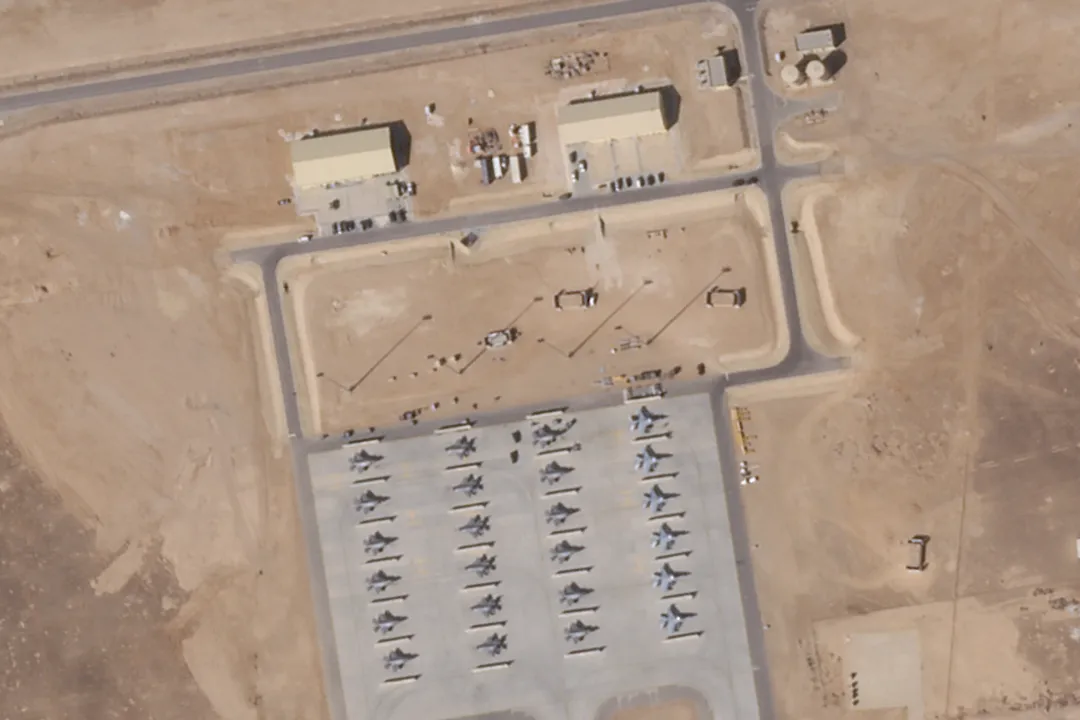
Among the latest to reiterate this position is Jordan, where a buildup of U.S. fighter jets, electronic warfare aircraft and cargo planes has been spotted at Muwaffaq Salti Air Base via recent satellite imagery recent shared with Newsweek by Planet Labs.
"Jordan has a defense agreement with the U.S., and the presence of U.S. aircraft and forces in Jordan is part of this agreement and is governed by the agreement," Jordanian government sources told Newsweek. "Jordan reiterates that it will not serve as launchpad for attacks against Iran."
At the same time, the Jordanian government sources stated that "Jordan also made it clear that it will not allow Iran and others to violate its airspace if war erupts."
To read more, become a Newsweek member.
Feb 26, 2026 at 12:31 PM EST
Iranian voices reveal rising desperation as Geneva talks drag on
As U.S. and Iranian negotiators continue their indirect discussions in Geneva, people inside Iran describe a mood shaped less by geopolitics and more by daily survival. For many, the question is no longer whether diplomacy will succeed but how much longer they can endure worsening conditions at home.
Majid, 50, said he supports any path that might break the country’s deadlock, even if it risks conflict. He asked to use only his first name for security reasons. “I don’t want war, but I think something must be done and if that is the only option, then it is what it is,” he said. “We don’t have the luxury to debate the future. We just need action.”
That urgency reflects a broader sense of exhaustion. Years of economic decline, water shortages, and rising food insecurity have pushed many Iranians to a breaking point. Reza, 27, described feeling “stuck between a rock and a hard place,” saying people can no longer simply wait for political or economic relief. “We can’t just keep waiting for change,” he said.
Others spoke of a deeper emotional toll as hopes for improvement fade. Yalda, 31, said daily life has become a cycle of stress and scarcity. “You don’t understand how bad things have gotten,” she said. “We have no relief, no respite from day-to-day difficulties. After the protests things have only gotten worse. We all feel stuck. It’s hard to have hope for a future like this.”
Feb 26, 2026 at 12:17 PM EST
Rubio says Iran’s missile stance a ‘big problem’ as Geneva nuclear talks continue
US Secretary of State Marco Rubio said Wednesday that Iran’s refusal to engage on its ballistic missile program remains a “big problem,” even as Washington pushes ahead with diplomacy in Geneva. He said the latest round of talks will center on Iran’s nuclear activities, which he described as the president’s preferred starting point for progress.
Rubio stressed that the administration still sees a diplomatic path, rejecting suggestions that the Geneva session represents a final chance for negotiations. He cautioned, however, that meaningful movement on the nuclear file is essential before the two sides can tackle broader issues such as missiles. “If you can’t even make progress on the nuclear program, it’s going to be hard to make progress on the ballistic missiles as well,” he said.
Pressed on whether President Donald Trump is nearing a decision on military action, Rubio said no determination has been made and declined to frame Wednesday or Thursday as decisive moments. He added that it would be “good if progress was made” this week but emphasized that the process is ongoing.
Rubio also addressed Trump’s earlier claim that US strikes last summer “obliterated” Iran’s nuclear program, saying Tehran has “not abandoned their desire to enrich again.” His comments reflect a widening gap between the administration’s public messaging and its acknowledgment that Iran’s nuclear ambitions remain unresolved even as talks continue in Geneva.
Feb 26, 2026 at 12:11 PM EST
U.S. diplomatic convoy returns to Geneva for nuclear talks with Iran
A convoy carrying U.S. diplomats arrived at an Omani diplomatic residence in Geneva on Thursday, signaling the resumption of indirect negotiations with Iran over its nuclear program. The vehicles entered the lakeside compound shortly after an Iranian delegation returned to the site earlier in the day.
The talks had paused for several hours as the U.S. team stepped away for a separate meeting with Ukrainian officials elsewhere in the city. The break did not appear to derail the process, and both sides moved quickly to reconvene after reviewing their respective positions.
Feb 26, 2026 at 12:03 PM EST
U.S.–Iran talks zero in on enrichment limits as both sides test diplomatic space
Crunch negotiations in Geneva have narrowed around one central question: whether Iran’s proposed limits on uranium enrichment can meet President Donald Trump’s demand that Tehran never acquire a nuclear weapon, according to people familiar with the discussions. The U.S. delegation, led by Steve Witkoff and Jared Kushner, entered the talks with firm requirements that Iran dismantle its key nuclear facilities and accept a permanent end to enrichment.
Iranian negotiators, by contrast, have floated a proposal that would pause high‑level enrichment for three to five years—effectively through the end of Trump’s term—before joining a regional consortium dedicated to low‑level, non‑weapons‑grade enrichment. Under the plan, international inspectors would be granted broad access to verify compliance. Whether that offer comes close enough to Washington’s demands remains unclear, and officials say Trump could still pivot toward military action if diplomacy stalls.
U.S. officials arrived in Geneva uncertain about Iran’s internal red lines, particularly whether the supreme leader would endorse concessions even if negotiators appeared more flexible. Iranian officials, aware that any agreement must allow Trump to claim a stronger deal than the Obama‑era accord he abandoned, have publicly floated economic sweeteners—including expanded U.S. access to Iranian oil and gas and commitments to purchase American goods.
The talks now hinge on whether the two sides can bridge the gap between a time‑limited pause and a permanent restriction—an unresolved divide that will determine whether negotiations continue or give way to a renewed confrontation.
Feb 26, 2026 at 11:50 AM EST
Convoy carrying Iranian delegates returns to Geneva talks site
A convoy believed to be transporting Iranian diplomats has returned to the Omani diplomatic residence in Geneva, where Tehran and Washington are holding indirect negotiations over Iran’s nuclear program. The vehicles pulled back into the lakeside compound after a several‑hour pause in discussions.
The break followed a separate meeting between the U.S. delegation and Ukrainian officials elsewhere in the city, part of a packed diplomatic schedule as Washington juggles multiple crises. The pause did not signal a collapse in talks, and the return of the Iranian convoy suggests both sides are preparing to resume the latest round of shuttle diplomacy.
Feb 26, 2026 at 11:48 AM EST
Former Iranian official says enrichment pause possible if U.S. offers sanctions relief
Former Iranian Deputy Vice President for Strategic Affairs Sasan Karimi says Tehran retains “some leverage” in its uranium‑enrichment program and could consider a temporary pause in high‑level enrichment if Washington offers meaningful concessions. Speaking to Al Jazeera, Karimi said Iran and the United States share at least one point of agreement: neither side wants Iran to possess nuclear weapons. But he stressed that any confidence‑building step from Tehran “is not for free” and must be matched by sanctions relief.
Karimi argued that Iran’s missile programs cannot be included in the Geneva negotiations, especially as the United States continues to expand its military presence across the region. He framed Iran’s missile arsenal as a conventional deterrent, saying the country “should have enough resources of conventional military options to retaliate,” just like any other state.
Feb 26, 2026 at 11:34 AM EST
Iran calls Geneva proposals ‘very constructive’ as third round of nuclear talks pauses
Iran’s foreign ministry says negotiators from Tehran and Washington have exchanged “very constructive” proposals during their third round of indirect nuclear talks in Geneva, describing the discussions as serious and focused on both Iran’s nuclear program and potential sanctions relief.
Talks briefly paused Thursday afternoon so both delegations could consult with their capitals, with Iran indicating the session would resume around 1630 GMT. Foreign ministry spokesperson Esmail Baghaei did not disclose details of the proposals but said the exchanges so far had been productive.
The negotiations, mediated by Oman’s foreign minister and attended by the head of the International Atomic Energy Agency, are widely viewed as a critical—possibly final—opportunity for diplomacy. The talks unfold under intense pressure, as the United States has deployed a significant fleet of aircraft and warships to the Middle East to push Tehran toward an agreement.
Feb 26, 2026 at 11:20 AM EST
Satellite pictures show surge in US aircraft in Middle East
...
Recent satellite imagery shows American military aircraft gathering at bases in the Middle East in one of the largest U.S. buildups this century, designed to pressure Iran into giving up its nuclear ambitions.
Photographs captured on February 21 and supplied to Newsweek by Planet showed F-35 and F-15 fighter jets among other combat and support aircraft at the Muwaffaq Salti Air Base in Jordan and at the Prince Sultan Air Base in Saudi Arabia.
The amassing of combat air power in the region—in plain sight of satellites operated by U.S. allies and adversaries alike—is a repeat of the Trump administration's military signaling used against Tehran last spring, and again against Caracas before Venezuelan President Nicolás Maduro was captured in early January.
Feb 26, 2026 at 11:06 AM EST
What to know as U.S.–Iran nuclear talks continue in Geneva
Crucial U.S.–Iran negotiations resume in Geneva today, bringing together U.S. envoys Steve Witkoff and Jared Kushner with Iranian Foreign Minister Abbas Araghchi for another round of indirect diplomacy focused on Iran’s nuclear program and the prospect of sanctions relief. The talks unfold amid heightened regional tension, a major U.S. military buildup, and deep skepticism on both sides about the other’s intentions.
Key points to understand
- Washington is demanding tighter nuclear restrictions. President Donald Trump has argued that Iran wants a deal to avoid a U.S. strike, but he maintains Tehran has not explicitly renounced nuclear weapons—despite repeated Iranian statements to the contrary.
- Tehran insists it will never pursue nuclear arms. Araghchi reiterated this week that Iran “under no circumstances” will develop a nuclear weapon, while emphasizing its right to civilian nuclear technology under international law.
- Iran’s proposal centers on limited enrichment and sanctions relief. A response expected to be delivered via Omani mediators would affirm Iran’s right to enrich uranium while offering caps on enrichment levels in exchange for meaningful sanctions relief.
- The talks are taking place amid regional volatility. Protests inside Iran, fears of escalation, and a substantial U.S. military deployment across the Middle East form the backdrop to the Geneva discussions, raising the stakes for any diplomatic breakthrough.
- Mutual distrust remains high. Iran says it is prepared for “both war and peace” but prefers diplomacy; U.S. officials have likewise questioned Tehran’s intentions even as they pursue negotiations. Both sides see the talks as pivotal but far from guaranteed to succeed.
Feb 26, 2026 at 10:52 AM EST
CIA makes offer to Iranians as protests kick off again
The Central Intelligence Agency (CIA) has made a recruitment pitch to potential informants in Iran to contact the U.S. spy agency as President Donald Trump continues to threaten strikes against the ruling regime.
The social media appeal offered secure ways to contact the CIA amid a new wave of protests in the Islamic Republic over the last four days in which university students have chanted anti-government slogans and in support of exiled Prince Reza Pahlavi.
On Wednesday, students at Iran's University of Art held a protest chanting slogans like "death to the dictator," and "political prisoners must be freed."
The demonstrations come on the heels of unrest last month against the ailing economy during which the authorities ordered a violent crackdown that killed at least 3,117, according to Tehran. NGOs and rights groups have estimated a much higher death toll of between 7,000 and 30,000. The violence prompted Trump to warn of a U.S. intervention.
A revolutionary court in Tehran on Tuesday issued a death sentence for a man accused of "enmity against god", which if confirmed would be the first such sentence linked to January's mass protests, a source close to the man's family said, according to Reuters.
Feb 26, 2026 at 10:38 AM EST
WATCH: Rubio is doubtful latest Iran talks will yield a breakthrough
Feb 26, 2026 at 10:24 AM EST
Iran’s Pezeshkian says nuclear weapons off the table as Geneva talks resume
Iranian President Masoud Pezeshkian said Thursday that the country will not pursue nuclear weapons, grounding the pledge in the authority of Iran’s supreme leader as a new round of negotiations with the United States begins in Geneva. Speaking on state television during a visit to Sari in northern Iran, Pezeshkian said the issue is not a matter of political preference but of religious doctrine.
“The religious leader of a society can’t lie,” he said, arguing that Ayatollah Ali Khamenei’s longstanding fatwa against nuclear weapons is binding. “When he announces that we won’t have nuclear weapons, it means we won’t. Even if I want to do that, I can’t, because of my beliefs.”
Feb 26, 2026 at 10:08 AM EST
Rubio says Iran’s missile stance a ‘big problem’ as Geneva nuclear talks continue
Iran is pushing back against U.S. and Israeli demands that any nuclear agreement also curb its ballistic missile program and support for regional armed groups, with Foreign Minister Abbas Araghchi insisting Tehran will not accept broader terms beyond the nuclear file. Speaking to India Today on Wednesday, Araghchi dismissed Washington’s claims that Iran is developing long‑range missiles capable of striking the United States, calling the allegation “fake news.” He said Iran has deliberately capped its missile range below 2,000 kilometers for what he described as strictly defensive purposes, adding, “Our missiles are for deterrence and self-defense, not aggression.”
Araghchi also rejected the characterization of groups such as Hezbollah, the Houthis, and Hamas as Iranian “proxies,” arguing they are independent movements pursuing “just causes” against occupation. He said Iran offers them political and moral backing but denied they operate under Iranian command, a claim long disputed by Western and regional intelligence agencies.
The foreign minister reiterated that Iran has “no intention to go for nuclear weapons and no intention to go for long-range missiles,” framing Tehran’s position as consistent with its stated defense doctrine. He said Iran remains open to transparency measures and international oversight of its nuclear activities but expects sanctions relief in return—an issue at the center of ongoing negotiations.
Feb 26, 2026 at 09:54 AM EST
Iran says Geneva talks ‘very serious’ as delegations break for consultations
Iran’s foreign ministry says the latest round of indirect nuclear negotiations with the United States in Geneva has been “very serious,” even as the two sides remain on a break to consult with their capitals. Spokesperson Esmail Baghaei, speaking through state media, said the roughly three‑hour session produced “very important and practical proposals” on both sanctions relief and the nuclear file, though he offered no specifics on what was exchanged.
Baghaei said the Iranian delegation feels “confident” heading into the next phase of talks, stressing that Tehran’s positions have been consistent and that outside commentary from foreign media and some U.S. officials has only fueled unnecessary doubt. He emphasized that the focus remains on outcomes rather than rhetoric, calling the process ongoing and incremental.
According to the statement, Iran expects any agreement to include the lifting of U.S. sanctions, which Baghaei said have “greatly affected” ordinary Iranians. He added that negotiators hope discussions will resume tonight “in a practical manner” on both sanctions and nuclear issues.
The pause underscores the sensitivity of the moment, with both sides weighing whether the proposals on the table are strong enough to justify continuing the diplomatic track amid a tense regional backdrop and a significant U.S. military buildup.
Feb 26, 2026 at 09:45 AM EST
Iran–U.S. nuclear talks to resume later today
Talks between Iranian and American negotiators in Geneva have paused as both sides step away to consult with their capitals, according to officials involved in the discussions. Iranian foreign ministry spokesman Esmail Baghaei said the delegations will reconvene at 5:30 p.m. local time (11:30 a.m. Eastern), signaling that enough substantive issues were raised during the session to justify continuing later in the day.
The pause comes during a pivotal round of indirect negotiations focused on narrowing gaps over Iran’s nuclear program and potential sanctions relief. Mediators, including Omani officials, have described the exchanges so far as constructive, with both sides presenting proposals that require internal review before talks resume.
Feb 26, 2026 at 09:38 AM EST
Vance sidesteps question on logic of striking Iran after claim of ‘obliterated’ nuclear program
A brief but pointed exchange on Wednesday highlighted growing scrutiny of the Trump administration’s messaging on Iran, after Vice President JD Vance declined to explain why the United States might need to strike Iran again if, as President Donald Trump has repeatedly claimed, U.S. airstrikes last summer “obliterated” Tehran’s nuclear enrichment program.
Asked directly to reconcile the administration’s warnings about Iran’s nuclear ambitions with Trump’s assertion that the program had already been destroyed, Vance refused to elaborate. “I’m not going to make any news on Iran today,” he said, offering no clarification on whether Washington believes Iran’s nuclear capabilities remain intact, partially degraded, or fully eliminated.
Feb 26, 2026 at 09:23 AM EST
WATCH: ‘Fully prepared’ for war of peace, Iranian PM warns ahead of US talks
Feb 26, 2026 at 09:09 AM EST
Ex-IAEA chief warns U.S. against ‘wars of choice’ as Iran tensions mount
Former International Atomic Energy Agency director Mohamed ElBaradei cautioned Wednesday that any U.S. move toward armed conflict with Iran would carry “horrific costs,” invoking the lessons of past wars as Washington ramps up its rhetoric. In a post on X, ElBaradei said the United States is “intensifying the drumbeat of war against Iran” without offering legal justification for the use of force or evidence of an imminent threat, arguing that officials are instead relying on hypothetical scenarios about Tehran’s future intentions.
ElBaradei said such gaps in legal and factual grounding are precisely why international norms impose restraints on the use of military power. He drew a direct parallel to the run‑up to the 2003 invasion of Iraq, calling the current moment “Iraq redux” and warning that policymakers “never learn” from the devastation caused by discretionary wars.
Feb 26, 2026 at 08:55 AM EST
Vance says Trump’s Iran red line ‘crystal clear’ as nuclear tensions rise
Vice President JD Vance defended the Trump administration’s posture toward Iran on Wednesday, insisting the president’s objectives amid a sweeping regional military buildup are “crystal clear”: Iran must not obtain a nuclear weapon. In a Fox News interview, Vance said Trump’s “preferred route” remains diplomacy but emphasized that preventing Tehran from reaching nuclear capability would be the “ultimate military objective” if force were required.
Vance argued that any uncertainty about Trump’s strategy was misplaced, describing the administration’s red line as “simple” and rooted in the belief that Iran represents one of the world’s most dangerous regimes. He reiterated that the U.S. is pursuing a diplomatic track in ongoing talks but warned that other tools remain available if negotiations fail.
Feb 26, 2026 at 08:41 AM EST
U.S. targets Iran’s ‘Shadow fleet’ and missile networks
The Trump administration has imposed sanctions on more than 30 individuals, companies, and vessels linked to what it describes as “illicit” Iranian oil sales and the country’s ballistic missile and advanced weapons programs, escalating pressure before U.S.–Iran talks resumed. The Treasury Department said the designations were part of its ongoing “maximum pressure” campaign and aimed at tightening restrictions as Washington pushes Tehran toward accepting terms for a new nuclear agreement.
According to Treasury, the measures hit tankers operating within Iran’s so‑called shadow fleet, which the U.S. accuses of disguising the origin of sanctioned crude. Additional sanctions targeted networks in Iran, Turkey, and the United Arab Emirates that officials say help the Islamic Revolutionary Guard Corps and Iran’s defense ministry obtain machinery and precursor materials used to rebuild ballistic missile and advanced conventional weapons production, as well as support the proliferation of unmanned aerial vehicles.
Treasury said the latter designations were issued in support of the snapback of United Nations sanctions following Iran’s violations of the 2015 nuclear deal, which the United States exited during Trump’s first term. The new actions come as the administration increases military and economic pressure on Tehran ahead of the upcoming diplomatic round, signaling that Washington intends to enter the talks from a position of leverage.
Feb 26, 2026 at 08:27 AM EST
Huckabee says Trump’s Iran deal terms ‘very clear’ as outrage grows over Israel remarks
Mike Huckabee said former President Donald Trump has been “very, very clear” about what Iran must concede for a nuclear agreement, arguing that Tehran already understands the conditions required to avoid further confrontation. His comments came as the U.S. ambassador to Israel warned that Iran’s nuclear program is only one part of a broader challenge, insisting that its ballistic missile arsenal must also be addressed. “The Iranians know what they have to do if they want to resolve this peacefully,” the ambassador said.
The diplomatic messaging unfolded just days after Huckabee ignited a regional firestorm with remarks suggesting he “would be fine” if Israel controlled most of the Middle East, a view he framed through his interpretation of biblical land promises. The exchange, made during an interview with Tucker Carlson, drew swift condemnation across the Arab world and prompted U.S. officials to clarify that Huckabee’s comments did not reflect American policy.
Feb 26, 2026 at 08:13 AM EST
Iran answers Trump’s main demand to avoid war before last-ditch talks

...
Iranian President Masoud Pezeshkian has emphasized Tehran's position that it will not develop nuclear weapons in response to U.S. President Donald Trump saying he had not yet heard such a promise.
A third round of indirect U.S.-Iran talks is due to take place on Thursday in Geneva to reach a deal that avoids military action by Washington, which has sent what Trump calls an "armada" to the Middle East.
The top issue is Iran's nuclear program, which Tehran says is for civilian energy, but the U.S. and Israel fear will one day lead to the development of a weapon of mass destruction. Iran has stockpiles of uranium enriched to a purity beyond what is needed for energy purposes.
"[Trump] says, for example, that Iran should declare that we will not have nuclear weapons," Pezeshkian said on Thursday in comments carried by Iranian state media, originally in Farsi.
"Well, the supreme leader has already stated that we will not have nuclear weapons at all. It’s different when I, as a politician, say something—because maybe politicians like us, who are not clerics, might not tell the truth to people.
"I might think that I’m like those politicians; I might lie too. But the leader of society, the religious leader of society, cannot lie. When he declares that we will not have nuclear weapons, it means we will not have them.
"Even if I wanted to move in that direction, I wouldn’t be able to. From a religious standpoint, I wouldn’t even have the right for it to cross my mind. We do not have the right to do such a thing.
"That’s what he says. They have not merely announced, so to speak, that we 'do not want' to have nuclear weapons."
Feb 26, 2026 at 07:59 AM EST
‘Creative and positive ideas’ exchanged during talks this morning
Omani Foreign Minister al-Bisaidi has said that there has been an exchange of "creative and positive ideas" during this morning's indirect talks.
He added that while the US and Iran negotiating teams took a break, he hopes that when they return, they "make more progress."
Feb 26, 2026 at 07:58 AM EST
Ukraine and U.S. Open Geneva talks as Umerov meets Witkoff, Kushner
Ukrainian negotiator Rustem Umerov said Thursday that bilateral talks with the United States have begun in Geneva, marking the latest step in a fast‑moving diplomatic track aimed at preparing for broader negotiations with Russia.
Umerov announced the start of the meeting in a post on X, noting that he had convened with U.S. envoy Steve Witkoff and presidential adviser Jared Kushner.
Feb 26, 2026 at 07:54 AM EST
State Department warns Iran’s missile spending is ‘unsustainable threat’
A senior U.S. official sharply criticized Iran’s expanding missile program, arguing that Tehran continues to invest heavily in advanced weapons despite deep economic strain. In remarks shared on the Department of State’s official X account, Secretary of State Marco Rubio said Iran’s leadership is prioritizing military development even as sanctions leave the country’s economy “in tatters” and its population under severe pressure.
Rubio said that “for a country facing sanctions, whose economy is in tatters, whose people are suffering, somehow they still find the money to invest in missiles of greater capacity every year.” He called the pattern “an unsustainable threat,” underscoring Washington’s long‑standing concern that Iran’s missile advancements could destabilize the region.
Feb 26, 2026 at 07:49 AM EST
Khamenei adviser says Swift US–Iran deal possible if talks focus on non-weaponization
A senior adviser to Iran’s Supreme Leader Ayatollah Ali Khamenei said Thursday that an “immediate agreement” between Tehran and Washington is attainable if negotiations are limited to the question of Iran not producing nuclear weapons — a position he argued already reflects Iran’s established policy.
Ali Shamkhani, a former Islamic Revolutionary Guard Corps commander and key figure in Iran’s national security apparatus, wrote on X that confining the talks to Iran’s “non-production of nuclear weapons” aligns with both the Supreme Leader’s fatwa banning such arms and Iran’s broader defense doctrine. Under those terms, he said, a deal could be reached quickly.
Shamkhani added that Foreign Minister Abbas Araghchi, currently in Geneva for indirect discussions with U.S. officials, has “sufficient support and authority” to finalize an agreement if the negotiations stay within that framework.
Feb 26, 2026 at 07:44 AM EST
Oman says US–Iran talks marked by ‘unprecedented openness’ as new round begins in Geneva
Omani Foreign Minister Badr Albusaidi said Thursday that indirect negotiations between the United States and Iran have opened in a “constructive spirit,” with both sides showing what he described as “unprecedented openness to new and creative ideas.” His remarks were posted on X by Oman’s foreign ministry ahead of the latest high‑stakes session in Geneva, where Muscat is again serving as mediator.
According to the ministry’s statement, Albusaidi said efforts were continuing “intensively” as negotiators explored fresh proposals and worked to create conditions for “a fair agreement with sustainable guarantees.” The message underscored Oman’s role in shaping the diplomatic environment and encouraging flexibility from both delegations.
Before today’s talks resumed, Albusaidi met in Geneva with U.S. envoy Steve Witkoff and President Donald Trump’s son‑in‑law Jared Kushner to review Iran’s latest positions and the American team’s questions and responses. Oman’s state news agency said the meeting focused on relaying Tehran’s perspectives and discussing the technical and oversight guarantees required for any potential deal.
Feb 26, 2026 at 07:39 AM EST
Iran’s Shamkhani says Swift nuclear agreement possible if talks focus on non-weaponization
Iran’s Secretary of the Defence Council, Ali Shamkhani, said Thursday that a rapid breakthrough in negotiations is achievable if the central demand is that Iran refrain from building nuclear weapons — a position he argued already aligns with the country’s established doctrine.
In a post on X, Shamkhani said that such a condition matches both the fatwa issued by Iran’s supreme leader and the principles of Iran’s defense strategy, which he described as explicitly rejecting nuclear arms. He added that “immediate agreement is within reach” under those terms and emphasized that chief negotiator Abbas Araghchi has “enough support and authority to reach an agreement.”
Feb 26, 2026 at 07:34 AM EST
UN nuclear chief Grossi joins Geneva talks as technical observer
An Iranian state TV reporter said Thursday that Rafael Grossi, the head of the UN’s nuclear watchdog, has joined the ongoing indirect negotiations between Iran and the United States in Geneva, describing him as a technical observer whose presence could help “advance the discussions more precisely and seriously.”
The AFP news agency also confirmed Grossi’s participation, citing a source close to the talks who said the International Atomic Energy Agency chief had entered the room as the latest round of discussions got underway.
Feb 26, 2026 at 07:28 AM EST
Indirect US–Iran talks pause in Geneva as diplomatic convoy departs
Iran’s Tasnim news agency said Thursday that the latest round of indirect negotiations in Geneva has been temporarily paused, with discussions expected to resume later in the day.
The talks, mediated through Omani officials, are part of an ongoing effort to navigate nuclear and regional security disputes.
Feb 26, 2026 at 07:27 AM EST
Trump showed his hand on Iran

...
President Donald Trump attacked Iran's "sinister" nuclear ambitions as he laid out his case for deposing the regime of Ayatollah Ali Khamenei in his State of the Union address Tuesday night.
The subtext was clear: His patience with Iran is running out.
The president still favors a deal—both sides do—but he has been unequivocal that Iran must meet his demands. Tehran would have to curb its nuclear program and also address its missile development and regional activities.
"We are in negotiations with them. They want to make a deal, but we haven’t heard those secret words: ‘We will never have a nuclear weapon,’" he said.
Crucially, Iran has said those words—often. Indeed, hours before Trump's speech, Seyed Abbas Araghchi, Iran's foreign minister, said: "Our fundamental convictions are crystal clear: Iran will under no circumstances ever develop a nuclear weapon."
Trump, therefore, has shown his hand—and the message is unmistakable.
To continue reading, become a Newsweek member now.
View 0 Comments
Submit Correction
View Editorial & AI Guidelines