10
Loading video...


By Giulia Carbonaro and Dan Gooding
0
Share
Newsweek is a Trust Project member
See more of our trusted coverage when you search.Prefer Newsweek on Googleto see more of our trusted coverage when you search.
The U.S. government suspended operations in Mexicali, the capital of Mexico's Baja California state, and warned U.S. nationals against traveling to the border city Tuesday due to a "potential threat."
The U.S. Mission to Mexico said it had limited operations and travel to Mexicali on Tuesday, and urged Americans to:
- Avoid government buildings in Mexicali
- Seek shelter in the event of an incident
- Notify friends and family of their safety in the event of an incident
- Follow instructions from Mexican law enforcement
- Monitor local media for updates
- Be aware of their surroundings
Read More on News
Officials have not yet disclosed specific details about the potential threat in Mexicali.

...
Baja California's 'Level 3' Risk
Baja California is currently considered a "Level 3" risk for U.S. travelers, who are advised to "reconsider travel due to terrorism, crime, and kidnapping."
Mexico overall is considered a "Level 2" risk, with Americans urged to "exercise caution due to terrorism and crime" when traveling to the state.
According to the State Department's travel advisory, the only travel restrictions in Baja California state are in Mexicali Valley. There are no additional travel restrictions for U.S. government employees in Baja California state, including in Tijuana, Ensenada, and Rosarito.
Related Story
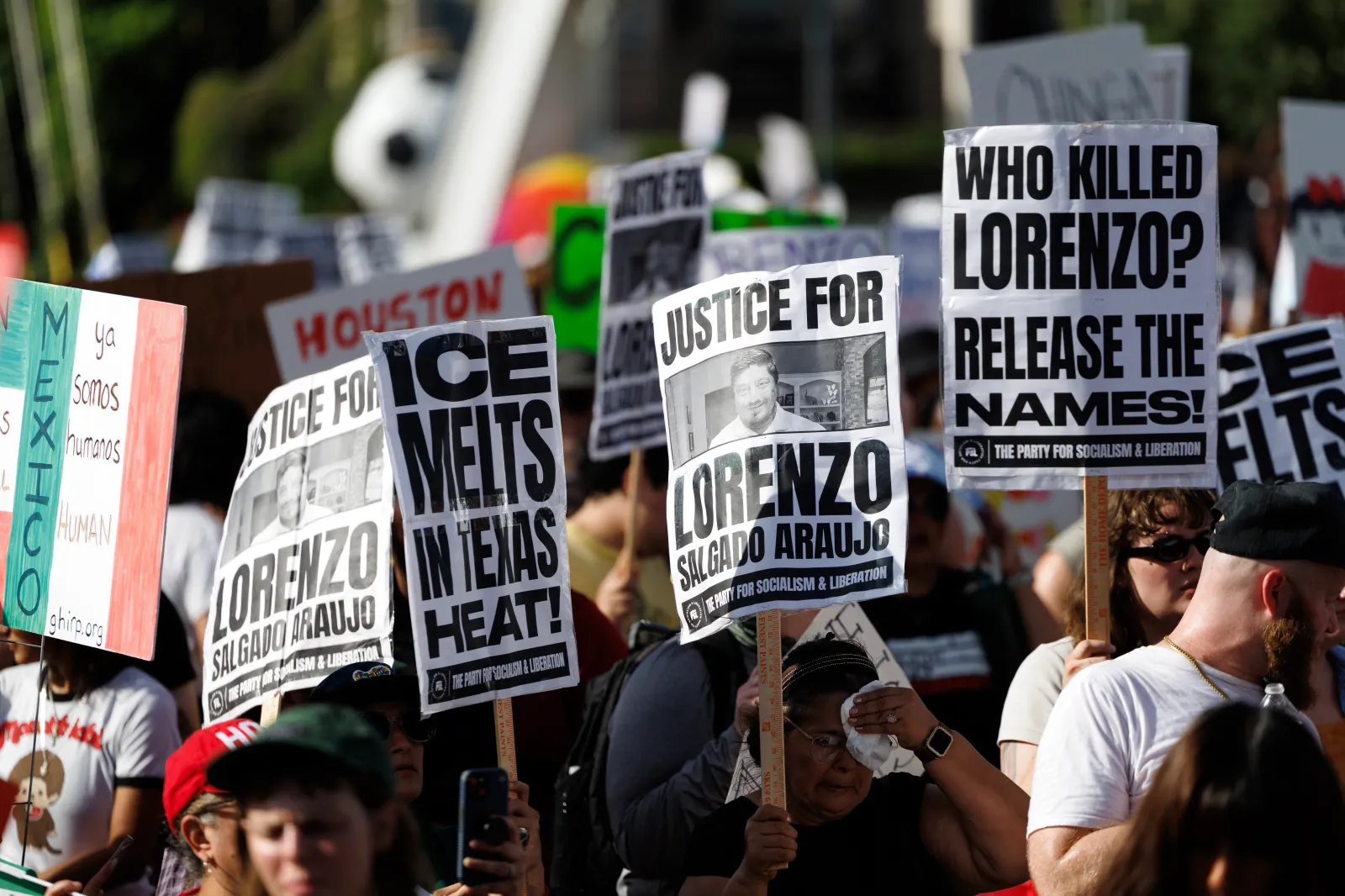
Mexico Turns to Unusual Tactic in Growing Fight Over ICE Deaths
Responding to the reports Tuesday, the Mexican Embassy in the U.S. said on X that the Mexican government had "not identified any evidence confirming a specific or imminent risk to the public."
The embassy said that the two countries continue to share information to assess and tackle any known threats, and patrols had been stepped up by federal, state and local authorities across Mexicali.
"The Security Cabinet urges the public to remain calm, rely on official sources, and avoid circulating unverified rumors," the embassy said.
Newsweek contacted the U.S. Embassy and consulates in Mexico for comment by email on Tuesday outside normal working hours.

...
Additional Security Measures in Place
In response to the U.S. authorities' warning issued for Mexicali, the government of the state of Baja California has deployed additional security.
Without directly mentioning the U.S. travel alert, the Secretary of Citizen Security and coordinator of the Security Roundtable for Peacebuilding strategy, Laureano Carrillo Rodríguez, said in a statement that the National Intelligence Center (CNI), and the Municipal Police, are maintaining security protocols.
These protocols will be strategically reinforced throughout the municipality in accordance with the permanent agreements made at the Security Roundtable and in close collaboration between the Secretariat of National Defense (SEDENA), the Navy, the National Guard, the Federal SSPC, the State Citizen Security Force (FESC), the Attorney General's Office (FGR), the State Attorney General's Office (FGE).
"At the direct instruction of Governor Marina del Pilar, state and federal forces are working in a coordinated manner to safeguard order and tranquility in the state capital. Prevention, patrol, and surveillance operations remain fully active as part of our unwavering commitment to protecting the people of Baja California," the state official stated.
Recent Episodes of Violence in Mexicali, Baja California
While the U.S. did not specify the potential threat in Mexicali, the city has recently been shaken by several episodes of violence.
In late June, two Baja California state police officers were killed in separate attacks in Mexicali, incidents that authorities said may have been retaliation for operations against Los Rusos, a faction associated with the Sinaloa Cartel, during which a high-ranking member of the criminal group was killed.
One officer and his wife were shot outside their home in Mexicali, and another officer was killed the next day at a taquería.
Last week, local news media reported that Mexican authorities had seized 120 kilograms of fentanyl pills, equivalent to 4 million doses, in Mexicali at a property linked to Los Rusos, showing that the group remains active.
In February, local authorities reported a wave of violent incidents across the state, including vehicle burnings and related disturbances in Tijuana, Mexicali, Tecate and San Quintín. Officials said there were 16 incidents statewide, though no civilian injuries, and arrested seven people during the subsequent security response.

...
Cartel Activity in Mexico
Los Rusos, the cartel active in Baja California, is a faction of one of the major drug cartels in Mexico, the Sinaloa Cartel, which operates in much of the north-west.
This is one of the largest and most powerful in the country, smuggling fentanyl, cocaine, and other drugs into the U.S. It was founded in the late 1980s by the infamous drug lord Joaquín “El Chapo” Guzmán, who was arrested twice in Mexico, once in 1993 and once in 2014, but escaped prison both times. He is now serving a life sentence at ADX Florence in Colorado.
Another major cartel is the Jalisco New Generation Cartel, a rival of the Sinaloa cartel for control of the synthetic drug market which operates in the west of Mexico, especially in the Tierra Caliente region.
The cartel was founded around 2010 and has since then quickly scaled up operations, expanding across the country to become a major player in drug trafficking. It is led by Ruben Oseguera, known as “El Mencho”, a former police officer.
Other major cartels operating in Mexico include the Gulf Cartel and Los Zetas Cartel, which can be found in the north-east.

...
U.S. Fentanyl Epidemic
The U.S. has been ravaged by a fentanyl epidemic which has caused tens of thousands of drug-related deaths every year for several decades, according to the Brookings Institution.
Over 100,000 Americans died from drug overdose every year since 2021, the think tank reported, with fentanyl being the main cause of deaths for U.S. nationals aged 18 to 45 in 2021.
The vast majority of fentanyl entering the U.S. illegally comes from Mexico, primarily through the southern border, and the Sinaloa Cartel and CJNG are considered the main suppliers.
When President Donald Trump returned to the White House last year, he accused the Mexican government of not doing enough to stop drug cartels from smuggling fentanyl into the U.S. The Trump administration introduced tariffs on Mexico, partially as punishment for this perceived failure.
Contact Newsweek editor on this story: Edward Pearcey.
View 0 Comments
Submit Correction
View Editorial & AI Guidelines