10
Loading video...

By Dan Gooding
Associate News Editor
0
Share
Newsweek is a Trust Project member
See more of our trusted coverage when you search.Prefer Newsweek on Googleto see more of our trusted coverage when you search.
The USS Abraham Lincoln is set to return home to California, it was reported Thursday, as its replacement arrived in the Middle East to take over operations amid America's ongoing war with Iran.
In a post to X on Thursday morning, U.S. Central Command said the USS George Washington was in the Arabian Sea. The arrival means the Lincoln can return to San Diego after over nine months at sea that culminated in wide-ranging concerns about conditions and supplies on board.
A U.S. official confirmed to The New York Times that the Lincoln had begun its journey home. An official return date was not immediately clear.
Read More on U.S.
A Navy spokesperson told Newsweek they could not comment on future ship movements.
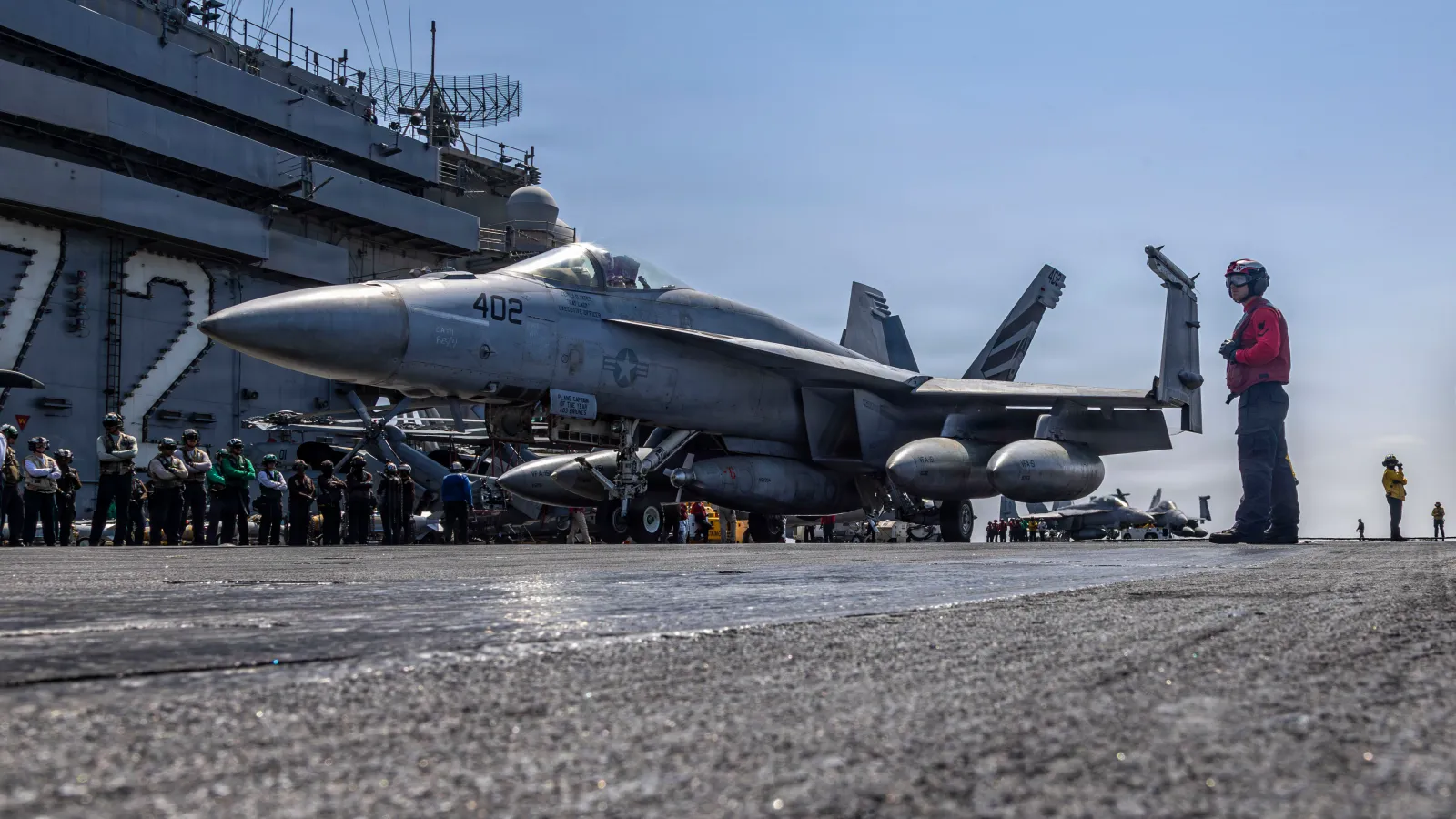
...
Weeks of Mounting Concerns About the Lincoln
Reports emerged in recent weeks from parents, spouses and friends of those on board the Lincoln that the crew was facing increasingly dire conditions, including moldy showers, poor food quality and a lack of basic necessities such as soap and razors.
On Friday, Newsweek spoke with the wife of a higher-ranking officer on board the vessel, who detailed how spouses had been trying to send care packages to the crew after reports of supplies running low and food deteriorating in the spring.
"Well, the care package took 2 1/2 months to get there. So that was concerning," Ashley Rogers said in a phone interview. "Now the most recent communications, even with my husband, who snaps into military mode, he just does his job, even he sounds so just defeated, and he has a really hard time getting his guys to cooperate and do their jobs."
Mental well-being also became a concern, with reports that some sailors had attempted—and even succeeded—in jumping overboard. The U.S. Navy pushed back on these claims.
"Based on information available to the command, we have not identified an increase in reported suicidal ideation or suicide attempts aboard the ship," a Navy spokesperson said August 12. "We take every service member’s well-being seriously and have religious, medical and mental health professionals available to assess and address concerns as they arise."
Related Story
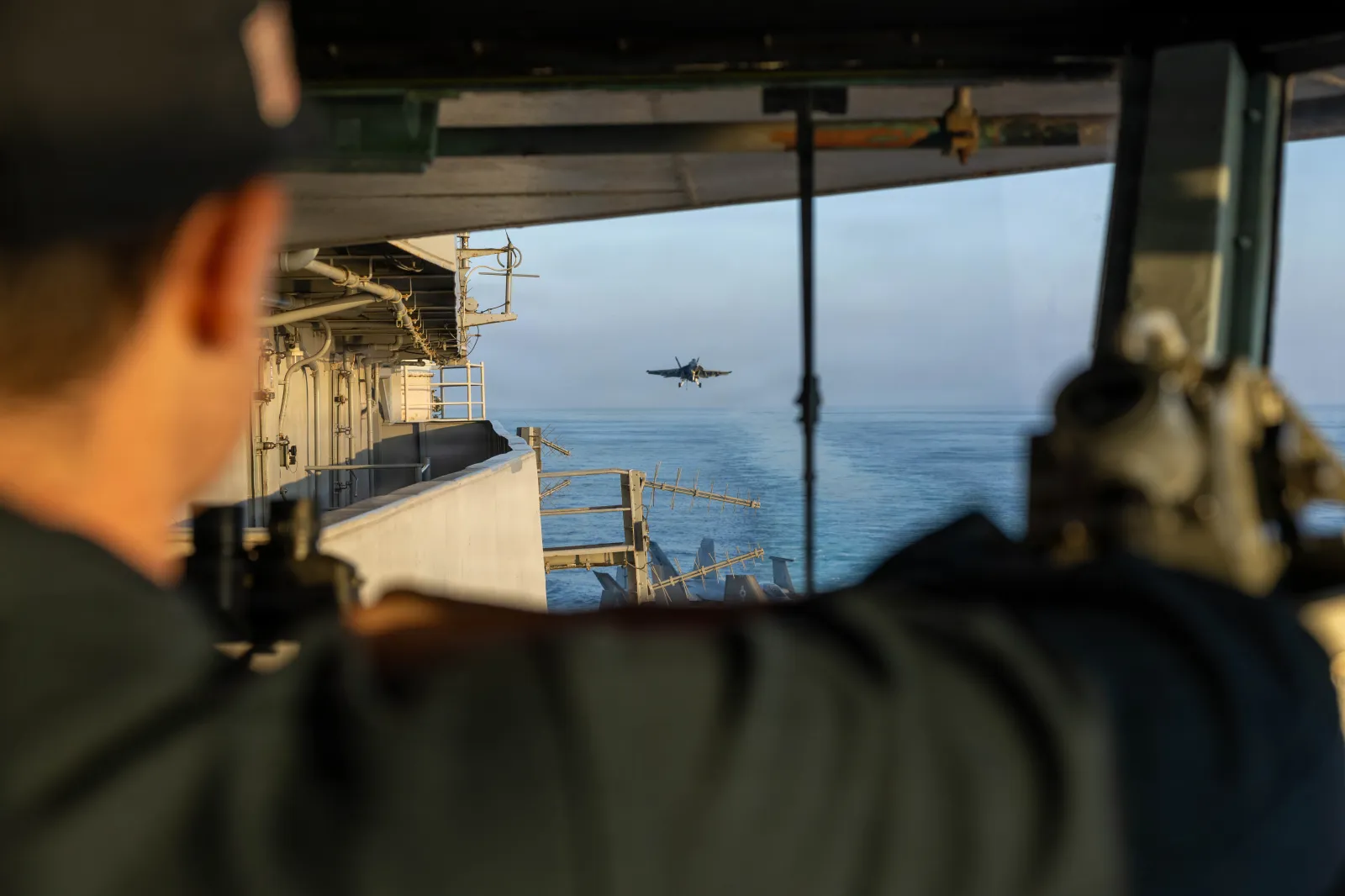
Father of USS Abraham Lincoln Sailor Criticizes Trump’s Iran ‘Forever War’
Trump and Hegseth's Dismissals
President Donald Trump and his Secretary of Defense Pete Hegseth both sought to downplay the claims about the conditions aboard the Lincoln.
Speaking to reporters at Joint Base Andrews in Maryland on Friday, the president was asked about the concerns, as the ship surpassed 265 days at sea.
"No, they're not," Trump said about families raising concerns. When asked if the deployment had gone on too long, Trump said, "No, no, no. Not nearly long enough."
A day earlier, Hegseth told reporters the situation had been "completely misrepresented," adding that "some deployments are longer than others, and I have more respect and gratitude for those sailors than anybody."
Rogers told Newsweek that afternoon that the comments were "selfish" and "disconnected from reality."
Lawmakers also responded, expressing their dismay at what the president had said. California Democratic Representative Mike Levin, who had repeatedly raised concerns over the week, took to X, writing, "Respectfully, Mr. President, I’d like to see you survive a week on that ship."
The Lincoln's Lengthy Deployment
The Lincoln, which once displayed the "Mission Accomplished" banner during President George W. Bush's May 2003 speech six weeks into the Iraq invasion, left its home base of San Diego on November 21 for a deployment initially focused on the Indo-Pacific.

...
The carrier strike group spent its early months operating in the Pacific, and by early January, the Navy had released imagery showing the vessel conducting live-fire exercises in the South China Sea, one of the world's most strategically contested waterways.
Within weeks, however, the carrier's trajectory changed. Open-source tracking and military updates indicated the Lincoln was moving west through the Strait of Malacca, the narrow maritime chokepoint between the Pacific and Indian Oceans.
The shift coincided with a broader U.S. military buildup in the Middle East as tensions with Iran escalated. By the end of January, the carrier had passed under the authority of U.S. Central Command, signaling its transition from a Pacific-focused mission to operations tied to Washington's growing military posture in the region.
As the conflict with Iran intensified, U.S. military statements increasingly placed the Lincoln within the U.S. Fifth Fleet's area of operations.
The Fifth Fleet is responsible for a vast region that includes the Persian Gulf, Gulf of Oman, Arabian Sea and parts of the Red Sea. While the Navy does not disclose the precise locations of deployed warships, the carrier's presence became a key part of America's naval force in the Middle East as the conflict continued.
More than eight months after leaving California, the Lincoln remained deployed in the Fifth Fleet area.
Military photographs released at the end of July showed the carrier still operating in the region, while additional images published in early August depicted fighter aircraft recovering aboard the ship.
Returning to Base
The *Lincoln'*s return to the U.S. will likely bring relief for both its crew and the family members who have spoken out about their worries.
U.S. officials have sought to praise the aircraft carrier's sailors and officers, with the commander of U.S. Central Command, Admiral Brad Cooper, saying in a statement shared to X Sunday that his time aboard on Saturday had been "awe-inspiring."
"I wish every American could see the crew in action. You would beam with absolute pride when witnessing their camaraderie, teamwork and resilience," Cooper said.
"Here’s an important fact: Of the U.S. Navy’s 11 active aircraft carriers, the Lincoln currently has among the lowest number of cases related to mental health."
Cooper went on to say that he knew not all was perfect, and that lengthy deployments were challenging and tough. He also said mental health required attention from leadership.
"I applaud Lincoln’s leadership — the senior enlisted leaders in the Chief Petty Officers Mess in particular — for stepping up and making mental health and crew resilience a leadership priority," Cooper said.
"To all our Sailors and Marines aboard the ship, keep up the great work and fair winds and following seas on the journey home.”
Contact Newsweek editors on this story: Samantha Beech and Edward T. Cummins.
View 0 Comments
Submit Correction
View Editorial & AI Guidelines