...

By Brendan Cole
Senior Reporter
0
Share
Newsweek is a Trust Project member
See more of our trusted coverage when you search.Prefer Newsweek on Googleto see more of our trusted coverage when you search.
Just days before the February 28 U.S. strikes on Iran, Iranian officials were hinting a nuclear deal with Washington was possible.
Tehran and Washington had restarted Omani-brokered talks in February with President Donald Trump setting an early March deadline for an agreement to be reached. The U.S. was demanding Iran dismantle its main nuclear facilities and transfer its enriched uranium stockpile.
Citing officials familiar with Thursday's negotiations in Geneva, The Wall Street Journal reported that the U.S. team was pushing the Iranians to dismantle the sites at Fordow, Natanz and Isfahan as part of a deal that would be tough for Tehran to accept.
Read More on News
Hamidreza Azizi, research fellow at the German Institute for International and Security Affairs (SWP) think tank in Berlin, told Newsweek Tehran was open to bigger concessions than previous negotiations, such as before the 12-day war with Israel in June 2025.
...
What Is Iran's Nuclear Program?
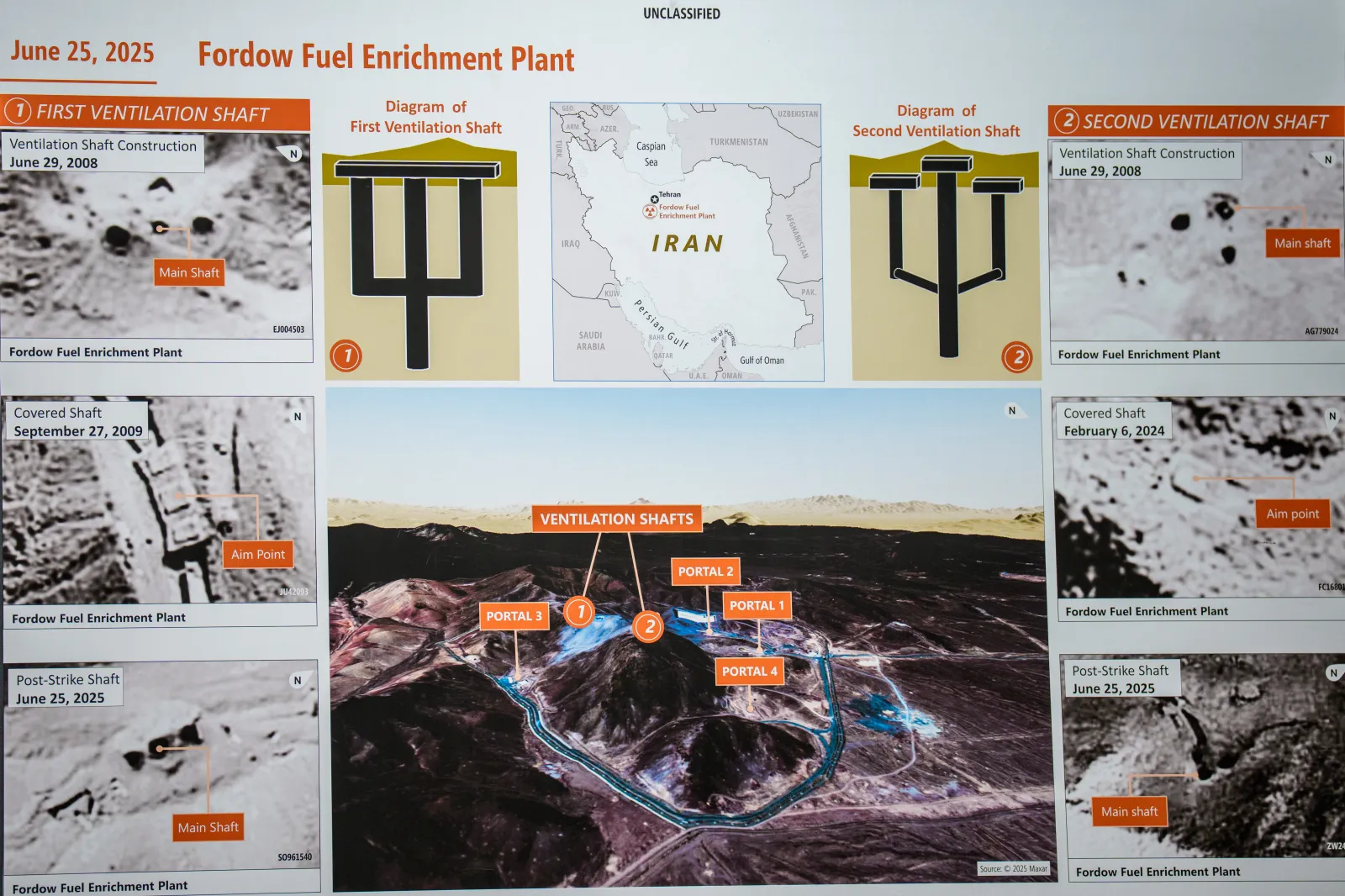
Iran has always maintained its nuclear program is peaceful and for energy purposes. But concerns about its nuclear weapons capability prompted President Donald Trump to order strikes that targeted the Fordow and Natanz enrichment facilities and a research site near Isfahan in June 2025.
Trump boasted the strikes "obliterated" Iran's nuclear program and while the International Atomic Energy Agency (IAEA)—the United Nations nuclear watchdog—said they had dealt a serious blow to the program, the watchdog added Iran's nuclear material remained "in large quantities."
Before the June strikes, Iran had enriched 972 pounds of uranium up to 60 percent purity, according to the IAEA, which is a short step away from weapons-grade 90 percent-enriched uranium. This was up from 605.8 pounds of 60 percent- enriched uranium in February 2025, and 267.9 pounds the previous year.
The U.S. Defense Intelligence Agency (DIA) estimated in May 2025 it would probably take Iran less than a week to produce enough weapons-grade uranium to make its first bomb, although building a bomb would likely take longer.
While Iran had long reiterated it had no intention of developing a nuclear weapon and insisted its program was peaceful, satellite images from late January showed roofs built over damaged buildings at the Natanz and Isfahan sites, which may suggest attempts to salvage remaining materials. On February 27, the IAEA reported Iran was conducting regular and unexplained activity at the uranium-enrichment sites.
Why Is The West Concerned?
In 2015, former President Barack Obama's administration and European allies struck the Joint Comprehensive Plan of Action, (JCPOA) with Iran to limit its uranium stockpiles and enrichment capacity and face IAEA monitoring, in return for sanctions relief.
But during his first term in 2018, Trump withdrew from the deal he said was insufficient, imposing harsh sanctions in a "maximum pressure" campaign to force Iran to negotiate a new agreement. Efforts by the Biden administration to revive the deal were unsuccessful.
During that time, Iran stopped following the terms of the JCPOA and increased its uranium enrichment program. In late February, U.S. Secretary of State Marco Rubio said Iran continued to pose a "very grave threat" with its nuclear ambitions and missile and naval capabilities.
What Was Iran Willing to Concede On?
Ahead of Saturday's strikes, Azizi told Newsweek Tehran may have been open to suspending its enrichment program for a few years and also allow the expansion of IAEA monitoring activities, including formalizing the additional protocol to the Nuclear Non-Proliferation Treaty (NPT).
He suggested Iran could have diluted the stockpile of its highly enriched program, with the possibility of some being shipped outside the country to trusted partners such as Oman or Russia.
However, he believed the U.S. demand for Iran to ship its whole stockpile of its lower and higher level enriched uranium to outside of the country was likely to be unacceptable for Tehran. While Iran may have agreed to suspend the program for a few years, Azizi added, the aim would be "to keep as at least a symbolic enrichment program within the country to show they have not capitulated and it also matters in terms of the image of the regime."
"A very important point that could be a challenge in the negotiations, and prevent reaching a deal is sanctions relief," he said. "Under which framework sanctions are going to be lifted is something that is very important for Iran."
Thursday's Geneva talks between Iranian officials and U.S. special envoys Steve Witkoff and Trump's son-in-law Jared Kushner, were "intense and serious," according to a senior Iranian official. He reiterated Tehran’s position that a deal would be possible if Washington "seriously separates nuclear and non-nuclear issues."
Last week, Iranian Foreign Minister Abbas Araghchi denied reports that Tehran was open to stopping its nuclear enrichment programs for a few years, saying: "We have not offered any suspension and the U.S. side has not asked for zero enrichment."

...
Update 02/28/26, 8:45 a.m. ET: This article was updated to include additional information and context.
View 0 Comments
Submit Correction
View Editorial & AI Guidelines