...

By Andrew Stanton
Reporter
0
Share
Newsweek is a Trust Project member
See more of our trusted coverage when you search.Prefer Newsweek on Googleto see more of our trusted coverage when you search.
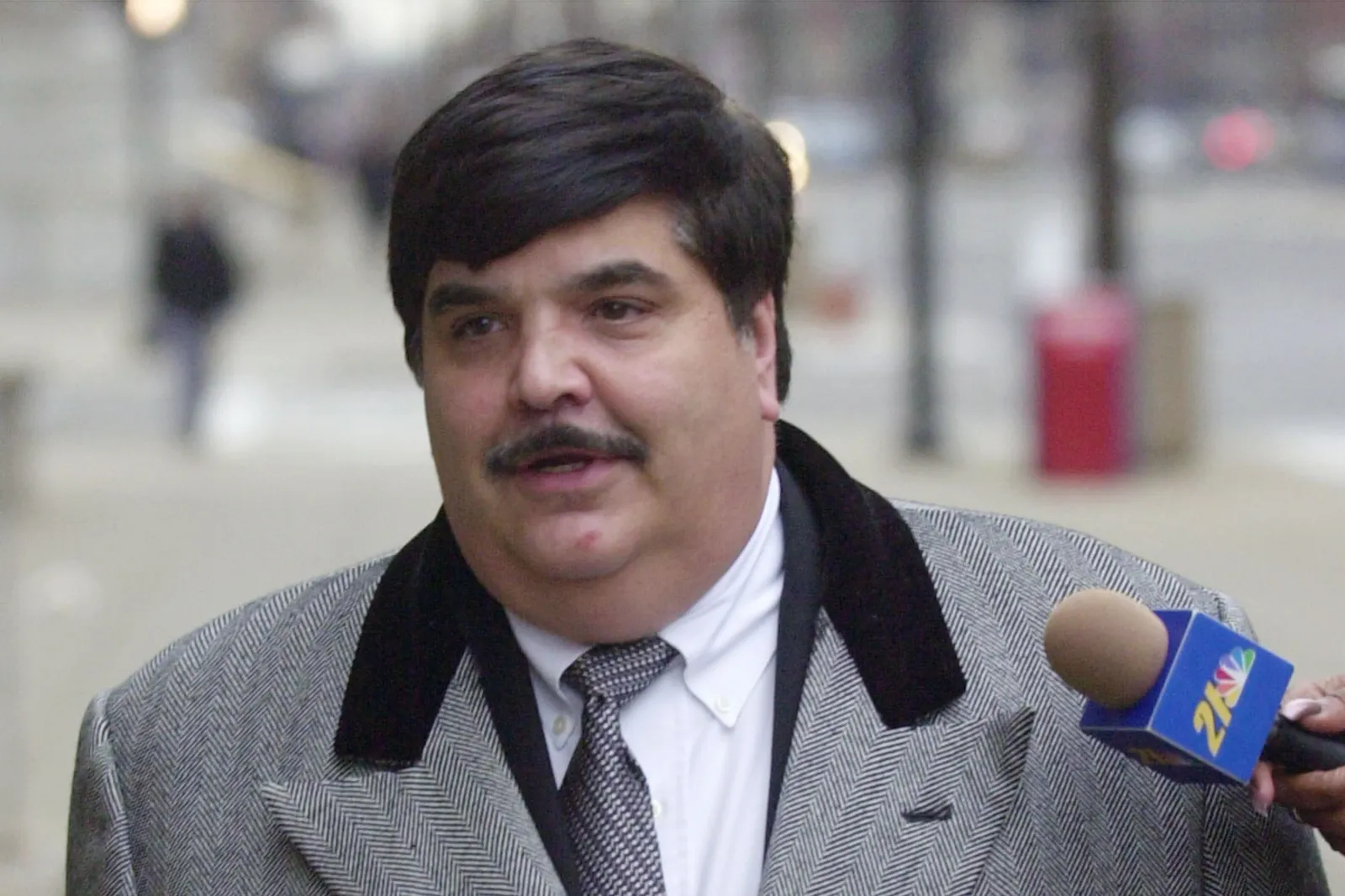
John J. Cafaro, a businessman who has donated hundreds of thousands of dollars to President Donald Trump, is coming under scrutiny over alleged ties to the company contracted to install a water purification system in the Lincoln Memorial Reflecting Pool after algae blooms have returned.
The renovation of the reflecting pool, the latest Washington, D.C. landmark to undergo a transformation during Trump’s tenure, has drawn criticism after algae spread across its surface, turning the water green.
Federal contract records show that a $1.7 million contract was given to Greenwater Services, a business based in Brookfield, Ohio, to install a “nano bubble” device to kill algae. The New York Times reported that the business is owned by J.J. Cafaro Investment Trust, which is led by Cafaro.
Read More on U.S.
Cafaro has donated hundreds of thousands to Trump over the years, including a $250,000 donation in 2020 and a $100,000 donation in 2024, according to Federal Election Commission (FEC) records reviewed by Newsweek.
Katie Martin, a spokeswoman for the Department of the Interior, told the Times that the company was “selected because they had the expertise, workforce and materials” and that the White House was not involved.
Newsweek reached out to Greenwater Services for comment via email.
...
Who Is John J. Cafaro?
Cafaro’s LinkedIn profile describes him as a “longtime Ohio retail and manufacturing executive who has guided major development projects, including the South Hill Mall and Meadowbrook Mall.” He has also overseen assets in Florida and West Virginia.
In 2021, he pleaded guilty to bribing former Congressman James Traficant Jr., an Ohio Democrat, and was expected to testify against him, the Times reported*.* In 2020, he pleaded guilty to a campaign finance crime, according to Cleveland.com.
Cafaro’s family business has developed more than a dozen malls across the country. It was founded in 1949 by William M. Cafaro and his brother. He has been retired from the company for about 17 years, according to a company spokesperson.
His daughter Capri Cafaro served in the Ohio State Senate as a Democrat.
He is also a neighbor to Trump’s Mar-a-Lago club in Florida, reported the Times.
Trump once described Cafaro as a “man who made a lot of money in Cleveland, does a good job and is a fantastic man” during a campaign event in the state, The Columbus Dispatch reported.
Contract Comes Under Scrutiny
The contract drew scrutiny from some prominent Democrats on Friday.
“You can’t make this s*** up,” Hunter Biden, the son of former President Joe Biden, wrote on X.
“This is Trump donor and Mar-a-Lago neighbor John Cafaro who got the no-bid contract to install a water purification system for the reflecting pool. He has 2 prior convictions, one for bribing a member of Congress and another for an illegal loan that violated campaign finance,” Moe Davis, a former U.S. Air Force colonel and congressional candidate, wrote on X.

...
Reflecting Pool Debacle
The project involved draining the nearly century-old pool, resurfacing it with an “American flag blue” coating, then refilling it ahead of the nation’s 250th anniversary celebrations. Within days, however, algae spread across the surface, turning the water green.
The Lincoln Memorial Reflecting Pool has long struggled with algae because of its design. As a shallow, slow-moving body of water exposed to direct sunlight, it provides ideal conditions for algae growth, particularly during warmer months.
Scientists describe algae blooms as driven by a relatively simple combination of factors: sunlight, warmth, nutrients and water. When those conditions align—as they often do in shallow outdoor basins—growth can accelerate rapidly. In such environments, algae can multiply from microscopic levels into visible blooms in a matter of days.
The renovation itself may have contributed to the speed of the bloom.
The pool was drained, repaired and refilled on a compressed timeline, leaving limited opportunity for systems to stabilize. Experts note that restarting water systems after a shutdown can release residual algae from pipes and supply lines, effectively seeding new growth as soon as the pool is refilled.
Temperature is another key factor. Some specialists have suggested the darker coating applied during the renovation could increase heat absorption, raising water temperature and encouraging algae to grow more quickly. Even small changes in temperature can significantly affect reproduction rates, making conditions more favorable for a bloom.
Together, those elements—residual biological material, warm weather, abundant sunlight and shallow water—can create conditions in which algae spreads quickly, even after extensive maintenance work.
Cleanup efforts have been underway, with National Park Service crews being deployed to remove the algae.
View 0 Comments
Submit Correction
View Editorial & AI Guidelines