...

By Jenna Sundel
News Reporter
0
Share
Newsweek is a Trust Project member
See more of our trusted coverage when you search.Prefer Newsweek on Googleto see more of our trusted coverage when you search.
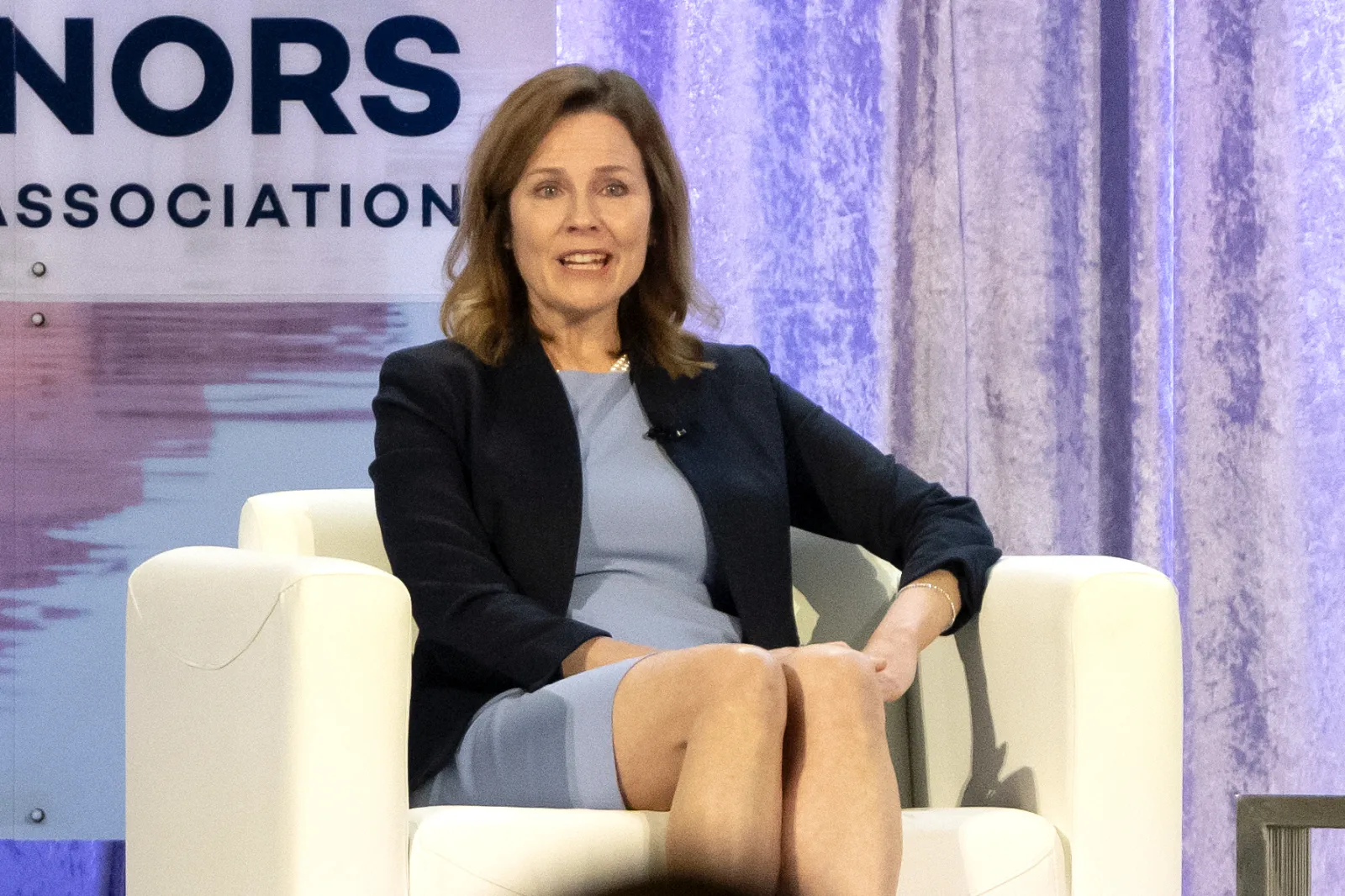
U.S. Supreme Court Justice Amy Coney Barrett was the lone jurist on the High Court who did not participate in a ruling that blocked creation of the first taxpayer-funded religious charter school in the nation.
The resulting 4-4 split decision reached on Thursday upholds a ruling by the Oklahoma Supreme Court to invalidate the state charter board's approval of St. Isidore of Seville Catholic Virtual School without setting a national precedent.
Justices are not required to provide a reason for their recusal from a case. Barrett did not explain hers, but she is close friends and used to teach with Notre Dame law professor Nicole Garnett, who has been an adviser to the school, according to the Associated Press (AP).
Read More on News
...
Why It Matters
The U.S. Supreme Court's ruling in the case packed the potential to expand the scope of religious institutions' access to public funding nationwide. Instead, it ended in a rare 4-4 split.
A total of 164 cases decided by the High Court from 1925 to 2015 ended in a tied ruling, according to the Minnesota Law Review.
In addition to recusals, the court has decided cases with eight members following the death of a justice. Following Justice Antonin Scalia's death in 2016, the court was left with eight justices and had evenly split rulings on several cases, including United States v. Texas and Friedrichs v. California Teachers Association.
What To Know
The High Court's decision was announced in a brief one-page opinion on Thursday: "The judgment is affirmed by an equally divided Court. Justice Barrett took no part in the consideration or decision of these cases." The opinion does not reveal how each justice voted.
Oklahoma's Statewide Charter School Board approved an application by St. Isidore in 2023 and state Attorney General Gentner Drummond filed a lawsuit in response, arguing that the decision violated state and federal laws against government establishment of religion.
After the Oklahoma Supreme Court ruled in Drummond's favor, St. Isidore appealed to the U.S. Supreme Court. The K-12 online Catholic school had originally planned to start instruction for 200 students in fall 2024.
In a statement to Newsweek, George Theoharis, teaching and leadership professor at Syracuse University, said the deadlocked ruling leaves many questions unanswered. "If the court allows the specific teaching of religion (forbidden by current law), what other parts of the law will religious and other charter schools no longer need to comply with? Can they reject students they do not want to educate?"
He said it also remains unclear whether students who do not practice the school's religion would be allowed to attend and if they would be forced to participate in religious education.
Charter schools are free and open to all, receive state funding and must follow antidiscrimination laws. They are run by independent boards that are not part of the public school system.
What People Are Saying
Theoharis, also in his statement to Newsweek: "Will the court wrestle with families that are not Catholic sending their kids to this charter school and will they get to object to the teaching of religion?"
Jim Campbell—chief legal counsel at Alliance Defending Freedom who argued on behalf of Oklahoma's charter school board to the Supreme Court—in comments to AP: "Oklahoma parents and children are better off with more educational choices, not fewer. While the Supreme Court's order is disappointing for educational freedom, the 4-4 decision does not set precedent, allowing the court to revisit this issue in the future."
What Happens Next
The decision invalidates prior approval of St. Isidore by Oklahoma's charter board. The lack of a national precedent allows religious schools to seek consent from state charter boards in the future, which could lead to further litigation.
Do you have a story that Newsweek should be covering? Do you have any questions about this story? Contact LiveNews@newsweek.com.
View 0 Comments
Submit Correction
View Editorial & AI Guidelines