...

By Mandy Taheri
Reporter
0
Share
Newsweek is a Trust Project member
See more of our trusted coverage when you search.Prefer Newsweek on Googleto see more of our trusted coverage when you search.
As the United States and Iran are set to sign a deal on Friday aimed at ending the more than 100-day war, details of the agreement remained unclear until Wednesday, with conflicting reports initially regarding a $300 billion reconstruction fund for Iran.
U.S. officials read out the Memorandum of Understanding (MOU) on Wednesday, with one of the principles stating, "United States of America undertakes with regional partners to develop a definitive, mutually agreed plan with at least USD $300 billion for the reconstruction and economic development of the Islamic Republic of Iran. The mechanism for the implementation of this plan will be finalized as part of a final deal within 60 days. All required licenses, waivers, and permissions needed for the relevant financial transactions will be granted by the United States of America."
Vice President JD Vance initially appeared to suggest that such funding could be provided to Iran in a press interview, but later clarified, “not a single cent of American money goes to Iran.”
Read More on World
President Donald Trump denied the claim, saying at the G7 Summit in France, “We're not investing any money. I have the right to, if we want, but we're not investing any money. We didn't pay for it like Obama did. He paid billions of dollars"—likely in reference to the Joint Comprehensive Plan of Action (JCPOA), known as the Iran deal, which allowed the country to regain access to frozen assets and some sanctions relief.
Separately, the Obama administration settled an old financial dispute regarding a breach-of-contract claim for military sales to Iran in 2016 worth $1.7 billion.
The president’s comments come hours after he posted on Truth Social Monday night, writing, “Iran has agreed to never have a Nuclear Weapon! Also, the story that the U.S. is paying Iran 300 million Dollars is Fake News, put out by the Dumocrats!!!”
Newsweek reached out to the Iranian Foreign Ministry and the White House via email on Tuesday for comment.

...
What To Know
Trump has touted the MOU, which would open the Strait of Hormuz on Friday, a vital waterway that has been blocked by Tehran amid the war. Speaking in France on Monday, Trump said: “the deal’s all signed.” A formal signing ceremony is expected to take place on Friday and would also include a 60-day ceasefire extension.
The agreement has quickly drawn backlash over its lack of detail, what some believe are concessions to Tehran, and the decision to reportedly defer key nuclear issues to future talks. While some have welcomed the prospect of easing global energy disruption, critics say the MOU leaves core questions unresolved, although no finalized copy has been publicly shared.
Israel has been among the most vocal critics of the deal, with Finance Minister Bezalel Smotrich having called the MOU “bad for Israel” and “the entire free world,” pledging to continue efforts to topple Iran’s regime.
Several hardline Iranian newspapers, like Kayhan and Khorasan, reportedly said the agreement does not address the underlying issues between the U.S. and Iran and depicts it as a diplomatic capitulation to the West. Meanwhile, more moderate outlets like Khabar Online applauded the move.
Many politicians are still waiting for the full text to be released before commenting fully on the matter.
Reuters reported, citing an anonymous source, that a $300 billion private fund is outlined in the deal, noting that it is a private investment vehicle rather than a reconstruction or reparations program. The source said companies based in the U.S., the Gulf, Asia, South America, and Africa have all agreed to commit financing.
"It'll only be created once the final deal is signed," the source told Reuters. "During these 60 days the fund administrators will work with Iranians and investors to plan and scope projects."
What Vance Has Said About the Reported $300 Billion Fund?
On Monday, Vance confirmed that Iran could have access to $300 billion for reconstruction under the peace agreement.
CBS News’s Ed O’Keefe asked Vance during a Monday interview, “The Iranians are saying that they are going to have access to a $300 billion reconstruction fund, true or false?”
Vance said, “Well, Ed, that’s the sort of thing they could have access to, funded by the Gulf Coast coalition, so long as they honor their end of the obligation.”
The vice president continued, “I think that one of the things you’re going to see, Ed—and people have to be skeptical of this—is that the hard-liners in the Iranian system will overemphasize the benefits that Iran gets, while underemphasizing all the things that they have to concede, and all the things they have to provide, in order to get these benefits.”
He went on, “We absolutely are open to the Gulf Coast countries investing in the reconstruction of Iran, but only if Iran ends their nuclear program, ends their enriched stockpile of material and is really open to an inspections and enforcement regime.”
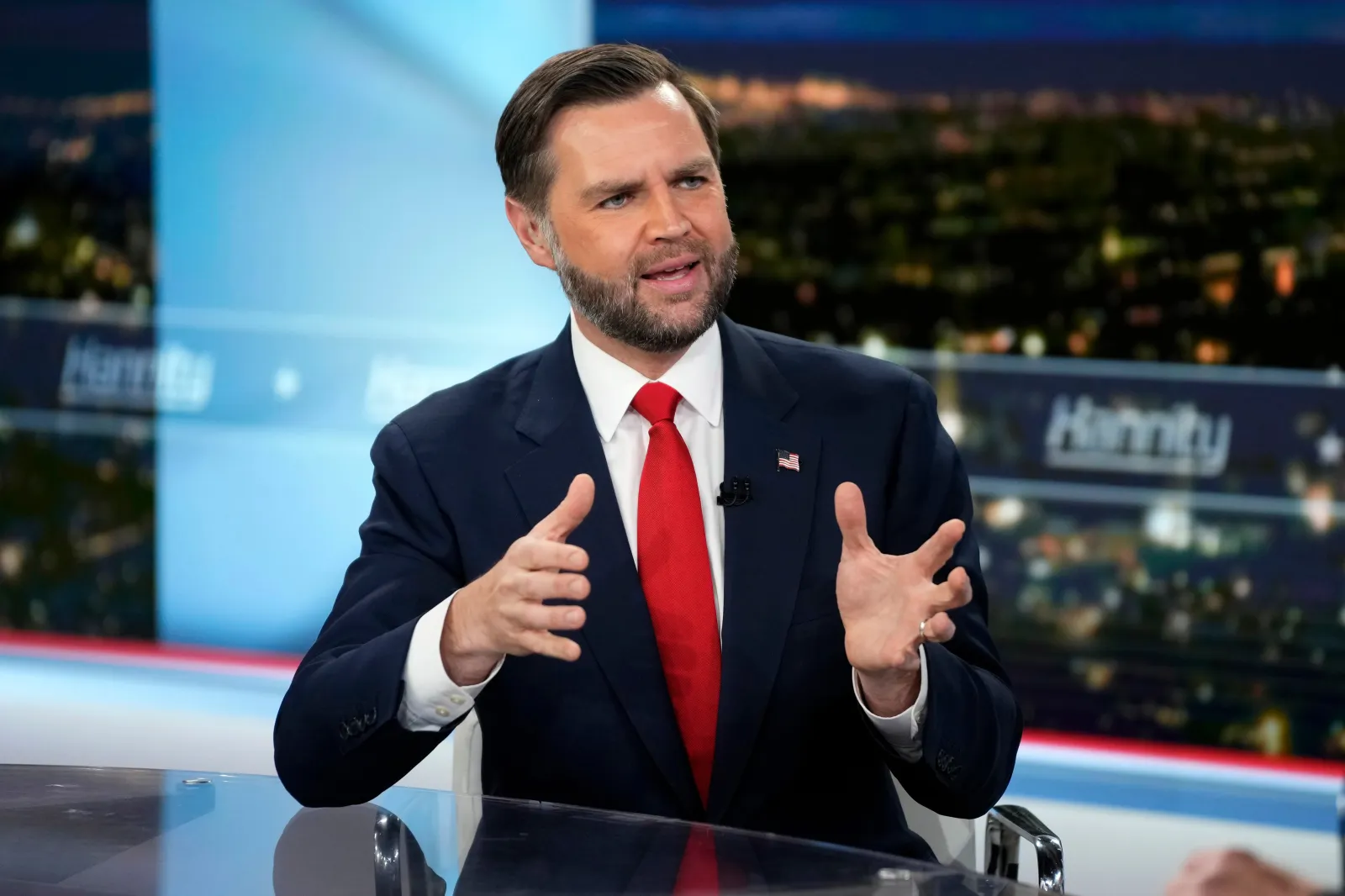
In a Monday night interview with Fox News’ Sean Hannity, Vance said, “Did the U.S. ever sign off on the Qatari paying them that money?” in reference to the reported $300 billion fund.
“No, the agreement says they are not getting a single dime of American money; that is just not what this is,” Vance said. “What the agreement does say, Sean, is again, if the Iranians behave, and if there are sanctions relief, and if the Iranians are integrated into the world economy, we would invite other countries, not us, but other countries, to invest in their country. That’s fine. But only if they comply with the terms of the agreement.”
...
On Fox New’s Fox & Friends Tuesday morning, co-host Lawrence Jones said his understanding of the deal, which has not been made public yet, includes an end to sanctions, Iran’s “best effort” to stop funding proxies, Iran will not have to close its nuclear facility, and “there's also the $300 billion in reparations that's gonna come from Qatar and some of the Gulf states, and then $24 billion in unfrozen assets. Is any of that true?”
Vance did not affirm or deny, saying, “most of that is basically Iranian propaganda,” adding that it’s “frustrating” but “expected.”
He clarified, “Not a single cent of American money goes to Iran. Not $300 billion, not $24 billion, not any of the money.”
How Political Figures Have Reacted to the Reported Fund?
Many political figures have called out the reported funding, arguing that it runs counter to the president's MAGA platform.
Former Representative Marjorie Taylor Greene, who left office in January after her public split with Trump and has been vocal against American wars, called the reported $300 billion fund “bull****.”
In a video posted on her X account Monday, she said, “I’m assuming this comes from the American taxpayer, and I want to tell you that’s a bunch of bull****. This is a war that Americans did not support, as a matter of fact we said no more foreign wars and that’s what we voted for in 2024, well, Trump decided to bomb Iran and go to war with Iran on behalf of his good friend Bibi Netanyahu in Israel, and he’s on record saying that he did this for Israel, while he claimed that it was to stop Iran from having a nuclear weapon.”
She went on to criticize the financial costs of the war, including the depletion of U.S. munitions stockpiles, higher gasoline prices and inflation, before adding, “now were getting told that we may have to pay an additional $300 billion to rebuild what Trump and Netanyahu decided to bomb? This is a bunch of bull****.”
Republicans Against Trump wrote in a Tuesday X post, “The U.S. is allowing Iran to immediately resume oil and fuel sales as part of the deal to end the war, per the WSJ. The sanctions waivers would kick in right away and also cover banking, shipping, and insurance needed to support those sales. So Iran gets billions in economic relief on day one, before giving up much of anything in return. The worst deal EVER.”
Dan Bilzerian, who is running as a Republican for a Florida House seat, said in a Monday X post, “We won the Iran war so decisively that we’re now offering $300 billion to convince Iran to end it.”
The Lincoln Project, a Republican but anti-Trump group, said in a Monday post, "Need MAGA to explain to the rest of us with brain cells how giving Iran $300 Billion is different or somehow better than giving Iran $1.7 Billion?" again referencing the Obama administration's dealings with Iran.
Republican Senator Rand Paul, who has been outspoken against the war, said in an X post on Tuesday, "I applaud President Trump's desire for peace. The American people are tired of endless wars and the price that comes with them. Peace with Iran is worth pursuing. Those rushing to sabotage these talks should ask themselves: whose interests are they actually serving?"
View 0 Comments
Submit Correction
View Editorial & AI Guidelines