10
Loading video...


By Khaleda Rahman and Jesus Mesa
0
Share
Newsweek is a Trust Project member
See more of our trusted coverage when you search.Prefer Newsweek on Googleto see more of our trusted coverage when you search.
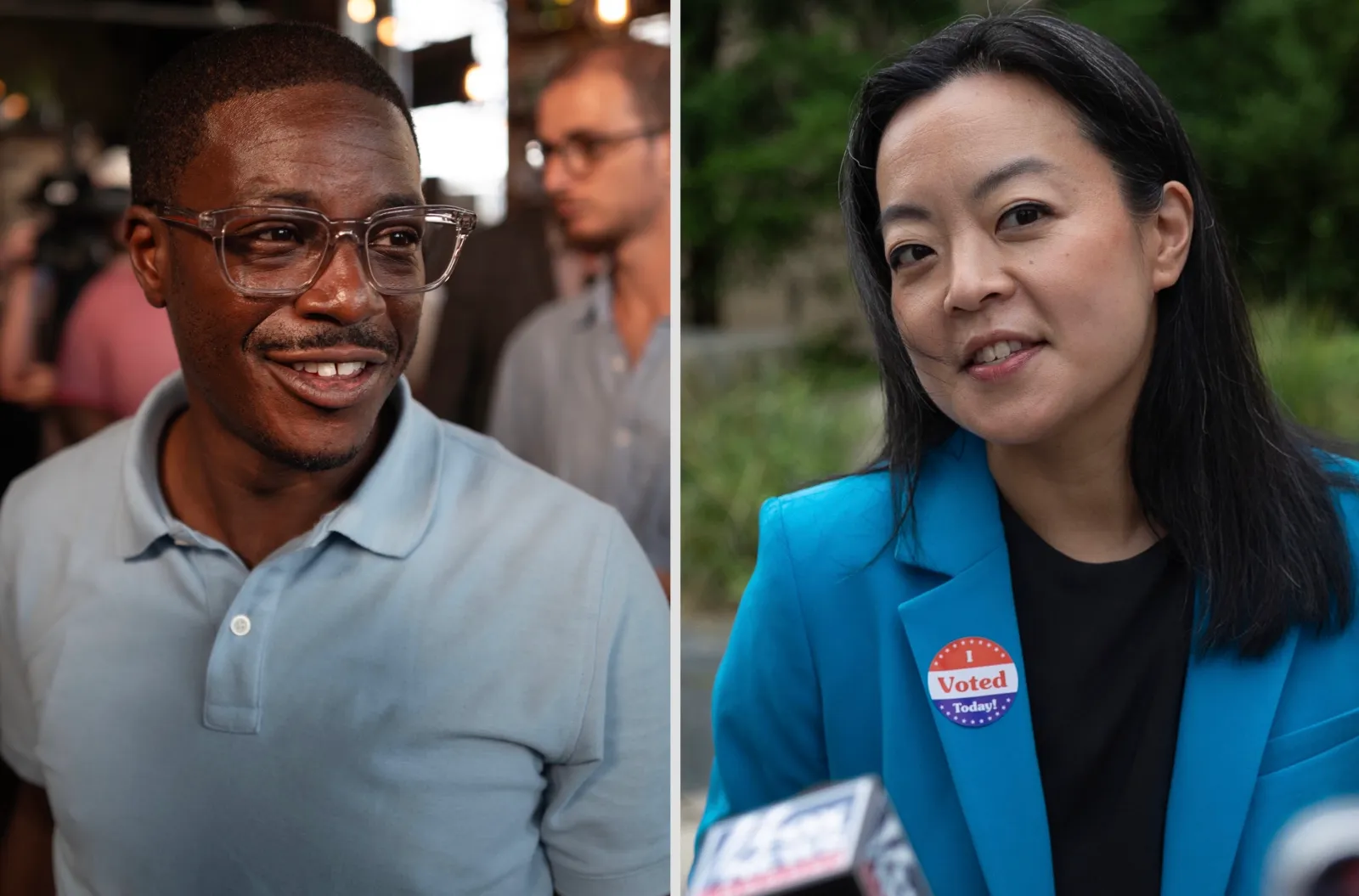
Milwaukee County Executive David Crowley has won Wisconsin's Democratic gubernatorial primary, defeating state Representative Francesca Hong—the democratic socialist who had been leading in public polling for weeks.
With 98 percent of votes counted, Crowley was ahead of Hong by about 3,000 votes, or 0.4 percent.
The Associated Press called the race for Crowley at 3:34 a.m. Eastern time, saying it declared the winner after Hong conceded the race and removed the possibility of a recount.
Read More on News
Since Crowley's margin of victory was less than 1 percentage point, Hong could have requested that the ballots be recounted.
Hong's campaign manager, Becky Cooper, said after Hong's concession that she was "proud of the race we ran."
Newsweek has contacted the Hong campaign for comment via an email sent outside regular business hours.
Crowley's victory saw him triumph over Hong mere weeks after he reentered the race with outgoing Governor Tony Evers' endorsement. He secured the backing of more mainstream Democrats, who see Crowley as having the best chance of beating Republican U.S. Representative Tom Tiffany in November.
"From day one, this campaign has been about what comes next for Wisconsin: making life more affordable, strengthening our schools, creating good-paying jobs, and making sure opportunity reaches every corner of our state," Crowley wrote on X shortly after the race was called.
"Wisconsin, let's get to work," he added.
...
Crowley "is grateful to Wisconsin voters, the volunteers who powered this campaign, and everyone who stepped forward to participate in this primary," Garren Randolph, Crowley's campaign manager, said in a statement.
"To Francesca, Kelda, Joel, and every other candidate who shared their vision for Wisconsin, thank you. They challenged all of us to think bigger about what our state can become," he continued.
Randolph added that Crowley is now focused on "bringing people together, earning the support of Democrats, Republicans, Independents, and anyone who believes Wisconsin is at its best when we work together and deliver results."
Evers congratulated Crowley on social media, writing that he "earned this win and the accolades."
"I am so proud of David—he's the future of our Party, and I can't wait for him to be our next governor. For now, we polka. Tomorrow, we're back at work to win," he continued.
To Tiffany, the governor added, "We'll see you in November."
Late on Tuesday night, Hong told supporters: "We have built something that will change politics forever. The work we have done will be remembered forever. I know we don't have the final results right now, but what I do know is we are ready to keep fighting."
Democrats are hoping to capitalize on low approval ratings for President Donald Trump in a state he won in 2016 and 2024 to retain control of the governor's office and flip both chambers of the Legislature to gain full control of Wisconsin state government for the first time since 2010.
Related Story

Who Framed AOC?
Crowley Tries to Unite Democrats After Bruising Primary
Crowley moved quickly to shift Democrats’ focus away from the primary fight, arguing that the party’s divisions between moderates and progressives mattered less than the broader fight ahead.
“Over the past few months, you’ve heard a lot of people try to define this election as a battle between the left and the center,” Crowley said Wednesday. “That narrative misses the entire point of what we’re doing.”
Instead, Crowley said Democrats should focus on what unites them, particularly the effort to keep what he called “MAGA extremism” from taking hold in Wisconsin.
“The real threat wasn’t any of my primary opponents,” Crowley said. “The real opponent has always been Tom Tiffany. That remains true today.”
Crowded Field Narrowed to Two
Evers' decision not to seek a third term prompted a crowded and chaotic race to replace him.
Tiffany, who had Trump's backing, won the Republican primary with only token opposition.
But the Democratic race saw an initially broad field narrow to a contest between Hong and Crowley.
Crowley, who had dropped out of the race in early July, relaunched his bid for the governor's mansion less than two weeks later, as Lieutenant Governor Sara Rodriguez ended her run amid a campaign finance scandal.
Evers, who had initially declined to endorse anyone in the race, threw his weight behind Crowley.
Establishment Democrats had worried that a Hong win would make it easier for a Tiffany victory in November, as her platform would be a tougher sell among moderate and independent voters who are critical in the swing state known for razor-thin election margins.
Jim Kessler, the executive vice president for policy at the centrist group Third Way, said the skepticism reflected a structural reality of governor's races rather than bias against Hong specifically.
"Voters are a lot more forgiving in legislative races than in governor's races when it comes to ideology," Kessler told Newsweek. In a governor's race, he said, "the officeholder is one of one," and voters weigh what a candidate means "for their taxes, their business, their schools and their safety."
While Hong had energized left-wing voters, prominent national progressives—including Representative Alexandria Ocasio-Cortez and Senator Bernie Sanders—did not endorse her despite supporting other prominent progressive candidates, such as Michigan Senate nominee Abdul El-Sayed.
"My focus has been in winning back the Congress, winning back the House, and positioning ourselves to have the best chance possible to win the Senate," Ocasio-Cortez said on ABC's This Week on Sunday when asked why she hadn't endorsed Hong.
How the Polls Underestimated Crowley
The polling in the race appears to have severely underestimated Crowley, with every public survey showing Hong as the clear front-runner.
State Navigate's final survey of the race, conducted among 1,473 likely Democratic primary voters from August 3 to 6, showed Hong with a 22-point lead over Crowley.
The poll had Hong with 44 percent support, compared with 22 percent for Crowley, 11 percent support for state Senator Kelda Roys and 5 percent for nonprofit executive Joel Brennan. It had a margin of error of plus or minus 2.3 percentage points.
Other recent polls also showed Hong with a commanding lead over other candidates in the race.
She led five consecutive Marquette University Law School polls. The most recent, conducted between July 22 and 27 among 407 Democratic primary voters, showed Hong with 38 percent support, followed by former Lieutenant Governor Mandela Barnes at 16 percent. That survey showed Crowley with 7 percent support, while 34 percent remained undecided.
Looking Ahead to November
Crowley and Tiffany are now set to meet in the November 3 general election.
In the hours since Crowley's primary win, Democrats' chances of holding the governor's office have surged on prediction markets.
As of early Wednesday, the party has a 77 percent chance of holding the office on Kalshi, while Polymarket now gives Democrats a 75 percent chance.
Democrats had been favored to hold the governor's office for most of the past year, with their odds reaching as high as 75 percent on Kalshi through the spring and summer. But that flipped in the days leading up to the August 11 primary. As Hong emerged as the likely nominee, Republicans' odds rose to 62 percent, while Democrats' fell to 39 percent—a swing of more than 30 points in less than two weeks.
Forecasters at PollsMax rated the Wisconsin governor's race a Republican-leaning contest heading into the fall, projecting the GOP would narrowly flip the seat.
Still, while Trump carried the state in two of three presidential runs, a late-July Marquette Law School poll found his approval rating in Wisconsin at 40 percent, with 58 percent disapproving—his lowest rating in the poll during either of his terms. Among likely voters, 84 percent of Democrats said they were certain to vote in November, compared with 79 percent of Republicans and 69 percent of independents.
Contact Newsweek editors on this story: Tobias Meyjes and Shakeema Edwards.
View 0 Comments
Submit Correction
View Editorial & AI Guidelines