10
Loading video...

By Melissa Fleur Afshar
Reporter
0
Share
Newsweek is a Trust Project member
See more of our trusted coverage when you search.Prefer Newsweek on Googleto see more of our trusted coverage when you search.
A 33-year-old mother has sparked a viral discussion after suggesting that modern families should rethink how they spend money—by taking inspiration from the more-restrained habits of the 1990s.
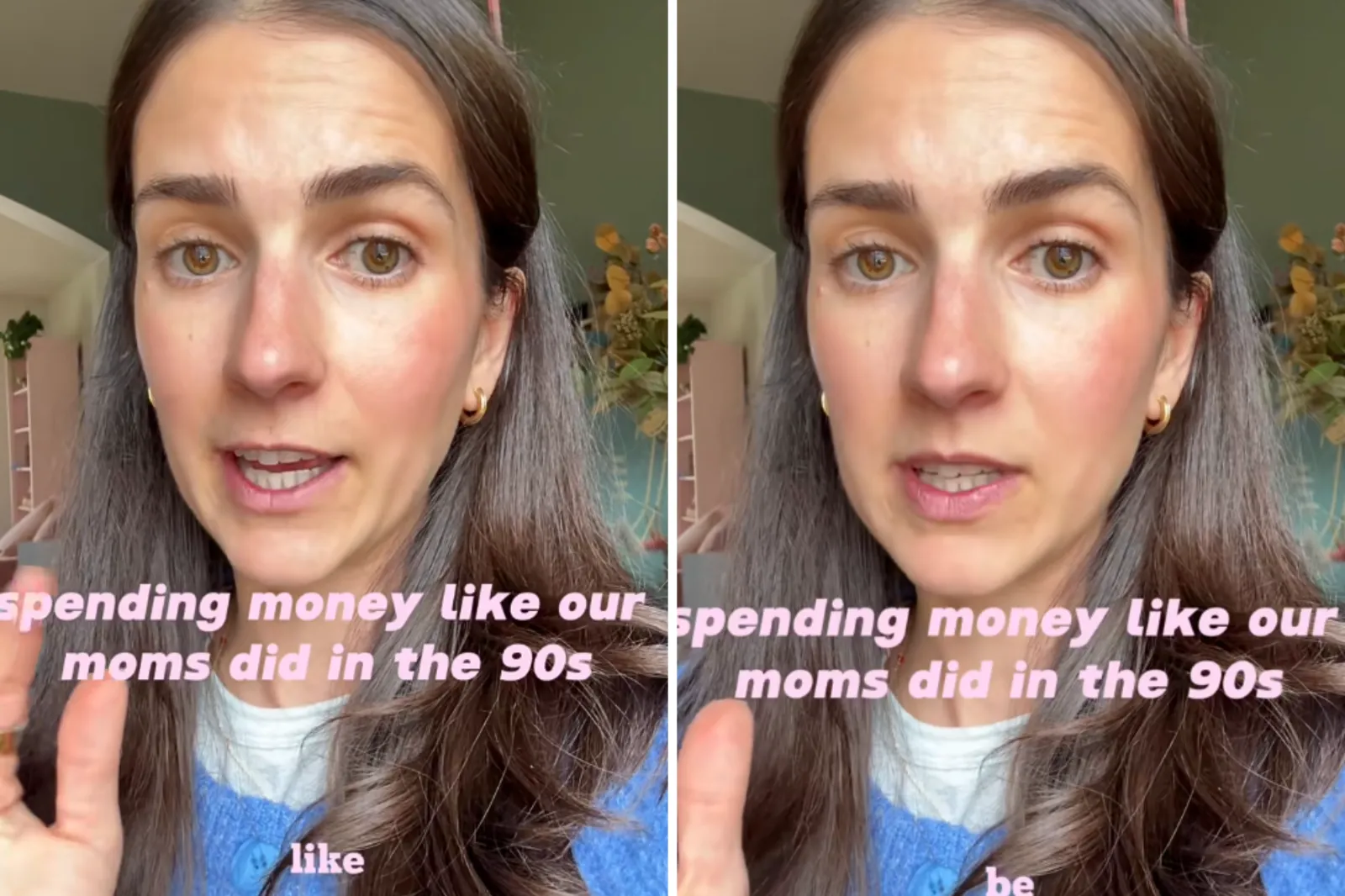
Francesca O’Daniel, who lives in Denver, Colorado, and spoke to Newsweek about the debate, shared her realization in a TikTok video on February 24 that has since been viewed more than 162,000 times and received over 13,000 likes. In the clip, O’Daniel (@francescaodaniel) argues that constant advertising, social media and the pressure to buy have fueled overconsumption, contrasting today’s spending culture with what she describes as the simpler, more-limited choices families made decades ago.
Speaking directly into the camera, O’Daniel told viewers that the idea took shape during a recent conversation with her mother about household finances. She explained that, when she mentioned needing to rein in her budget, her mother appeared confused.
Read More on On the Internet
"She was kind of baffled," O’Daniel said in the video. "She was just like, this is how people lived in the 90s."
O’Daniel went on to outline what she sees as key differences between then and now.
...
"We never got our nails done weekly," O'Daniel said. "You guys got one set of clothing at the beginning of the year and then you wore that until you grew out of it."
She added that shopping was once far more functional, with fewer temptations and less exposure to advertising. "If we needed something, you just had to go to the grocery store. There wasn’t this many things bombarding us from every angle [saying] purchase, purchase, sale, sale. We had like three pairs of pants."
The millennial mom told Newsweek the video reflects a broader shift she wants to make in her own life.
She said that, when her mother was raising children in the 1990s, she was not constantly inundated with the messaging to buy more. Without social media, O'Daniel added, families had little insight into how others were living or spending their money and felt less pressure to compare themselves to others.
"I wanted to get back to that type of spending mindset of less is more," O’Daniel said.
The video was posted shortly after a major personal transition.
O’Daniel was laid off at the end of January and began posting on social media as a way to connect with other women and mothers. With three toddlers, she said adjusting to life as a stay-at-home mom has been challenging.
"Solely being a stay-at-home mom has been an adjustment and can be lonely," O'Daniel said.
What Did the Comments Say?
O'Daniel's candid post to TikTok sparked a lively and sometimes-contradictory comment section, with viewers reflecting on how spending, prices and consumer culture have changed.
One commenter pointed out that durability itself may be part of the issue, writing: "Respectfully clothing in the 90s could last years now not so much." Another added: "Nails were for proms and weddings."
Others questioned the idea that earlier generations consumed less overall.
"All the ‘collections’ in the thrift stores and ‘antique’ stores beg to differ," one viewer wrote, while another commented: "Ok but why are boomers houses so full of stuff? My parents included."
Some viewers framed the discussion in economic terms rather than generational ones.
One commenter noted: "I like the explanation now that luxuries have become cheaper while necessities have become more expensive. The average house being $400,000 but you can buy a giant flat-screen TV for $300 is the inverse of what the 90s was."
For O’Daniel, the mixed reaction underscored the complexity of the issue—and the reason she shared the video in the first place. Rather than calling for a return to the past, her message invites viewers to question whether today’s constant pressure to consume is sustainable, and whether spending less might offer a sense of control to frazzled millennials in an increasingly expensive world.
View 0 Comments
Submit Correction
View Editorial & AI Guidelines