10
Loading video...

By Melissa Fleur Afshar
Reporter
0
Share
Newsweek is a Trust Project member
See more of our trusted coverage when you search.Prefer Newsweek on Googleto see more of our trusted coverage when you search.
Ever wondered what would happen if the working world was simply not built for you?
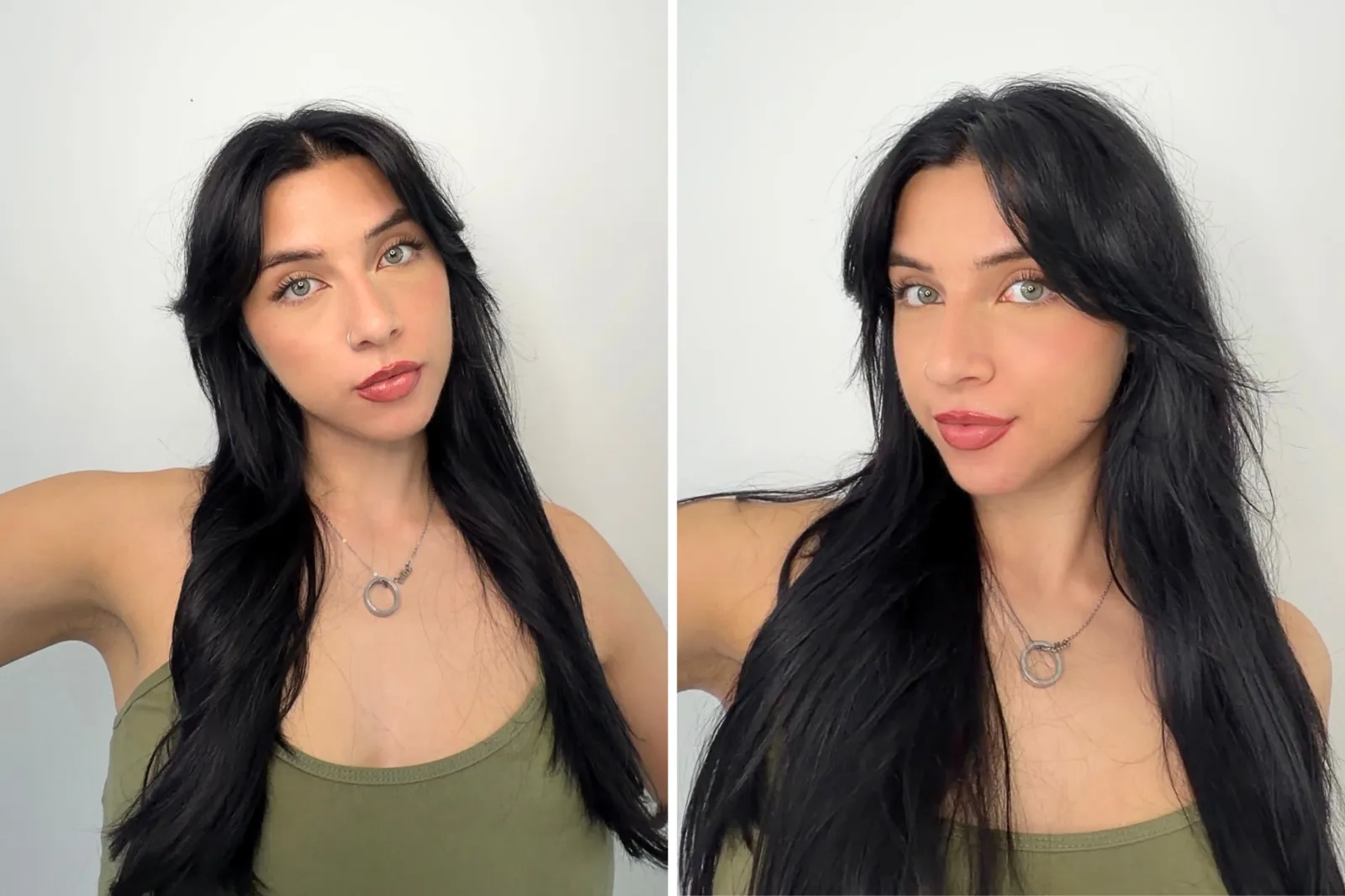
Ella Thompson does. The 23-year-old is not short on drive or intelligence—an offer onto a forensic psychology master's course is proof of that. But a late double diagnosis of autism and ADHD slashed her ambitions because the rigidity of traditional work and education failed to accommodate her needs, and the symptoms that flare when those needs are neglected.
Thompson has never held a job for longer than two months. Her every attempt ended in a dramatic, tearful meltdown, followed by resignation. So, she stopped trying, turning to education instead in 2024—until that "very intense" master's degree pushed her past breaking point and into a hospital bed.
Read More on Life
"I was struggling with anorexia rooted in not accepting or accommodating my autism," Thompson told Newsweek. "And I started opening up about my journey after being hospitalized.
"That's where my 'Good Girls Don't Get Diagnosed' movement began."
That movement has since become Good Girls Club, an online community for late-diagnosed women with AuDHD—the combination of autism and ADHD.
Ten weeks ago, Thompson began posting on TikTok, then Instagram, chronicling her struggle to survive inside a working world she says was never designed with her brain in mind.
The story she tells is deeply personal. But it is also, increasingly, a public one—shared by millions of neurodivergent adults navigating corporate expectations that assume everyone's mind works the same way.
‘Work Is Exhausting—but Not To Do With Motivation or Capability'
For Thompson, the problem was never a lack of ability.
"It's less that the 9-5 is unsuited, and more that it's unaccommodating," she said. "Plenty of adults with ADHD and autism thrive within a traditional structure, but for people like me, who have both, it takes more than workplace adjustments provide."
...
Steady focus for eight-plus hours, minimal breaks and identical output expectations regardless of energy levels create, in her words, "a rigid model that doesn't account for how our focus and energy move."
Harsh sensory environments compound the strain.
"Open-plan offices, fluorescent lighting, and constant background noise are exhausting in a way that has nothing to do with motivation or capability," she said.
Then there is what Thompson calls the invisible second job outside the office: workplace socializing.
"Workplace culture leans on teamwork, on socializing with colleagues," she said. "It's not just the job; it's the social performance and environment you have to do it in."
She wants neurotypical employers to know that there is a difference between being good at a job and being good at having a job.
"When someone struggles with the structure of work, it doesn't mean they're not capable," she said. "Often they're excellent at the work but exhausted by everything else layered on top of it."
She urges managers to "ask what they'd be capable of if they didn't have to lose themselves just to hold down a role."
Reaching Breaking Point and Making a Change
Before her hospitalization, Thompson dreamed of becoming a forensic psychologist.
"I could do it," she said. "But I would be doing it using really disruptive coping mechanisms. I can do a day's work, but at the cost of my life."
That reckoning led her to abandon the traditional career path and build something else entirely—a platform, and a movement, around honesty rather than masking.
On August 31, she posted a video to Instagram under @goodgirlsguides, captioned: "I'm autistic and refuse to work traditional 9-5 jobs."
It struck a nerve among viewers, racking up 31,000 likes and a flurry of comments from people who said they recognized themselves in her words.
One viewer wrote: "Based on suicide rates we need to start listening to people experiencing this."
Indeed, neurodivergent people are at a higher risk of suicide. According to Grassroots Suicide Prevention, a U.K.-based charity organization, 11 percent of suicides in the country involve people with autism, despite them making up only 1 percent of the population.
Navigating Neurodivergence at Work: The Bigger Picture
Thompson is careful to frame her stance not as a rejection of work, but as a plea for mainstream understanding.
"I'm not here to demand the workplace caters to my needs," she said. "I want to reduce the shame around people struggling to exist within that structure, and to normalize finding alternative ways to work that still get the job done."
Too often, she said, the default assumption from neurotypical bosses is laziness rather than mismatch.
"That shame stops people asking for what would help," she said. "Employers can, instead, create enough psychological safety that people can say, 'this isn't working for me' without it being read as a lack of commitment."
In the U.K., where Thompson lives, more than a third of workers—35 percent—believe their employer is ineffective at training managers to support neurodiversity, according to a YouGov survey commissioned by Acas, a nondepartmental public body.
In the U.S., up to 85 percent of autistic adults are unemployed, according to nonprofit Creative Spirit, and up to 46 percent of those in employment are working below their level of capability, a 2024 study published in Autism found.
The U.S. Bureau of Labor Statistics recorded an overall unemployment rate of 4.1 percent in August 2026.
Neurodivergence is not a medical diagnosis but an umbrella term covering conditions including autism, ADHD, dyslexia, OCD, bipolar disorder and sensory processing disorder. Roughly 20 percent of people fall under it, with autism alone affecting an estimated 61.8 million people worldwide—about 1 in 127, according to the World Health Organization.
Research from the National Autistic Society confirms autistic adults remain significantly less likely to be employed than their non-autistic peers—a fact that troubles Thompson and motivates her to continue speaking out.
Contact Newsweek editors on this story: Kara Dolman and Emma Lee-Sang
View 0 Comments
Submit Correction
View Editorial & AI Guidelines