...

By Matthew Tostevin
0
Share
Newsweek is a Trust Project member
See more of our trusted coverage when you search.Prefer Newsweek on Googleto see more of our trusted coverage when you search.
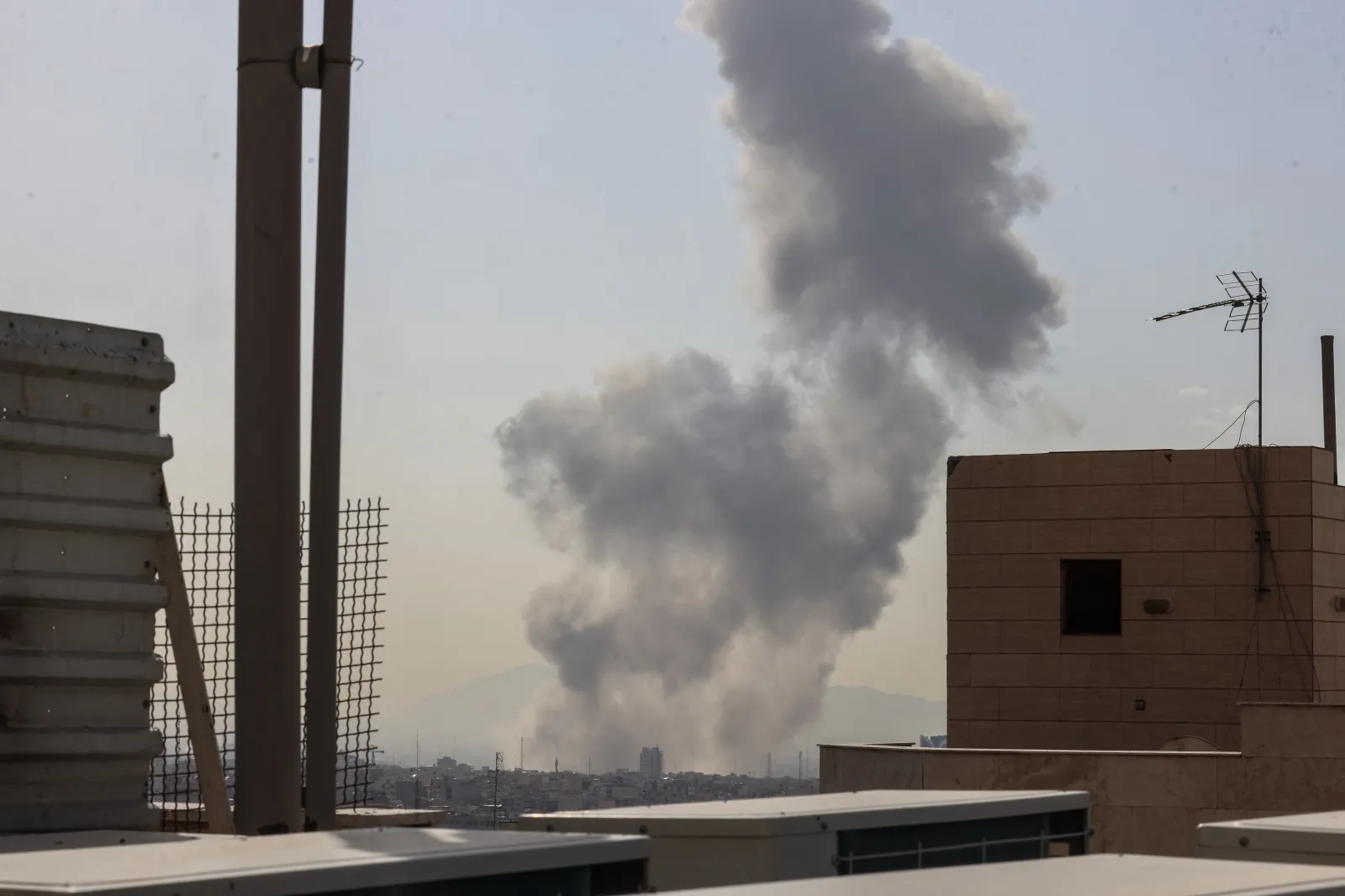
Global reaction to U.S. and Israeli attacks on Iran underlined the divisions in a world fractured on geopolitical lines, but there was little in the barrage of foreign ministry statements to give much comfort to Iran.
Longstanding U.S. allies within NATO, Germany, Britain and France, the most powerful countries in Western Europe, distanced themselves from the attacks ordered by U.S. President Donald Trump, but did not condemn them. They appeared, if anything, to put the blame on Iran as they said they had repeatedly urged it to end its nuclear program, curb its ballistic missile program, and stop both destabilizing the region and repressing its people.
“We did not participate in these strikes, but are in close contact with our international partners, including the United States, Israel, and partners in the region,” they said in a joint statement.
Read More on Analysis
Essential reading: Donald Trump Faces 'Epic Fury' From MAGA Over Iran
Europeans condemn Iran rather than U.S. and Israel
While not condemning the U.S. and Israeli attacks on Iran, they did “condemn Iranian attacks on countries in the region in the strongest terms.”
“We call for a resumption of negotiations and urge the Iranian leadership to seek a negotiated solution. Ultimately, the Iranian people must be allowed to determine their future,” they said.
In doing so, they echoed some of President Trump’s own talking points in announcing the military action: that it was about curbing its military capabilities and bringing regime change.
French President Emmanuel Macron went a bit further, saying: “The ongoing escalation is dangerous for all. It must stop.” But he again put the onus on Iran by saying it had no option to engage in good faith negotiations. He also called for an urgent meeting of the United Nations Security Council, although given that the United States has veto power, it cannot lead to any action against its interests.
...
There was nothing further for Iran from the European Union as a whole, with foreign policy chief Kaja Kallas also putting plenty of words into condemning Iran and none for the U.S. and Israeli strikes.
U.N. Secretary General António Guterres condemned all the military action—including that by Iran too.
"The use of force by the United States & Israel against Iran, and the subsequent retaliation by Iran across the region, undermine international peace & security," he said. "I call for an immediate cessation of hostilities & de-escalation. Failing to do so risks a wider regional conflict with grave consequences for civilians & regional stability."
Newsweek sought comment from Iran's foreign ministry on the global reaction.
What did Russia say about attacks on Iran?
Iran might not have expected any great support from longstanding U.S. allies. From Russia, it did at least get strong condemnation, with Moscow saying the U.S. military buildup in the region ahead of the attacks had left “no doubt that this is a deliberate, premeditated, and unprovoked act of armed aggression against a sovereign and independent UN member state.”
“Washington and Tel Aviv have once again embarked on a perilous course that is swiftly pushing the region toward a humanitarian, economic, and potentially even radiological disaster,” the Russian foreign ministry statement said.
But rather than rallying to Iran’s side with anything more than words, particularly given the Comprehensive Strategic Partnership between the countries, it called for “an immediate return to a political and diplomatic track”: in essence, not very different to the Europeans.
How did China react to U.S. attacks on Iran?
China is Iran’s other big partner and state news agency Xinhua headlined “China highly concerned over military strikes against Iran launched by U.S., Israel: foreign ministry,” but it was not its top headline in either English or Chinese. Beijing is likely to come up with more and harsher words, but it is uncertain what that might provide in terms of concrete support for Tehran.
The state-run China Daily did publish a commentary that read: “If conflict erupts on a larger scale, it is unlikely to remain contained — and its trajectory would be far more severe and unpredictable than many policymakers anticipate.” But nothing stronger.
India, the world’s most populous nation, did not explicitly condemn the U.S. and Israeli attacks, but in a “Statement on the evolving situation in West Asia” called for restraint and the respect of territorial integrity, saying “Dialogue and diplomacy should be pursued to de-escalate tensions and address underlying issues.” Prime Minister Narendra Modi was in Israel this week.
Pakistan, a member of Trump’s Board of Peace, came up with a tougher response, with Deputy Prime Minister and Foreign Minister Ishaq Dar saying he “strongly condemned the unwarranted attacks against Iran and called for an immediate halt to escalation.” He also spoke to his Iranian counterpart and others in the Middle East and beyond.
Arab countries rally to condemn Iran
Last year’s Israeli and U.S. attacks on Iran drew at least expressions of concern from Arab countries if not actual condemnation, but as Iran fired off missiles at U.S. allies in the Gulf they instead rallied against Tehran. The denunciations were for its attacks on their territories, which host U.S. bases, rather than for the U.S. and Israeli strikes that prompted them.
One of the sternest responses to the attacks on Gulf states came from Saudi Arabia, which as a largely Sunni monarchy has been a longstanding regional rival of Iran’s Islamic Republic but had more recently seen something of a rapprochement. As the home of Islam’s holiest sites, as well as the Gulf's biggest Arab country, its reaction is also important.
“The Kingdom affirms its full solidarity with and unwavering support for the brotherly countries, and its readiness to place all its capabilities at their disposal in support of any measures they may undertake,” the Saudi foreign ministry said in a statement.
“The Kingdom of Saudi Arabia calls on the international community to condemn these blatant attacks and to take all firm measures necessary to confront Iranian violations that undermine the security and stability of the region.”
Updated on 02/28/2026 at 11.58 a.m. ET with U.N. Secretary General comment
View 0 Comments
Submit Correction
View Editorial & AI Guidelines