10
Loading video...

By Sean O'Driscoll
Senior Crime and Courts Reporter
0
Share
Newsweek is a Trust Project member
See more of our trusted coverage when you search.Prefer Newsweek on Googleto see more of our trusted coverage when you search.
Supreme Court Justice Amy Coney Barrett signaled a potential divergence from her conservative colleagues during oral arguments in a case that could expand the scope of religious exemptions for nonprofit organizations.
Why It Matters
The case—Catholic Charities Bureau v. Wisconsin—concerns whether a Catholic-affiliated social services agency must pay into the state's unemployment insurance system, despite its religious mission.
Read More
Trump Official’s Remarks on Americans’ Retirement Savings Spark Backlash4 min read

Republican Warns Tariffs Spurred ‘Worst Depression We’ve Ever Had’6 min read

Trump Official Confronted Over Tariffs on Islands Where Only Penguins Live5 min read

At issue is whether Catholic Charities Bureau qualifies as a religious employer under the First Amendment or whether it should be treated like a secular nonprofit because its primary services—such as job training and housing—do not include religious instruction or worship. If the court sides with Catholic Charities, it could open the door to broader religious exemptions from labor and tax laws.
...
What To Know
Catholic Charities Bureau has said it helps all people, regardless of their religious affiliation, and does not try to convert them to Catholicism.
Wisconsin officials say the group functions like a secular nonprofit, providing services funded by government contracts without requiring religious participation, and should not be exempt from paying unemployment tax.
The charity, located in Superior, Wisconsin, argues that its affiliation with the Catholic Church and faith-based mission should exempt it from paying unemployment tax, similar to houses of worship.
During oral arguments on April 1, several justices seemed open to carving out more leeway for religious nonprofits.
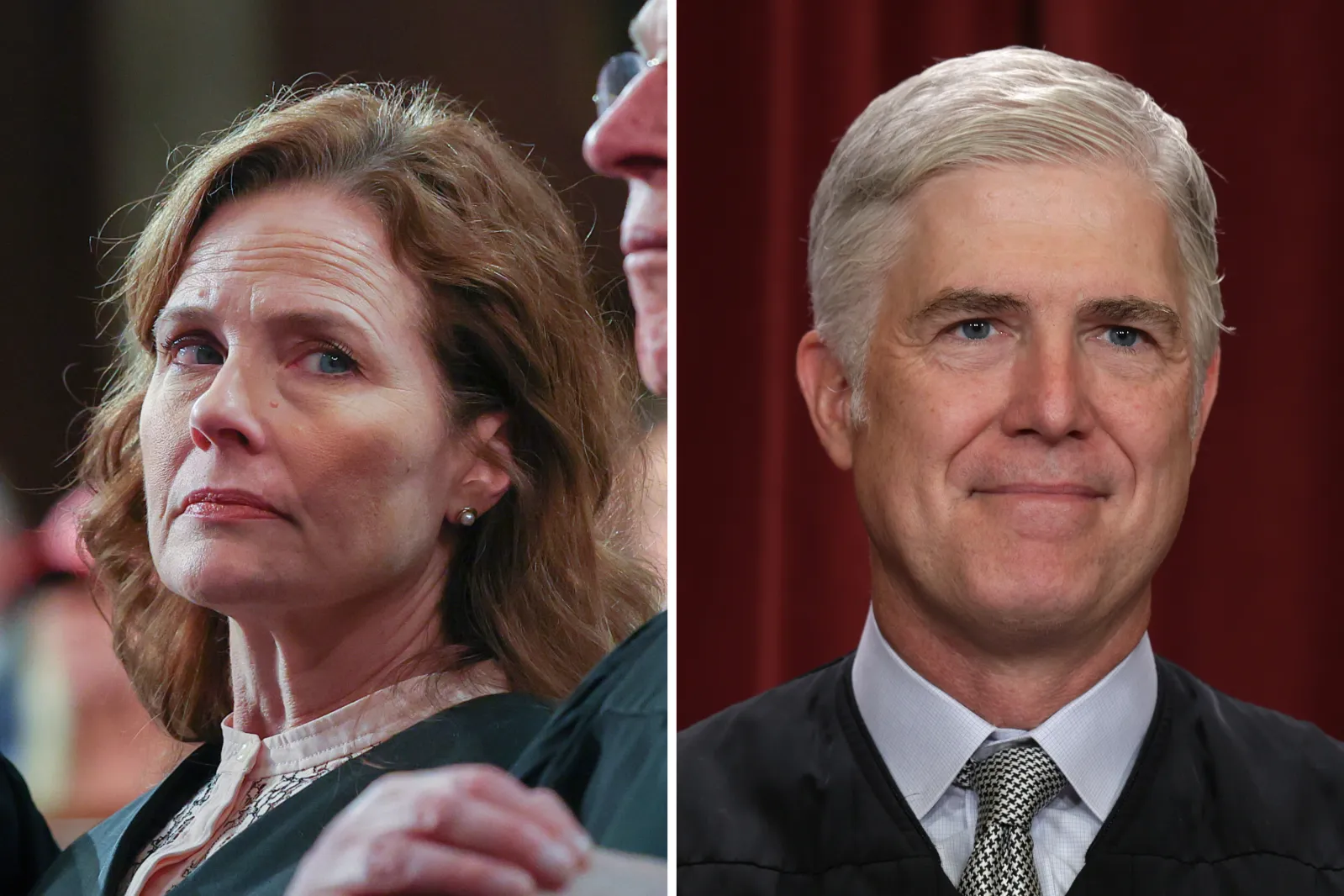
Justices Neil Gorsuch and Samuel Alito appeared more sympathetic to Catholic Charities' position, emphasizing the importance of shielding religious organizations from excessive government regulation.
However, Barrett's questions reflected skepticism toward a broad expansion of religious exemptions.
Drawing the Line
Barrett, a devout Catholic and former professor at Notre Dame Law School, emphasized the difficulty of distinguishing faith-driven missions from general public service provided by religious groups.
"One of the problems here is figuring out what the line is," Barrett said from the bench, according to a Supreme Court transcript of the oral arguments.
"You point out that it's excessive entanglement, in your view, to try to distinguish between—to get involved in the enterprise of figuring out what you're up to," she added.
Barrett said that even discovering whether a person was a religious minister could be difficult.
"What about the ministerial exemption itself? It requires that kind of distinct—distinguishing. I mean, is it excessive entanglement for a court to figure out who is a minister?" she said.
Barrett appeared poised to play a moderating role in a decision that could redefine the boundaries between church and state in labor and tax law.
What People Are Saying
Eric Rassbach, a lawyer for Catholic Charities, said during the oral arguments: "No court would hold that clergy who preach on Saturday are not ministers because preaching on Sunday is more typical. Nor would any court hold that a religious leader who helps the poor isn't a minister because secular leaders help the poor too. By that measure, Mother Teresa might not qualify."
Supreme Court Justice Elena Kagan said: "There are lots of hard questions in this area. Vegan restaurants, hospitals, lots of hard questions. I thought it was pretty fundamental that we don't treat some religions better than other religions. And we certainly don't do it based on the content of the religious doctrine that those religions preach."
What Happens Next
A ruling in Catholic Charities Bureau v. Wisconsin is expected by late June.
If the Supreme Court upholds Wisconsin's classification, it will affirm existing boundaries between faith-based charity work and secular for-profits.
Barrett's opinion—whether concurring or dissenting—could set the tone for how future cases define religious liberty.
View 0 Comments
Submit Correction
View Editorial & AI Guidelines