...

By Gabe Whisnant
News Editor
0
Share
Newsweek is a Trust Project member
See more of our trusted coverage when you search.Prefer Newsweek on Googleto see more of our trusted coverage when you search.
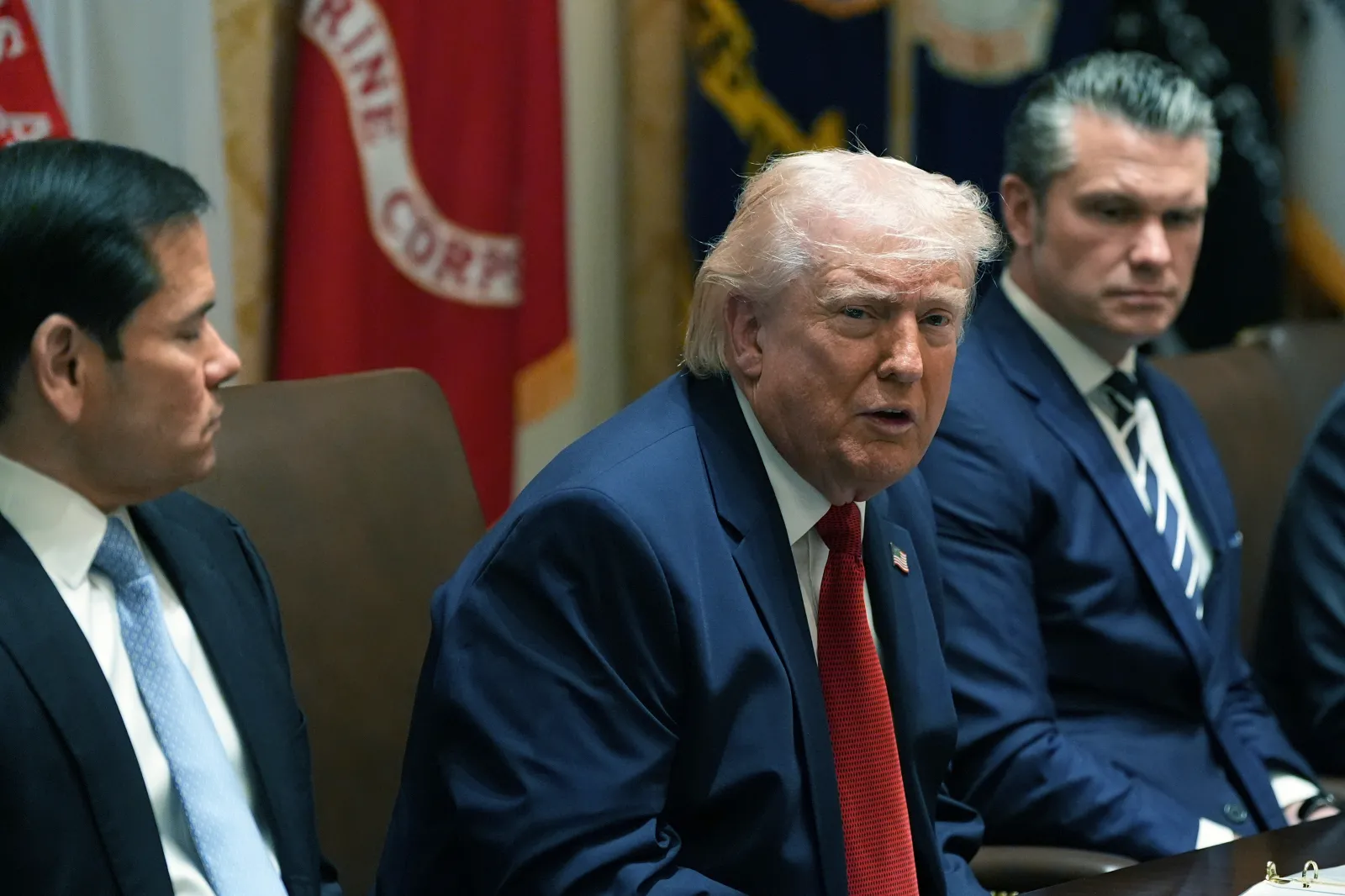
President Donald Trump said Iran allowed 10 oil tankers to pass through the Strait of Hormuz during talks with U.S. representatives, calling the move a “present” tied to oil and gas that signaled Tehran’s interest in reaching a deal. Trump said the gesture came amid what he described as substantial discussions with Iran, even as tensions remain high across the region.
"They said, to show you the fact that we're real and solid and we're there, we're going to let you have eight boats of oil, eight boats, eight big boats of oil," Trump said. "I guess they were right, and they were real, and I think they were Pakistani-flagged... It ended up being 10 boats."
Read More on World
The U.S. president puzzled some observers on Tuesday when he said Iran had granted Washington a costly, energy‑related concession, while declining at the time to explain what he meant
"They gave us a present and the present arrived today, and it was a very big present, worth a tremendous amount of money," Trump told reporters then.
The Strait of Hormuz is a critical global shipping lane through which about one‑fifth of the world’s oil supply moves each day. Trump said the passage of the tankers showed Iran was willing to ease pressure on energy markets, and he framed the development as progress toward de‑escalating the standoff, though Iranian officials have publicly downplayed the scope of the talks.
Iran Rejects U.S. Ceasefire Plan as Fighting Intensifies
Iran on Wednesday rejected a U.S. proposal to pause the war in the Middle East and launched fresh attacks on Israel and Gulf Arab states, including strikes that hit a fuel tank at Kuwait International Airport, igniting a fire, according to regional officials. The escalation came as Israel carried out new airstrikes on Tehran and the United States moved additional troops into the region.
Iran’s Foreign Minister Abbas Araghchi said in an interview on state television that Tehran has not engaged in talks to end the war and does not intend to negotiate. His remarks followed a report by Press TV, Iran’s English‑language state broadcaster, citing an anonymous official who said Iran had formally rejected the American ceasefire proposal and instead presented its own conditions to halt the fighting.
What the U.S. Peace Proposal Included
Two Pakistani officials, whose government has acted as an intermediary between Washington and Tehran, described the U.S. proposal as a 15‑point framework addressing sanctions relief, limits on Iran’s nuclear program, restrictions on its missile development and the reopening of the Strait of Hormuz, a critical maritime chokepoint through which roughly one‑fifth of the world’s oil supply passes. The officials spoke on condition of anonymity to discuss diplomatic details not publicly released.
An Egyptian official involved in the mediation effort said the plan also included curbs on Iran’s support for armed groups across the region. Iran has long said it will not negotiate over its ballistic missile program or its backing of allied militias, which it views as essential to its national security.
Trump Says Iran Still Wants a Deal
Despite Iran’s public rejection of the U.S. plan, President Donald Trump insisted Wednesday night that Tehran remains eager to reach an agreement. Speaking at a fundraiser in Washington, Trump said Iranian leaders were negotiating but reluctant to acknowledge it publicly.
“They are negotiating, by the way, and they want to make a deal so badly, but they’re afraid to say it,” Trump said, adding that Iranian officials feared retaliation both internally and from the United States. Trump has said negotiations involve special envoy Steve Witkoff, Secretary of State Marco Rubio, Vice President JD Vance and his son‑in‑law Jared Kushner, though he has not identified any Iranian participants.
Strait of Hormuz at the Center of the Conflict
Iran’s control over access to the Strait of Hormuz remains one of its most powerful strategic levers. While Tehran has allowed a limited number of vessels to transit the strait in recent days, it has barred ships linked to the United States, Israel or their allies, according to Iranian statements.
Iran’s attacks on regional energy infrastructure and its restrictions on shipping have driven oil prices sharply higher, intensifying pressure on Washington to find a diplomatic off‑ramp. Although oil prices eased on news of potential negotiations, they remain elevated, with Brent crude trading near $100 a barrel — still roughly 35% higher than before the war began. Economists have warned that sustained high energy prices could ripple through the global economy, raising costs for food, transportation and borrowing.
U.S. Sends More Troops to the Middle East
As diplomatic efforts falter, the United States is reinforcing its military presence. About 1,000 Army paratroopers from the 82nd Airborne Division are expected to deploy to the region in the coming days, according to three people familiar with the plans. The Pentagon is also sending roughly 5,000 Marines trained in amphibious operations, along with thousands of sailors.
The buildup comes amid rising public concern at home. A new AP‑NORC poll found that most Americans believe U.S. military action against Iran has gone too far, while many worry about rising gasoline prices. Although Trump’s approval rating has remained relatively stable, the conflict is increasingly viewed as a potential political liability for his administration and Republicans in the midterm elections.

...
Heavy Casualties Across the Region
The war has taken a growing toll. Iran’s Health Ministry says more than 1,500 people have been killed in the country. Israeli officials say 20 people have died in Israel, including two soldiers in Lebanon. At least 13 U.S. service members have also been killed.
In Lebanon, authorities say nearly 1,100 people have died as fighting with Iranian‑backed Hezbollah continues. Iraq has reported dozens of deaths among its security forces as militia groups aligned with Iran entered the conflict. Despite renewed diplomatic pressure, officials on all sides acknowledge that any talks would face steep obstacles, with deep mistrust and competing demands threatening to prolong the war.
Updates: 3/26/26, 1:47 p.m. ET: This article was updated with new information and remarks.
This article includes reporting by the Associated Press.
In a polarized era, the center is dismissed as bland. At Newsweek, ours is different: The Courageous Center—it's not "both sides," it's sharp, challenging and alive with ideas. We follow facts, not factions. If that sounds like the kind of journalism you want to see thrive, we need you.
When you become a Newsweek Member, you support a mission to keep the center strong and vibrant. Members enjoy: Ad-free browsing, exclusive content and editor conversations. Help keep the center courageous. Join today.


View 0 Comments
Submit Correction
View Editorial & AI Guidelines