...


By Tom O'Connor and Shane Croucher
0
Share
Newsweek is a Trust Project member
See more of our trusted coverage when you search.Prefer Newsweek on Googleto see more of our trusted coverage when you search.
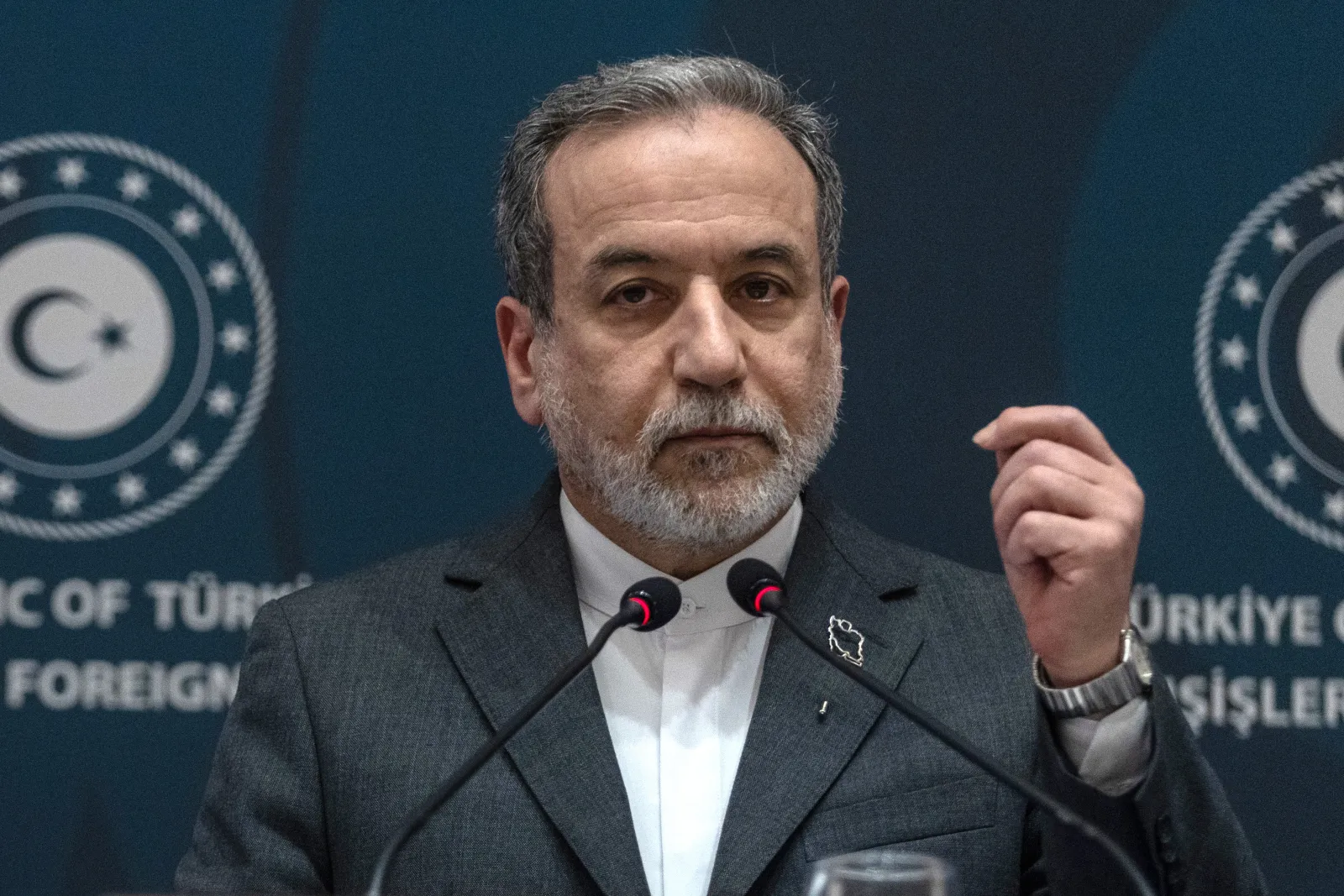
Iranian Foreign Minister Abbas Araghchi said his delegation had reached a "general agreement" with the U.S. on its nuclear programme, saying the path had been laid to reach a deal that would avoid the military action threatened by President Donald Trump.
Araghchi said there was a "more constructive atmosphere" at talks in Geneva on Tuesday. These were the second round of official talks since the U.S. and Iran exchanged military strikes last summer.
They come at a critical point as Trump has deployed warships and fighter jets to the Persian Gulf in a bid to pressure Tehran over its nuclear program, missiles and bloody crackdown on protesters, some of whom openly called for regime change. Thousands have been killed.
Read More on World
Araghchi did not disclose detail of what had been agreed, but said progress had been made with the U.S. side. Iran has consistently said while it's open to a nuclear deal, it would not negotiate on its ballistic missiles or regional allies.
"Various ideas were presented and seriously discussed. Ultimately, we were able to reach a general agreement on a set of guiding principles, based on which we will proceed from now on and move toward drafting the text of a possible agreement," Araghchi said in remarks released through his Telegram account, originally in Persian.
"This does not mean that we can reach an agreement quickly, but at least the path has begun."
Newsweek has reached out to the Iranian Mission to the United Nations and the White House for comment.
The comments mark the most significant sign of progress since nuclear talks were renewed this month, with the first round held between Araghchi and U.S. Special Envoy to the Middle East Steve Witkoff in Oman on February 6.
Ongoing Negotiations and Conflict
Trump announced his willingness to return to diplomacy with Iran after issuing direct military threats to the Islamic Republic as it faced nationwide demonstrations which devolved into deadly clashes. The U.S. has blamed Iranian security forces for directly targeting and killing protesters, while Iranian officials have alleged the bloodshed to largely be the result of infiltrators aided by foreign intelligence organizations.
Trump previously entered into negotiations with Iran last year, but talks were interrupted when Israel launched what came to be known as the 12-Day War against Iran in June, conducting a sweeping series of strikes against Iranian personnel and sites linked to the nation's military and nuclear program. Iran retaliated with hundreds of missile and drone strikes against Israel.
The U.S. also conducted an unprecedented bombing of three Iranian nuclear facilities, to which Iran responded by launching a missile attack against the largest U.S. military base in the Middle East, located in Qatar, shortly before Trump announced a ceasefire.
Trump has since warned new U.S. action against Iran would go even further should negotiations fail to produce an agreement. A substantial military build-up has taken place in the region, with one U.S. aircraft carrier strike group now operating in the area and another set to arrive.
Meanwhile, the Iranian military sought to showcase its readiness by conducting live-fire exercises in the Strait of Hormuz amid the latest talks on Tuesday. State media reported that the drills were accompanied by the temporary closure of the vital trade corridor.
Iranian officials have rebuffed the U.S. threats. Reacting to Trump's stated decision to send another carrier strike group to the Persian Gulf, Iranian Supreme Leader Ayatollah Ali Khamenei earlier on Tuesday stated that "a warship is a dangerous piece of military hardware. However, more dangerous than that warship is the weapon that can send that warship to the bottom of the sea," according to his official X account.
Peaceful Nuclear Development
Statements published after the conclusion of the talks continued to defend Iran's right to maintain a nuclear program for peaceful purposes.
"The Americans say, ‘Let's negotiate over your nuclear energy, and the result of the negotiation is supposed to be that you do not have this energy!'" Khamenei said, according to his account. "If that’s the case, there is no room for negotiation; but if negotiations are truly to take place, determining the outcome of the negotiations in advance is a wrong and foolish act."
Iranian leadership has always maintained that its nuclear program was strictly for peaceful purposes, though the U.S., Israel and a number of nations in the region and in Europe have expressed concern that the Islamic Republic was preparing to produce weapons of mass destruction. The United Nations Security Council imposed sanctions against Iran in 2006 due to its nuclear activities.
An Iran deal reached in 2015, known as the Joint Comprehensive of Action (JCPOA), allowed for the lifting of international sanctions in exchange for Iran curbing its nuclear program. The JCPOA was led by the U.S. under then-President Barack Obama and backed by China, the European Union, France, Germany, Russia and the United Kingdom, but garnered criticism from conservatives in both Washington and Tehran, with Trump ultimately abandoning the agreement during his first term in 2018.
Iranian Missile Threat
While Trump has largely focused his rhetoric on Iran's nuclear program, he has also called for restriction on Iran's missile capabilities. A number of administration officials, including Secretary of State Marco Rubio, have also indicated that the Islamic Republic's sizeable missile arsenal and ties to a coalition of regional non-state actors, known as the Axis of Resistance (a loose anti-Western, and anti-Israel alliance of state and non-state actors in the Middle East), should be on the table.
Israeli Prime Minister Benjamin Netanyahu has pressed for a more comprehensive agreement as well and signaled he would convey this message during his latest trip to the White House last week, after which Trump said no agreements had been reached.
Both Iran's missile program and Axis of Resistance connections have been involved directly throughout the regional confrontation surrounding the war in Gaza, which began with an attack led by the Palestinian Hamas movement against Israel in October 2023.
Trump has sought to put an end to the conflict through a 20-point peace plan that entered into effect this past October and set to be discussed during the first Board of Peace meeting scheduled to be held on Thursday.
In a polarized era, the center is dismissed as bland. At Newsweek, ours is different: The Courageous Center—it's not "both sides," it's sharp, challenging and alive with ideas. We follow facts, not factions. If that sounds like the kind of journalism you want to see thrive, we need you.
When you become a Newsweek Member, you support a mission to keep the center strong and vibrant. Members enjoy: Ad-free browsing, exclusive content and editor conversations. Help keep the center courageous. Join today.


...
View 0 Comments
Submit Correction
View Editorial & AI Guidelines