10
Loading video...

By Martha McHardy
US News Reporter
0
Share
Newsweek is a Trust Project member
See more of our trusted coverage when you search.Prefer Newsweek on Googleto see more of our trusted coverage when you search.
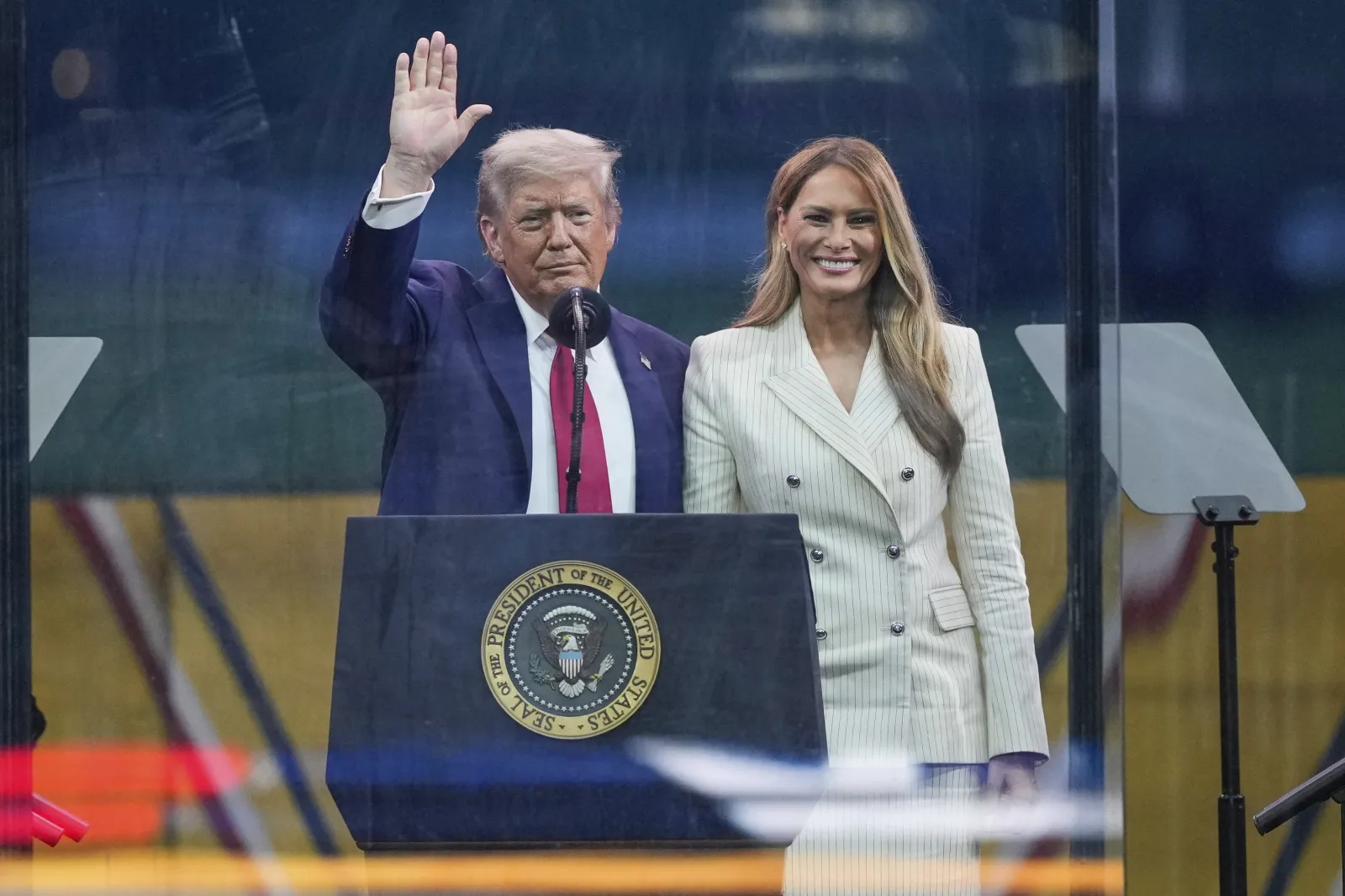
First lady Melania Trump's immigration history came under fire during a heated congressional hearing on Wednesday.
Democratic Representative Jasmine Crockett questioned how the former model qualified for a visa typically reserved for individuals with "extraordinary ability."
Why It Matters
Crockett's remarks come at a time when the president is railing against immigrants and directing ICE officials to enact raids across the country.
Read More on U.S.
Trump and his allies have also taken a hard line on visas. On June 4, he signed an executive order targeting Harvard University's student visa program, citing national security concerns—particularly related to Chinese students—and emphasizing that student visas are a privilege, not a right. Later in June, Trump introduced a broad visa and travel ban affecting 19 countries, fully restricting visas from 12 and imposing partial limits on seven others citing security and vetting concerns. The administration has also expanded social media screening for visa applicants, with a focus on international students.
...
What To Know
Speaking during a House Judiciary Committee hearing on Wednesday, Crockett challenged what she described as selective outrage from Republican lawmakers over visa policy.
"Integrity isn't snatching lawful visa holders off the streets and throwing them into unmarked vans," she said. "Integrity is not revoking visas based on social media posts that hurt somebody's little feelings, because kids decided they wanted to go after Trump or this administration. We have a thing called free speech in this country."
Crockett then turned the spotlight on what she called a double standard in how visa rules are enforced and discussed, questioning why Republicans weren't scrutinizing the immigration paths of those close to the president.
"Why aren't we talking about integrity when it comes to the president's family's visas?" she asked.
The congresswoman specifically targeted Melania Trump's 2001 EB-1 visa, also known as the "Einstein visa," a category typically reserved for individuals with "sustained national or international acclaim."
"Let me tell you how you receive an Einstein visa," Crockett said. "You're supposed to have some sort of significant achievement, like being awarded a Nobel Peace Prize or a Pulitzer; being an Olympic medalist; or having other sustained extraordinary abilities and success in sciences, arts, education, business, or athletics. Last time I checked the first lady had none of those accolades under her belt."
Crockett acknowledged Melania Trump's modeling career but questioned whether it rose to the level the EB-1 visa demands.
"Melania, the first lady, a model—and when I say model I'm not talking about Tyra Banks, Cindy Crawford or Naomi Campbell-level—applied for and was given an EB1 visa."
Concluding her remarks with a jab, Crockett said: "It doesn't take an Einstein to see that the math ain't mathin' here."
The Cato Institute's Alex Nowrasteh, who also testified during the House hearing, then stepped in to "defend Melania real quick."
Nowrasteh, the institute's vice president of economic and social policy, responded with a quip: "Not everybody could marry Donald Trump, and I think that's quite an achievement, so I think she deserves credit for that. Nobody up here could have done it!"
Crockett quickly fired back: "You sure are right, I couldn't have done it."
To obtain an EB-1 for extraordinary ability, an immigrant has to provide evidence of a major award or meet three of 10 criteria proving excellence in their field. The criteria include coverage of the applicant in major publications, original and significant contributions to a field, and work displayed at artistic exhibitions.
Before applying for her visa, Melania Trump appeared on the cover of British GQ and had appeared in other U.K. and U.S. magazines.
Melania Trump first arrived in the United States in 1996, initially on a tourist visa before transitioning to a series of work visas for skilled professionals, according to her attorney. At the time, she was pursuing a modeling career in New York City and met Donald Trump at a party in 1998, a connection that significantly elevated her public profile.
The year the future first lady obtained legal residency, 2001, only five people from her home country of Slovenia got green cards through the EB-1 program, according to State Department statistics reported by The Washington Post.
What People Are Saying
Alex Nowrasteh of think tank the Cato Institute said: "Not everybody could marry Donald Trump, and I think that's quite an achievement, so I think [Melania Trump] deserves credit for that."
Michael Wildes, an attorney for Melania Trump, previously defended her visa history: "Mrs. Trump obtained her Green Card legally and was more than amply qualified and solidly eligible for the Extraordinary Ability Green Card," he said in an email to Newsweek in 2018. "No further comment will be issued to protect Mrs. Trump's privacy."
What Happens Next
Melania Trump has not yet commented on Crockett's remarks.
She has kept a notably low profile since her husband's second term began. The First Lady was last seen accompanying the president at the U.S. Army's 250th Anniversary Parade on June 14—which also marked Donald Trump's 79th birthday. She was also seen with him at a red carpet event at the Kennedy Center on June 11, followed by her attendance at the White House congressional picnic the next day.
View 0 Comments
Submit Correction
View Editorial & AI Guidelines