...

By Peter Aitken
Politics Weekend Editor
0
Share
Newsweek is a Trust Project member
See more of our trusted coverage when you search.Prefer Newsweek on Googleto see more of our trusted coverage when you search.
The Pentagon is considering a more robust naval presence in the Middle East to escort oil tankers through the Strait of Hormuz as gas and oil prices continue to rise, but any operation won't commence for at least a month, according to The Wall Street Journal.
White House Deputy Press Secretary Anna Kelly told Newsweek in response to a query for comment: "President Trump is fully prepared to provide U.S. Navy escorts through the Strait of Hormuz if he deems it necessary. Our military has destroyed well over 20 inactive mine laying boats with more to come."
The Pentagon referred Newsweek to comments made today during the press briefing held by Defense Secretary Pete Hegseth and Chairman of the Joint Chiefs of Staff Gen. Dan Caine.
Read More on World
Why It Matters
The U.S. and Israel continue to strike Iran, targeting the Mideast nation's weapons and naval assets in an effort to degrade those capabilities.
Hegseth earlier this week described the military action, termed Operation Epic Fury, as "an extraordinary offensive" that is rapidly degrading Iran's military, saying: "Every single day, this regime in Iran has less missiles, has less launchers. Their factories work less, and their navy is being eviscerated."
The International Energy Agency (IEA) said Wednesday that its members would release a record 400 million barrels of oil from their emergency reserves to ease market pressure caused by threats to oil supplies traveling through the Strait of Hormuz. Some economists warned that it would do little to reassure markets.
...
What To Know
The Journal, citing two U.S. officials, has said that Washington wants to reduce the threat from Iran before undertaking any escort operations, but that could take up to a month or more to accomplish, even as officials continue to downplay concerns over the strait and the impact that risks to shipping have had on global energy markets.
"For decades, Iran has threatened the shipping industry with Hormuz: This is always what they do—hold the strait hostage," Hegseth said at a press conference on Friday morning, adding: "We have been dealing with it and don't need to worry about it."
Trump said earlier this week he would take action to address the oil supply issue, but on Friday said the U.S. was holding off on escorting ships through the strait.
Residential heating oil prices have surged amid the Iran war, according to EIA data. On March 9, prices averaged $5.094 per gallon, up from $4.268 per gallon. That was an increase from $4.103 per gallon one week earlier.
Oil spiked to over $100 a barrel earlier this week, marking the first time in four years that the price of oil has crossed that threshold.
However, various nations have reportedly reached out to Iran in order to work out deals that would provide them safe passage through the strait.
Two of the officials familiar with the talks named France as a party to these talks, and one said that Italy was also attempting to speak with Tehran about the issue.
Iran has made allowances for certain countries not involved in the joint U.S.-Israel operations, such as India, according to Reuters, which reported on Thursday that the foreign ministers of India and Iran had three conversations in recent days that focused on "issues pertaining to the safety of shipping and India's energy security."
Why Isn't The U.S. Escorting Tankers Through The Strait of Hormuz?
In vowing to not let a "single liter of oil" pass through to the U.S or its allies, Iran has attacked at least 20 vessels, effectively shutting down the shipping lane for 12 days and counting. Pictures of tankers on fire have sent oil prices skyrocketing.
Energy Secretary Chris Wright earlier this week falsely claimed that the U.S. had accompanied a tanker through the strait, later admitting that the U.S. was "simply not ready" to offer protection to ships. He told CNBC that an escort mission could "happen relatively soon but it can't happen now."
General Dan Caine, the U.S. Chairman of the Joint Chiefs of Staff, said on Tuesday that the U.S. was looking at "a range of options" for ensuring oil flows but didn’t provide much detail.
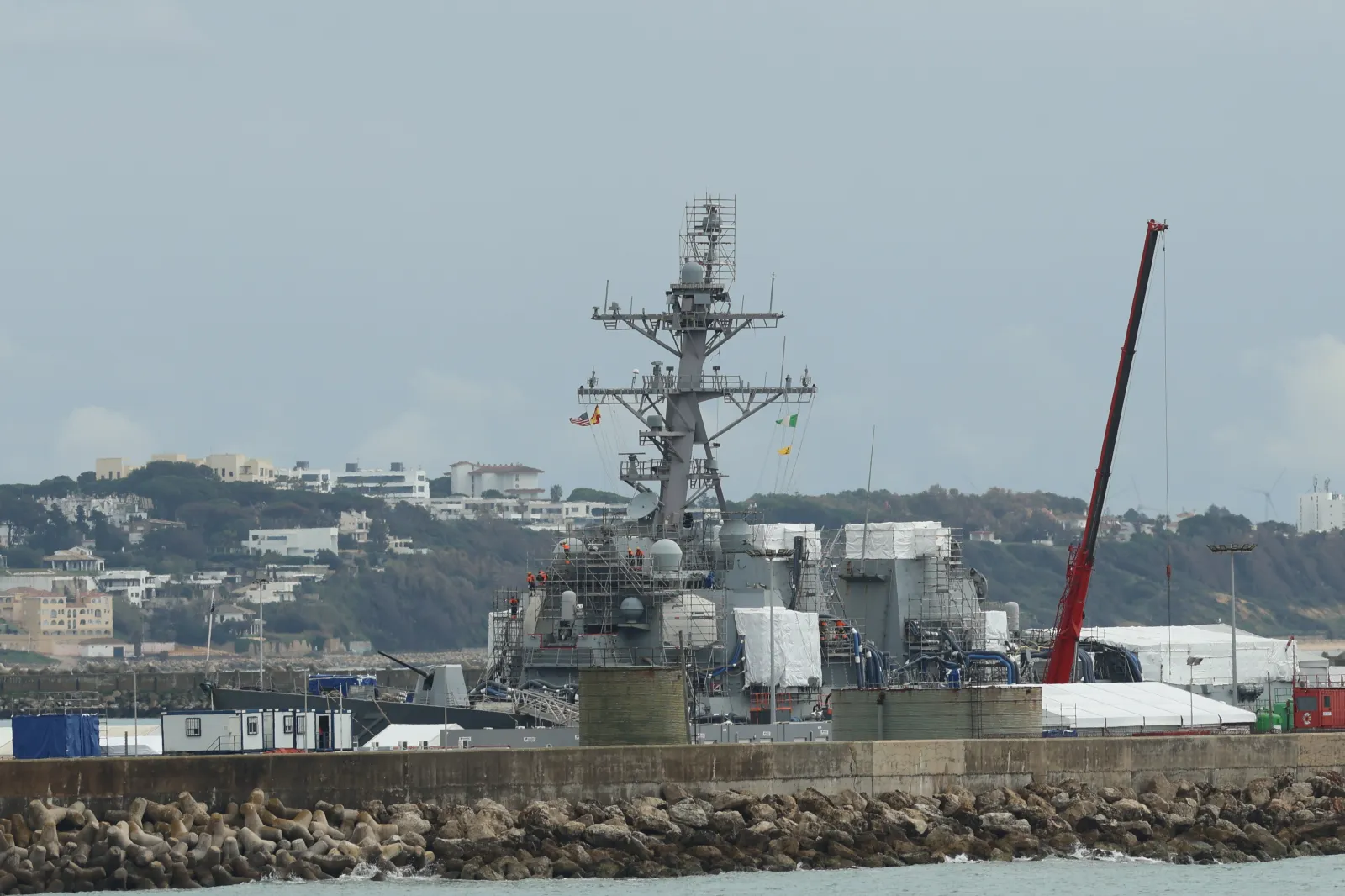
A "basic" escort operation would need between eight and 10 destroyers to shield between five and 10 commercial ships, according to maritime specialists, Lloyd's List.
The priority would be on getting ships currently stranded in the area out through the strait, before turning to ships making their way there.
An escort could come together in "days, not weeks," said retired U.S. Navy Vice Admiral Robert Murrett, who is now a professor of practice of public administration and international affairs at Syracuse University. But "it's complicated," he told Newsweek.
How Much Oil Goes Through the Strait of Hormuz?
Roughly 20 million barrels of oil per day, about one‑fifth of global petroleum consumption, normally pass through the Strait of Hormuz, according to U.S. Energy Information Administration data.
The waterway is also a critical route for liquefied natural gas, carrying about 20 percent of global LNG trade, largely from Qatar.
Most of the oil shipped through the strait is bound for Asian markets, making disruptions especially significant for global energy prices.
Update 3/13/26, 3:11 p.m. ET: This article has been updated with additional information.
Update 3/13/26, 12:58 p.m. ET: This article has been updated with additional information.
In a polarized era, the center is dismissed as bland. At Newsweek, ours is different: The Courageous Center—it's not "both sides," it's sharp, challenging and alive with ideas. We follow facts, not factions. If that sounds like the kind of journalism you want to see thrive, we need you.
When you become a Newsweek Member, you support a mission to keep the center strong and vibrant. Members enjoy: Ad-free browsing, exclusive content and editor conversations. Help keep the center courageous. Join today.


View 0 Comments
Submit Correction
View Editorial & AI Guidelines