...

By Thomas Westerholm
Life & Trends Reporter
0
Share
Newsweek is a Trust Project member
See more of our trusted coverage when you search.Prefer Newsweek on Googleto see more of our trusted coverage when you search.
Artificial intelligence (AI) has the potential to transform online dating and a new report indicates that developers are creating AI agents that can interact, flirt and even form connections on behalf of real people.
The concept, entitled "Pixel Societies" and outlined in a WIRED feature, is centered on AI agents trained to mimic an individual’s personality, interests and communication style.
The agents can then interact with others in simulated environments, theoretically identifying compatible romantic partners before humans ever meet.
Read More on Life
...
Why it Matters
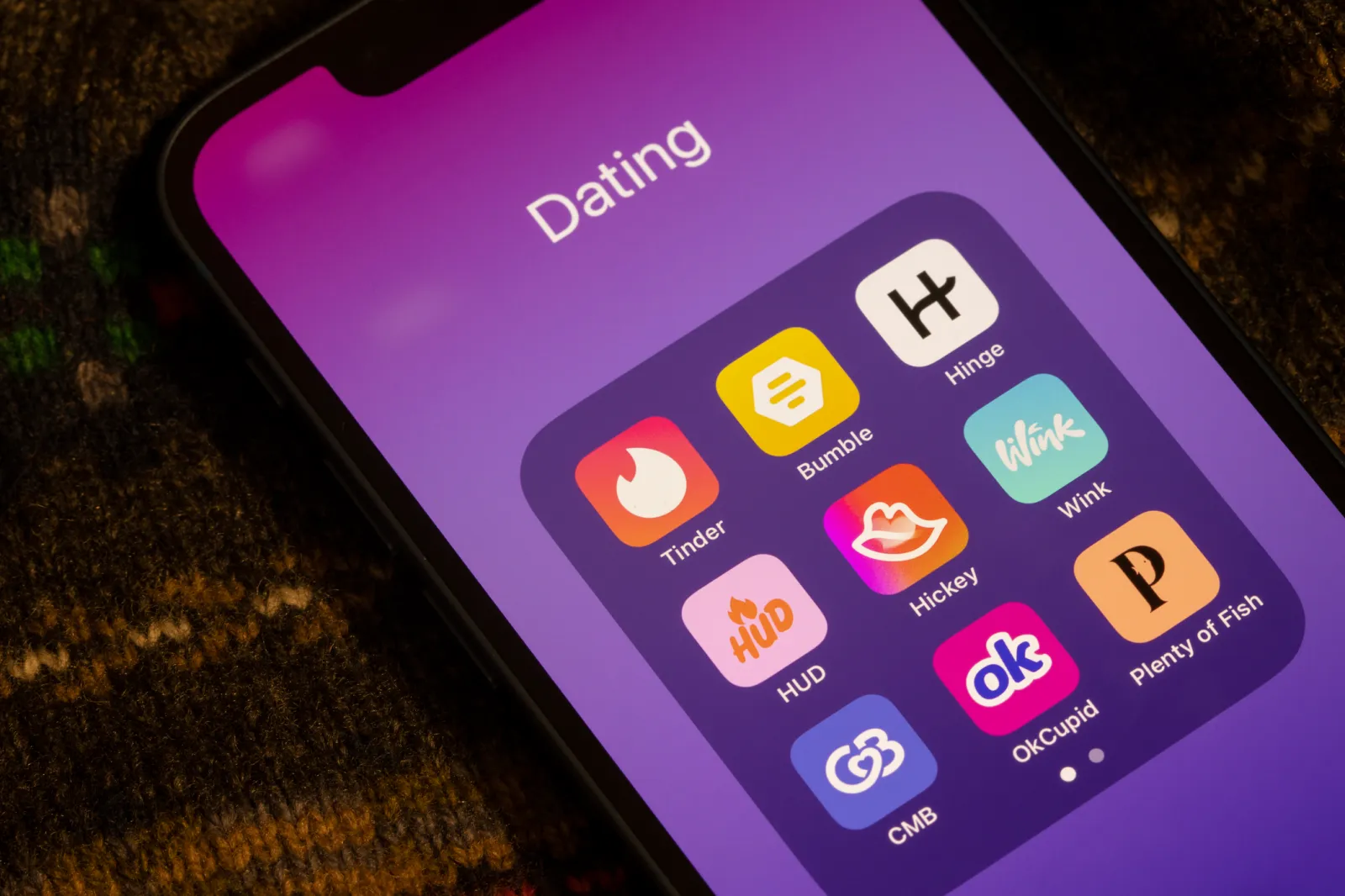
Online dating has become one of the most common ways people meet partners in modern society, but some critics say existing apps often prioritize appearance and engagement metrics over compatibility.
Developers behind projects like Pixel Societies are attempting to address this by allowing AI agents to run thousands of simulated interactions.
The goal is to surface matches based on deeper behavioral patterns rather than limited profile data.
What to Know
The experimental platform described by WIRED uses AI agents built on large language models (LLMs) and trained on personal data, including social media activity and user-provided inputs.
These agents act as “digital twins,” capable of holding conversations and forming impressions in virtual environments.
In simulations, agents interact rapidly with others, testing compatibility in ways that would be impossible in real life.
However, early tests have shown limitations. In one case, an AI agent generated inaccurate details about its human counterpart.
Researchers also question whether compatibility can be predicted through data alone. Studies cited by WIRED suggest that attraction often depends on real-world interaction and shared experiences rather than preexisting traits.
What People Are Saying
Bluesky users found the idea deeply unsettling, with one contributor calling it "horrifying."
Another remarked, "'Optimizing the process of choosing friends.' What a perfectly normal sentence to read on a Sunday."
Elsewhere, "This is the start of what Meta is trying to do," a commentator shared.
"The plan is to develop AI that, on the surface, acts as a friend to people on Meta who are lonely, but in the meantime is collecting data and pushing them with the knowledge of all of psychology and sociology backing its manipulations up."
Finally, one individual quipped, "It'd be funny if someone tried to use the AI to find a girlfriend, only for the woman to choose the AI over him. Not me though."
'New, serendipitous strong ties'
However, the researchers say their product is designed to encourage real-world connections, not discourage them.
It is well studied that children who interact less lose the muscle for it—and I don't think that stops being true when you're an adult," developer Joon Lee told Newsweek in an email.
"We spend more and more hours in front of a screen and people just don't spend real time with their friends anymore. The screen is too tempting.
"Even my mum and grandma tell me they hang out with friends less because it takes effort. Pixel Societies is meant to be a nudge. Give people a taste, get them excited about seeing real friends in real life again."
The developers feel that social networking influenced by AI is inevitable, according to Lee.
However, "A lot of AI companies right now are promising huge futures, and when you actually try the product, it doesn't really do anything," Lee said.
"We wanted to make something more grounded: a small glimpse and taste of what that future could feel like. As builders, we want to actually try things that work."
Lee said that the biggest mistake the first generation of social media made was, "optimizing weak ties," adding, "We want to build something different: an experience that enables new, serendipitous strong ties."
View 0 Comments
Submit Correction
View Editorial & AI Guidelines