...

By Claire Dodds
Life & Trends Reporter
0
Share
Newsweek is a Trust Project member
See more of our trusted coverage when you search.Prefer Newsweek on Googleto see more of our trusted coverage when you search.
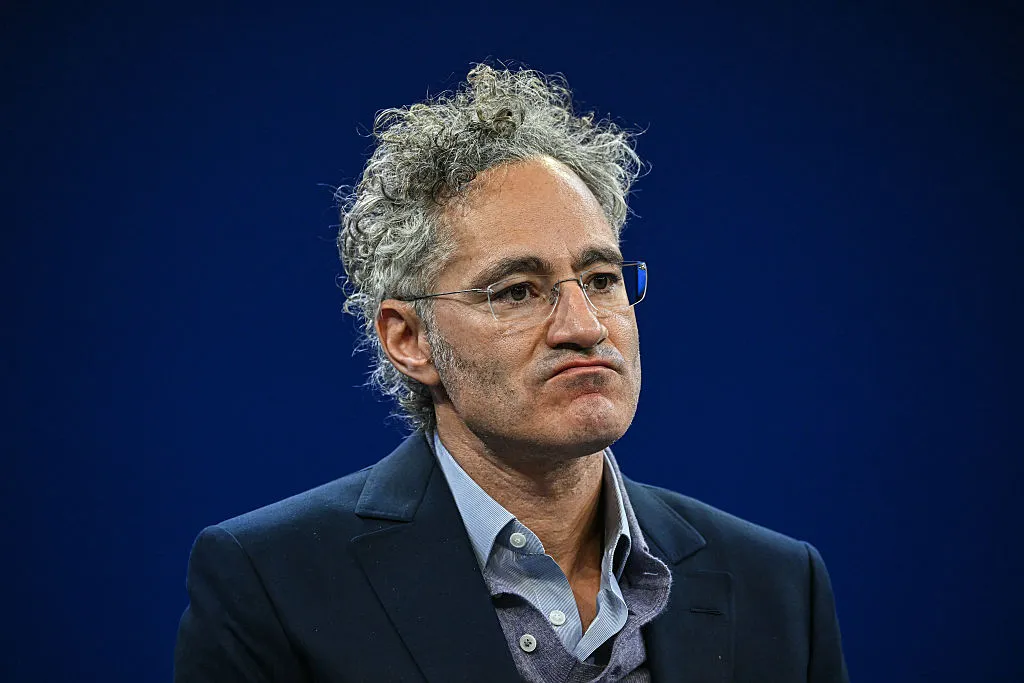
An online forum is fueling debate over the future of work after Palantir CEO Alex Karp suggested that only two types of people are positioned to succeed in an artificial intelligence (AI)-driven economy: those with vocational skills and those who are neurodivergent.
The comments, originally reported in a Fortune article, come as workers across generations grapple with how automation may reshape career paths.
Karp argued that hands-on trades and unconventional thinking styles will prove most resilient as AI adoption accelerates.
Read More on Life
His remarks arrive amid broader concerns about job displacement, with policymakers and researchers warning that automation could significantly alter the labor market in the coming decade.
...
An October 2025 Senate report highlighted the scale of potential disruption, estimating that emerging technologies, “could destroy nearly 100 million U.S. jobs in a decade,” according to Newsweek.
The report added: “Artificial labor could not only put millions of people out of work from their existing job. It could also replace new jobs that could have been created,” underscoring uncertainty about how quickly new opportunities will emerge.
The anxiety is particularly acute among younger workers entering a shifting job market. While some industries are already integrating AI into daily workflows, others—especially those requiring physical labor—remain less exposed.
A separate analysis by Anthropic found that AI is currently achieving only a “fraction” of its potential use, suggesting that more disruption could still lie ahead, according to Newsweek.
'We do not claim him'
Karp’s framing has drawn mixed reactions online, where Reddit contributors questioned both the practicality and implications of his view. Some responses leaned toward skepticism about the broader economic consequences of widespread automation.
“Maybe it's a subtle hint that just running off to the woods, [as] many of us feel compelled to do right now, is the path to surviving this,” a skeptic quipped.
Others focused on the economic ripple effects.
“What’s actually funny is that he thinks the economy can continue when the average person will have no money to buy anything,” a commentator lamented.
Some pundits rejected Karp’s characterization of neurodivergent workers altogether.
“As a neurodivergent person, we do not claim him,” one person retorted.
palantirs billionaire ceo says only two kinds of
r/technology
Beyond online discourse, political and business leaders continue to weigh the risks and benefits of AI adoption.
Senator Bernie Sanders warned in a video shared on YouTube that, “the artificial intelligence and robotics being developed by these multibillionaires will allow corporate America to wipe out tens of millions of decent-paying jobs,” according to Newsweek.
Broader Social Impacts
Entrepreneur Andrew Yang echoed concerns about broader societal impacts, telling Newsweek: “I don't think enough attention is being paid to various downsides of the advent of AI, from job replacement to the splintering of reality to rampant identity theft.”
At the same time, some experts argue that technological change may reshape rather than eliminate work. The Anthropic report noted that large-scale labor market effects have not yet fully materialized, even in highly exposed sectors.
As companies continue investing heavily in AI and governments consider policy responses, debates like the one sparked by Karp’s comments reflect a wider uncertainty about who will benefit—and who may be left behind—as the technology advances.
Newsweek has reached out to representatives of Alex Karp for comment via email.
View 0 Comments
Submit Correction
View Editorial & AI Guidelines