...

By John Feng
China Editor
0
Share
Newsweek is a Trust Project member
See more of our trusted coverage when you search.Prefer Newsweek on Googleto see more of our trusted coverage when you search.
Chinese President Xi Jinping pledged greater trade with North Korea and more high-level meetings with its leader, Kim Jong Un, both significant wins for the ruler of one of the world’s most isolated regimes.
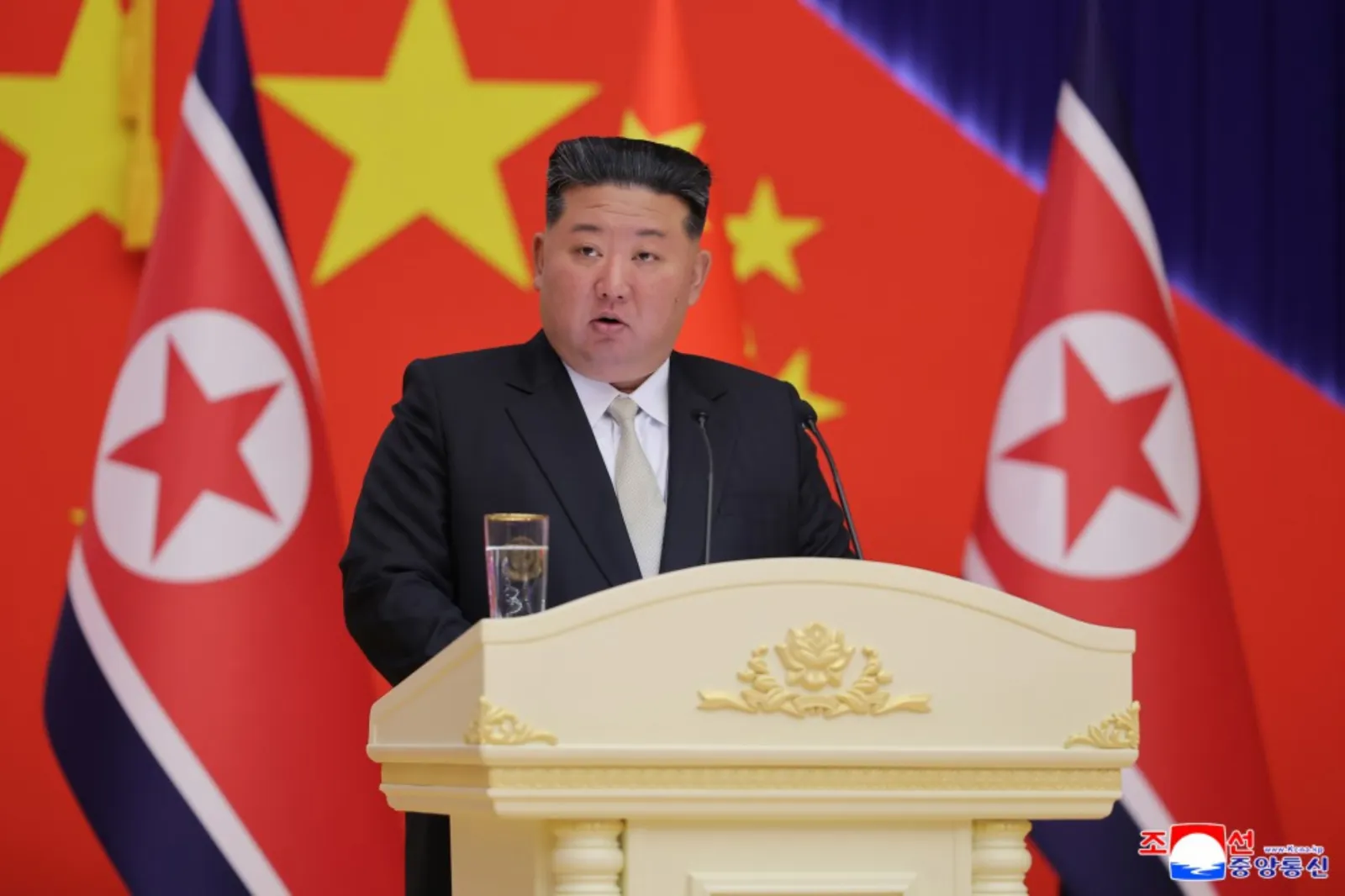
Xi made the remarks during summit talks in Pyongyang on Monday, state media reported, as part of his first official trip to China's neighbor in seven years. He promised to "open up a new future" of relations between the two countries.
Kim appears to be benefiting from a quiet contest for influence over Pyongyang between Xi and President Vladimir Putin of Russia. President Donald Trump may also be seeking an audience at a time of global instability.
Read More
China’s Xi Goes to North Korea to Court Kim5 min read

North Korea Leader Vows To Grow Nuclear Forces Exponentially5 min read

How China Could Help Solve Trump’s Iran Nuclear Problem7 min read

Officially, Xi’s trip marked the 65th anniversary of China and North Korea’s mutual defense treaty, but Pyongyang now has more than one ally.

...
Russia has deepened its diplomatic and defense ties with North Korea in recent years, including through the signing of a new security pact in June 2024, which formalized North Korean aid in Russia’s war in Ukraine.
Last month, North Korea sent soldiers to march alongside Russian troops for the first time in the annual Victory Day parade on Moscow’s Red Square.
The timing of Xi’s visit is linked to Kim and Putin’s ties, said Christopher Green, a senior consultant with the International Crisis Group.
China tolerates mutually beneficial economic and political ties between Moscow and Pyongyang but "will not allow a situation where it is no longer indispensable to North Korea, because keeping the Kim regime close is part of Beijing's national security calculus," Green told Newsweek.
What Kim Gets From China
China shares a land border with North Korea and has long been its largest trading partner and main lifeline to buffer international sanctions targeting its ballistic and nuclear missile programs.
Monthly two-way trade exceeded $325 million in April, the highest level since November 2017, according to Chinese custom data.
The transfer of vital commodities like energy, raw materials and basic foodstuff has increasingly been supplemented by purchases of Chinese technology, including consumer electronics and high-tech goods.
Xi pledged more "practical cooperation" in areas like tourism, agriculture and science and technology, according to a readout of the talks released by the Chinese Foreign Ministry.
The Chinese leader also stressed the deep historical and ideological ties between the two countries, including their status as socialist states led by communist parties.
In remarks published in the Rodong Sinmun, the official newspaper of North Korea’s ruling Workers’ Party, Xi called on the two countries to "oppose hegemony and power politics, as well as all attempts and actions to revive militarism and endanger regional security and stability."
Kim said the Xi’s visit was a clear demonstration "that the DPRK-China relationship is unbreakable," state media said, referring to the Democratic People’s Republic of Korea, North Korea’s official name.
What Kim Gets From Russia
In Putin, however, Kim has found a mutual friend in need and an opportunity to capitalize on a Russian military operation that by the end of this week will have lasted longer than World War I.
North Korea is estimated to have earned tens of billions of dollars for its cash-strapped economy by supplying weapons to Russia and later sacrificing thousands of elite soldiers on the front lines of Russia’s western Kursk region, according to South Korean research and intelligence assessments.
A March report by the Stockholm International Peace Research Institute said Russian arms imports from North Korea included artillery and missiles.
Resource-rich Russia paid Pyongyang in commodities and foreign currency—used in part to fund its trade with China—but Moscow also transferred ballistic missile and nuclear submarine technology, both of which were high on Kim’s wish list.
...
Together, China and Russia have helped North Korea resist Western efforts to further isolate its economy by using their vetoes on the U.N. Security Council to reject further sanctions and monitoring regimes.
In doing so, the allies also are signaling their tacit approval of North Korea’s nuclear ambitions, which SIPRI said this week could see its warhead count grow from 60 to 90.
Kim Balances Xi and Putin
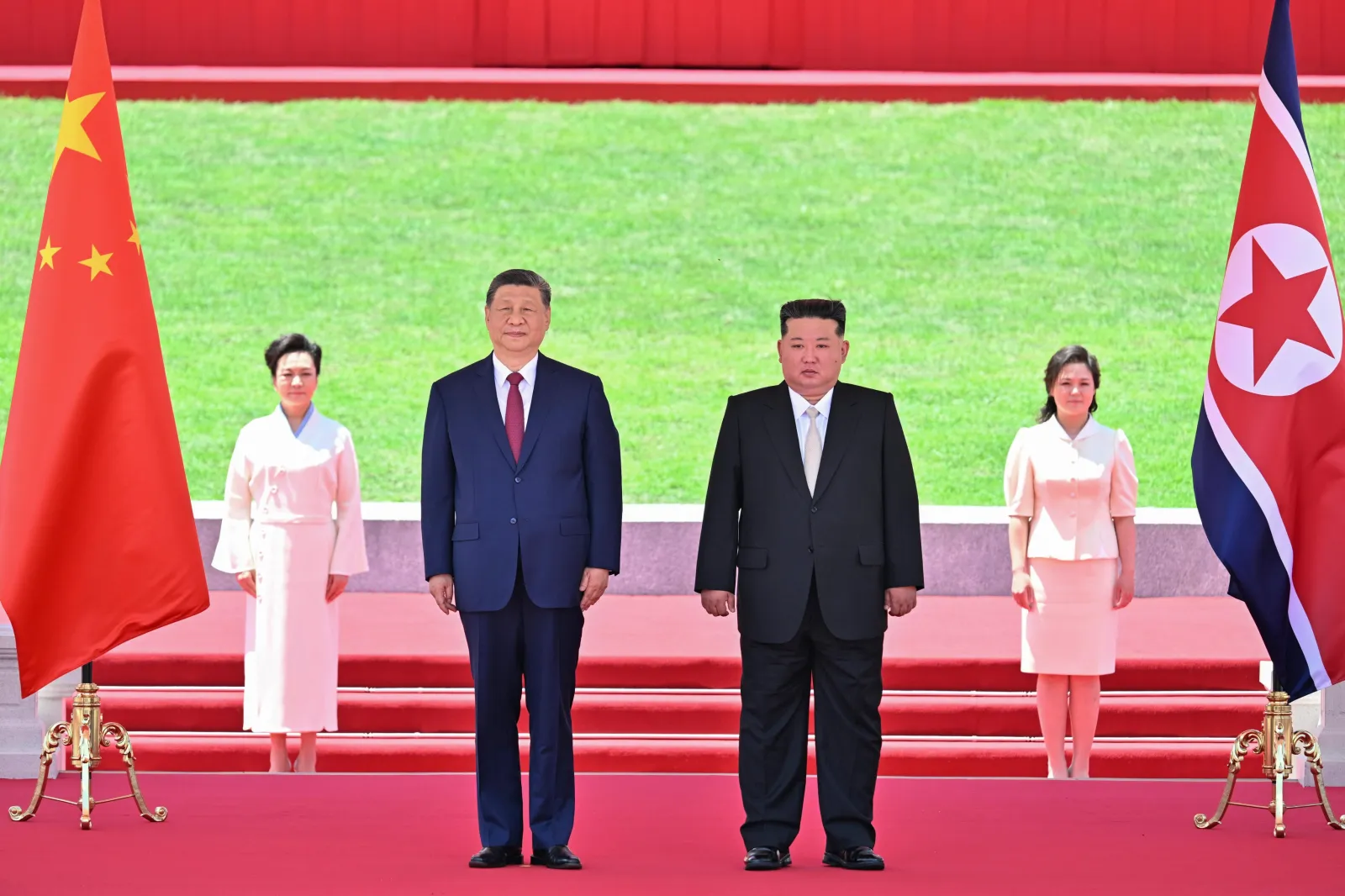
Kim and his wife personally greeted Xi’s plane on Monday. The Chinese leader was welcomed in central Pyongyang by the North Korean military and cheering crowds, and was later treated to a dinner banquet and cultural performance, according to state media reports.
Kim called Xi his "most respected guest" and played up the Chinese president’s first foreign trip of the year, which followed separate summits in Beijing with Trump and Putin.
While it would have been unusual for Kim and Xi to disagree publicly in the respective readouts of their talks, the absence from North Korean statements of the "four proposals" put forward by China's leader may point to less than complete agreement, according to Sydney Seiler, a senior adviser with the Center for Strategic and International Studies.
Xi's call to strengthen "mutual political trust" suggested China was frustrated by "a trust deficit" between the two sides, Seiler told Newsweek.
...
Xi’s last state visit to North Korea took place in June 2019. His first trip there since becoming leader of China followed a series of historic meetings between Kim and Trump in 2018 and 2019, which ultimately yielded no arms control breakthroughs.
Since becoming North Korea’s supreme leader in 2011, Kim has traveled five times to Beijing to meet Xi, including most recently in September, where he and Putin shared a stage at a Chinese military parade marking the 80th anniversary of the end of World War II.
Alignment between the three parties is tight, and regular visits to Russia and China give Kim an international platform and the status afforded to other world leaders.
As the most junior of the three leaders, Kim is creating room for his own political agenda and attempting to extract concessions from both powers.
Beijing’s defense treaty with Pyongyang remains the only such pact Beijing has ever signed. It was agreed just days after North Korea went into an alliance with the Soviet Union in 1961.
"Kim is trying to restore the permissive environment of the Cold War, when North Korea benefited in several ways from the competition between China and Russia," said Green of the Crisis Group.
"North Korea has sought to diversify its economic ties ever since the dissolution of the USSR in 1991, and today's situation is arguably the best it has had since then," Green said.
Xi, his wife and the Chinese delegation of senior officials departed Pyongyang on Tuesday after a formal luncheon hosted by Kim. Both leaders said they would develop stronger relations between their nations.
Kim said Xi’s visit “was a complete success,” Chinese state media said.
View 0 Comments
Submit Correction
View Editorial & AI Guidelines